DOJ Drops Reflecting Pool Charge, Citing Flaws and Contradicting Trump
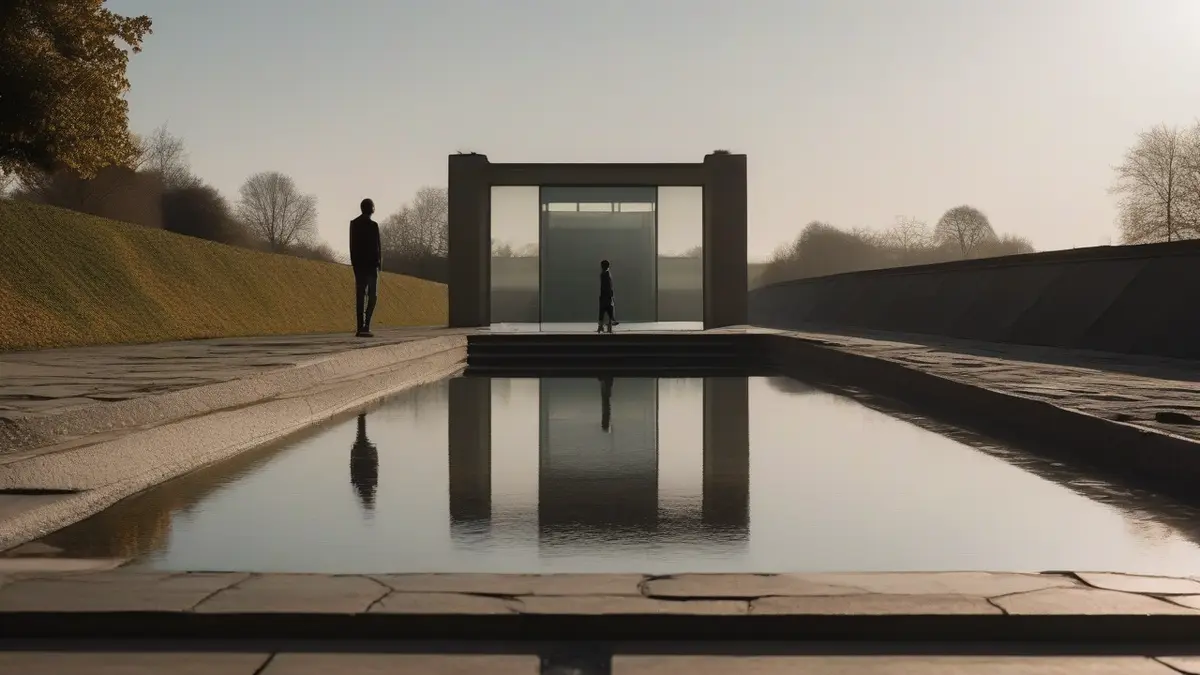
Federal prosecutors have dropped charges against an Olympian accused of vandalizing Washington D.C.'s Reflecting Pool, citing significant construction flaws that undermine the case and directly contradict former President Donald Trump's claims of deliberate vandalism. The Department of Justice (DOJ) announced the decision on Friday, acknowledging that the evidence pointed not to malicious intent but to a "botched" renovation project.
This development resolves a case that had become entangled in political controversy, with Trump himself insisting that the damage was caused by vandals and criticizing the DOJ's initial handling of the matter. The Olympian, identified as a prominent athlete, had been accused of damaging the iconic landmark during a period of ongoing renovations. However, the DOJ's review found that the damage was likely a result of the construction work itself, not intentional defacement.
The decision to drop the charges came after a thorough review of the evidence, which included expert assessments of the construction and the nature of the damage. Prosecutors concluded that the alleged vandalism was inextricably linked to the ongoing restoration efforts, which had reportedly been poorly executed. This finding directly challenges the narrative that the site was targeted by vandals, a narrative that had been amplified by former President Trump.
Trump had publicly voiced his strong opinions on the incident, suggesting that the alleged damage was a clear act of vandalism and expressing frustration with the prosecution's approach. His insistence on a vandalism narrative appeared to be at odds with the emerging evidence of construction-related issues. The DOJ's statement, by highlighting the "botched" work, effectively refutes the notion of deliberate destruction by an individual.
The case had taken a predictable turn into partisan territory, with some media outlets and political figures aligning with Trump's interpretation. However, the DOJ's meticulous review prioritized factual evidence over political pressure. The decision underscores the department's commitment to pursuing justice based on substantiated facts, even when those facts diverge from public or political assertions.
This outcome raises questions about the initial assessment of the incident and the communication surrounding the renovation project. The admission of construction flaws suggests a potential lack of oversight or quality control during the restoration of the Reflecting Pool. The DOJ's careful examination of the site's condition prior to and during the alleged incident was crucial in reaching its conclusion.
The specific nature of the construction flaws remains a subject of interest, as it directly led to the dismissal of charges. Reports indicate that the renovation work may have been rushed or inadequately supervised, leading to structural weaknesses or damage that was then misinterpreted as vandalism. This points to a broader issue of accountability in public works projects.
The decision to drop the charges is a significant moment, not only for the Olympian involved but also for the public's understanding of the incident. It highlights the importance of thorough investigation and the potential for misinterpretation when complex projects are involved. The DOJ's stance provides clarity and closure to a case that had been clouded by political rhetoric and unsubstantiated claims.
The implications extend to the management of historical landmarks and the processes involved in their upkeep. The incident serves as a case study in the challenges of balancing preservation, renovation, and public scrutiny, especially when high-profile figures weigh in. The DOJ's careful approach in this instance reinforces the principle that legal outcomes must be guided by evidence, not by external pressures or narratives.
Moving forward, the focus may shift to examining the management and execution of the Reflecting Pool renovation project itself. The DOJ's acknowledgment of construction flaws opens the door for further scrutiny of the entities responsible for the restoration work. This could lead to a re-evaluation of protocols for public infrastructure projects to prevent similar misinterpretations and controversies in the future.
Share this article
Send the story to readers on social or messengers.
Comments
Loading comments…

New Times Reporter Staff
Compiled and edited by the New Times Reporter newsroom from wire and publisher reporting, with the original source credited on every story.