How much will OpenAI's AI smart speaker cost?
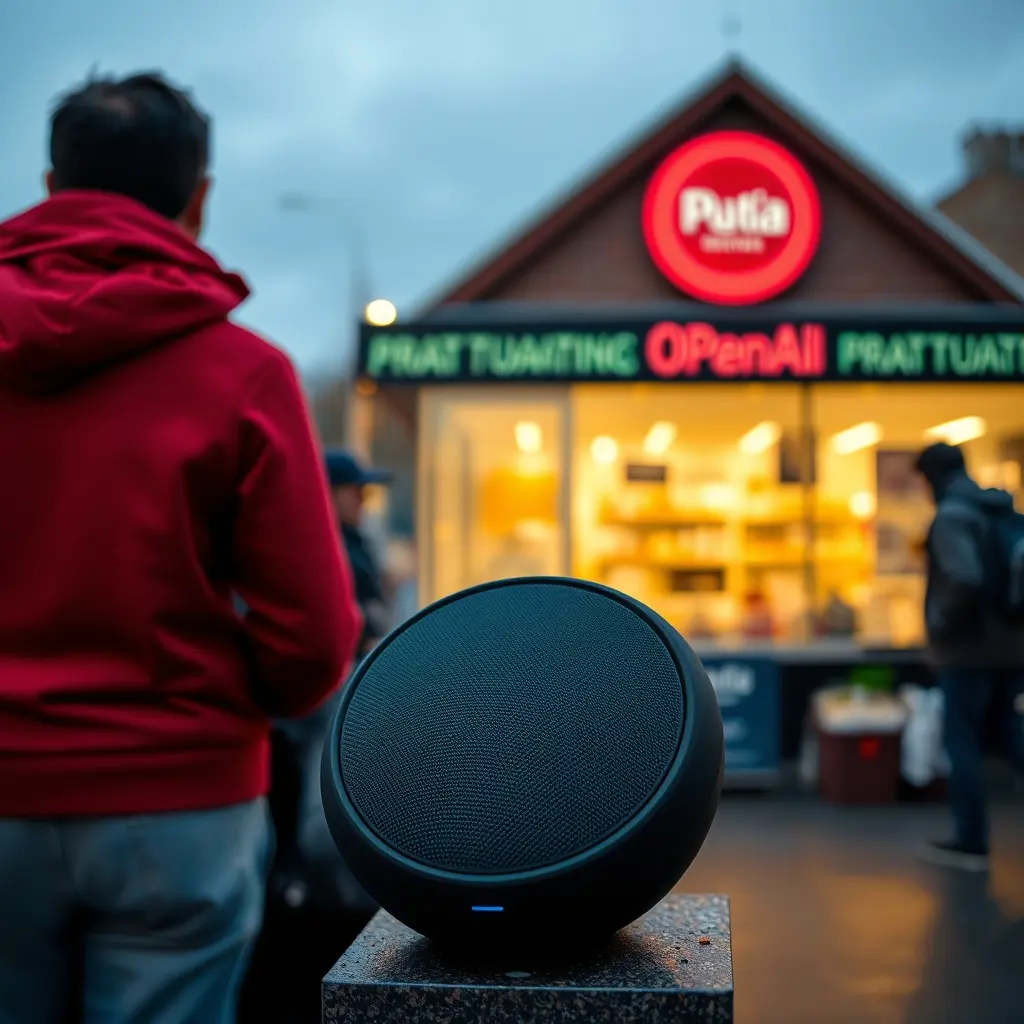
OpenAI is reportedly developing a hockey puck-sized smart speaker, its first hardware product, with an anticipated retail price between $300 and $400. This device, designed in collaboration with Jony Ive's design firm, LoveFrom, aims to offer a more advanced and expressive AI companion experience than current market offerings. The high price point suggests a focus on premium features and cutting-edge AI capabilities, positioning it as a distinct alternative to more budget-friendly smart speakers.
The device's development signifies OpenAI's ambition to move beyond software and into consumer hardware, leveraging its expertise in large language models. The speaker is expected to feature a minimalist, ring-shaped design, reflecting Ive's signature aesthetic. Unlike traditional smart speakers that primarily rely on voice commands for specific tasks, OpenAI's device is rumored to offer a more conversational and context-aware interaction, potentially acting as a personal assistant with a deeper understanding of user needs and preferences. Its success will likely depend on its ability to deliver a truly novel AI experience that justifies the premium cost.
The Background: OpenAI's Hardware Ambitions
OpenAI, a leader in artificial intelligence research and development, has primarily operated as a software company, known for its powerful language models like GPT-4. However, the company has been exploring hardware integrations to bring its AI capabilities directly into users' homes. This move into consumer electronics marks a significant strategic shift. The reported collaboration with Jony Ive, the former chief design officer at Apple, known for his work on the iPhone and MacBook, signals a strong emphasis on product design and user experience. Ive's involvement suggests that OpenAI is aiming for a product that is not only technologically advanced but also aesthetically refined and intuitive to use. This venture into hardware is not entirely unprecedented for AI companies, as others have experimented with smart displays and integrated AI devices, but OpenAI's focus on a dedicated AI-first speaker with Ive's design pedigree sets it apart.
The Mechanism: An AI-First Interaction Model
The OpenAI smart speaker is envisioned to function as a highly advanced conversational AI. Instead of relying on a fixed set of wake words and commands, it is expected to understand and respond to natural language in a more fluid and context-aware manner. Users might be able to engage in extended dialogues, ask complex follow-up questions, and receive nuanced responses. The device's core functionality will be powered by OpenAI's proprietary AI models, enabling it to perform tasks such as summarizing information, generating creative text formats, answering questions, and potentially controlling smart home devices. The hockey puck-like form factor suggests a compact device, likely featuring advanced microphones for superior voice capture and potentially a subtle visual interface or lighting system to indicate its status or convey information. The integration of Ive's design principles implies a focus on simplicity and elegance in both the physical form and the user interaction.
Who Is Affected and How
Consumers interested in cutting-edge AI and premium smart home devices will be directly affected. Early adopters and tech enthusiasts willing to pay a premium for advanced AI capabilities will likely be the primary target market. The $300-$400 price range places it significantly above most existing smart speakers from companies like Amazon (Echo) and Google (Nest), which typically range from $50 to $200. This means the device is not aimed at the mass market but rather at those seeking a more sophisticated AI experience. For these users, the speaker could offer a more integrated and intelligent way to interact with AI, potentially streamlining tasks and providing richer information. The broader impact could be felt by competitors, as a successful high-end AI speaker from OpenAI might push other companies to innovate faster in their own AI hardware offerings, potentially leading to a more competitive and advanced smart speaker market in the future.
What Happens Next
OpenAI has not officially announced the product, so its release timeline and final specifications remain speculative. However, if the reports are accurate, the next steps would involve further product development, rigorous testing, and eventually a public launch. The success of the speaker will hinge on its ability to deliver on the promise of a superior AI experience that justifies its high price. Key factors for its future will include the accuracy and responsiveness of its AI, the intuitiveness of its user interface, its integration capabilities with other smart home ecosystems, and its ability to maintain user privacy. If the device proves to be a significant leap forward in AI interaction, it could establish a new benchmark for smart speakers and influence the direction of consumer AI hardware. Conversely, if it fails to differentiate itself substantially from existing, more affordable options, it may remain a niche product, impacting OpenAI's broader hardware strategy.
Share this article
Send the story to readers on social or messengers.
Comments
Loading comments…

New Times Reporter
Editorial coverage from New Times Reporter.