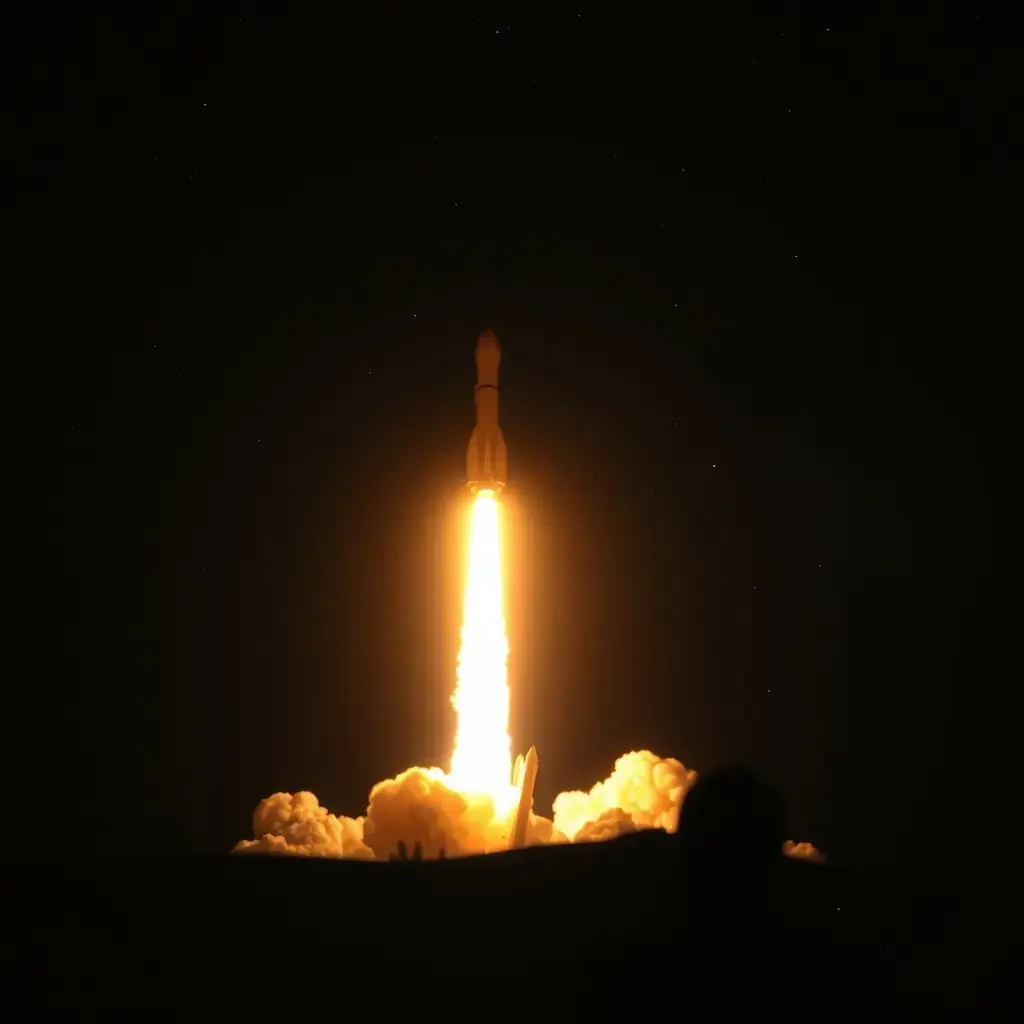
How does the Nancy Grace Roman Space Telescope differ from James Webb?
The Roman Telescope's Unique Mission
The Nancy Grace Roman Space Telescope, slated for launch no earlier than May 2027, is designed to tackle cosmic mysteries that are beyond the reach of the James Webb Space Telescope (JWST). While JWST excels at observing the universe in infrared light to peer back to the earliest galaxies, Roman's primary strength lies in its expansive field of view. This allows it to survey vast swathes of the sky much more efficiently, making it ideal for large-scale mapping projects and the study of dark energy and exoplanets.
Roman's mission is not to replace JWST but to complement it. JWST's instruments are highly sensitive and designed for detailed, in-depth observations of specific targets. Roman, on the other hand, is built for breadth rather than extreme depth. Its wide-field instrument will capture images that are 100 times larger than JWST's, enabling astronomers to survey billions of stars and galaxies in a fraction of the time it would take with other telescopes. This capability is crucial for understanding the large-scale structure of the universe and the distribution of matter within it.
The Mechanism: A Wider View for Deeper Understanding
The core difference between Roman and JWST lies in their optical design and primary scientific goals. JWST, with its 6.5-meter primary mirror, is optimized for high-resolution imaging and spectroscopy in infrared wavelengths, allowing it to see faint, distant objects. Roman, by contrast, features a 2.4-meter primary mirror, smaller than JWST's, but its key innovation is the Wide Field Instrument (WFI). The WFI boasts an unprecedentedly large field of view, equivalent to holding a grain of sand at arm's length and covering the entire Moon.
This wide field of view is achieved through a combination of advanced optics and large-format detectors. The WFI will be able to capture images that are 100 times larger than those from JWST's Near Infrared Camera (NIRCam). This means Roman can map out large regions of the sky, such as the distribution of galaxies across billions of light-years, or conduct comprehensive surveys of exoplanet atmospheres. While JWST might observe a single star system in great detail, Roman can survey thousands of star systems to identify potential exoplanets and study their characteristics on a grand scale.
Who is Affected and How?
Astronomers and astrophysicists will be the primary beneficiaries of Roman's capabilities. Researchers focused on cosmology, particularly the study of dark energy and dark matter, will find Roman indispensable. Its ability to map the distribution of galaxies over vast cosmic distances will provide crucial data for understanding the expansion of the universe and the nature of these mysterious components. For instance, Roman will conduct a "dark energy survey" that will map galaxies out to 10 billion light-years away.
Furthermore, the exoplanet community will benefit immensely from Roman's microlensing survey. This technique allows astronomers to detect planets orbiting distant stars, including those that might be Earth-like. By surveying billions of stars, Roman is expected to discover thousands of new exoplanets, significantly expanding our catalog of known worlds and providing statistical data on planet formation. The general public, while not directly operating the telescope, will indirectly benefit from the scientific discoveries that advance our understanding of the cosmos, potentially leading to new technological innovations and a deeper appreciation of our place in the universe.
What Happens Next?
The Nancy Grace Roman Space Telescope is currently in its final stages of development and testing. The telescope's primary mirror has been completed, and its instruments are undergoing rigorous calibration. The next major milestones include the integration of the telescope with its spacecraft bus and the launch, currently targeted for no earlier than May 2027. Following its launch, Roman will travel to its operational orbit around the Sun, about 1 million miles from Earth at the second Sun-Earth Lagrange point (L2), the same location as JWST.
Once in orbit and fully commissioned, Roman will begin its primary science operations. The scientific community has already proposed numerous observation programs, prioritizing the dark energy survey, the exoplanet microlensing survey, and infrared astrophysics. The data gathered by Roman is expected to revolutionize our understanding of dark energy, the prevalence of exoplanets, and the evolution of the universe. The long-term impact will depend on the success of these surveys and the subsequent analysis of the vast datasets Roman will produce, potentially leading to new theoretical frameworks in physics and astronomy.
Share this article
Send the story to readers on social or messengers.
Comments
Loading comments…

New Times Reporter
Editorial coverage from New Times Reporter.