How will the Roman Space Telescope directly image exoplanets?
The Background: Seeing the Unseen
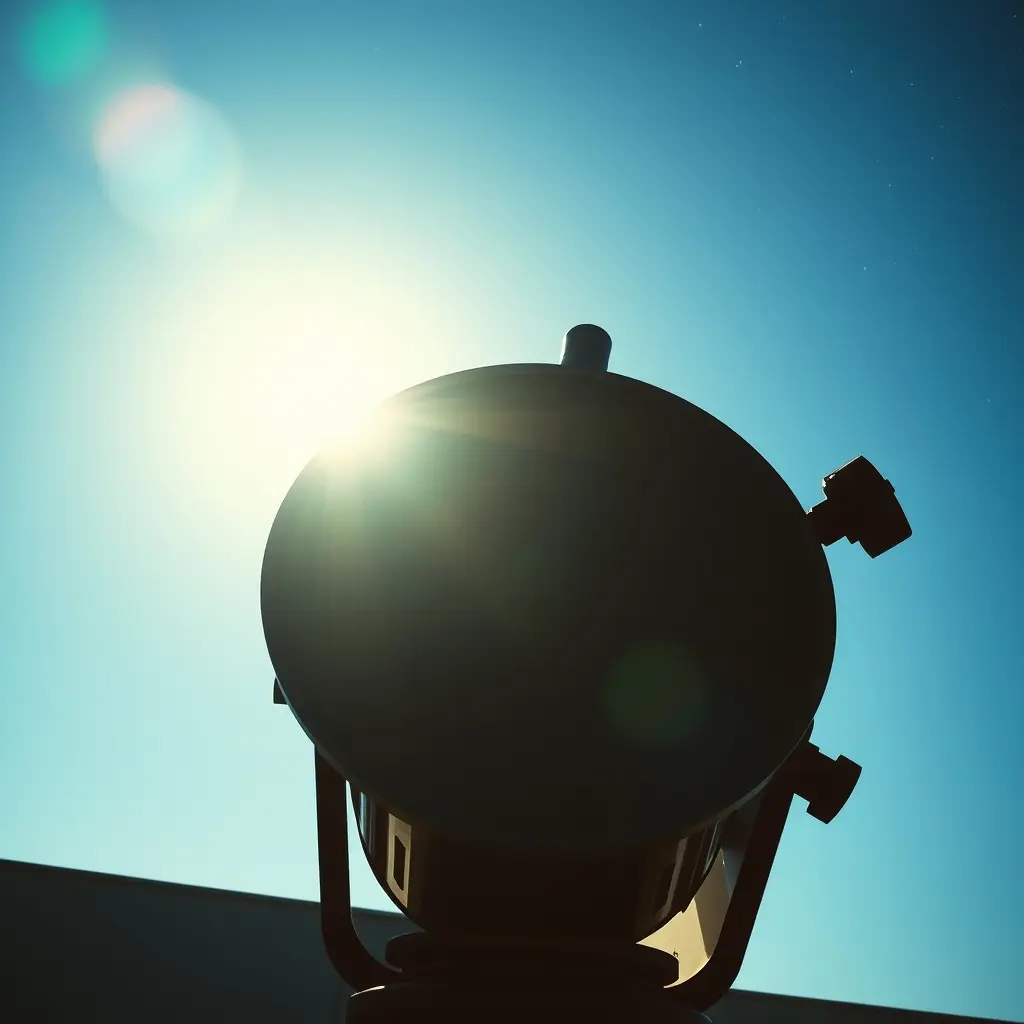
The Nancy Grace Roman Space Telescope, launched by NASA, aims to revolutionize exoplanet discovery by directly imaging these distant worlds. Unlike traditional methods that infer a planet's existence by observing its effect on its host star, direct imaging captures the light emitted or reflected by the exoplanet itself. This capability is crucial for studying planets that are too large or too close to their stars to be detected by transit or radial velocity methods. The Roman telescope, with its large mirror and advanced instruments, is designed to overcome the challenges of distinguishing faint planetary light from the glare of a bright star.
This mission builds upon decades of exoplanet research, which began in earnest in the 1990s. Early discoveries relied on indirect methods, leading to the cataloging of thousands of exoplanets. However, direct imaging has remained a challenging frontier, achieved only for a limited number of large, young, and relatively distant planets. The Roman telescope's specific design, including its coronagraph and integral field spectrograph, is optimized to block starlight and analyze the faint light from orbiting planets, paving the way for a new era of exoplanet characterization.
The Mechanism: A New Way to See
Direct imaging with the Roman Space Telescope involves a multi-step process designed to capture and analyze the faint light of exoplanets. The telescope's primary mirror, 2.4 meters in diameter, collects light from distant star systems. A key instrument is the Coronagraph, which uses a precisely shaped mask to block the overwhelming light from the host star. This allows the much fainter light from any orbiting planets to become visible.
Once the starlight is suppressed, the light from the exoplanet is captured by the telescope's detectors. Another crucial instrument is the Integral Field Spectrograph (IFS). The IFS breaks down the incoming light into its constituent wavelengths, creating a spectrum for each point in the image. This spectral information is vital for determining the planet's atmospheric composition, temperature, and other properties, offering a detailed look at its environment. This process allows scientists to not only see the planet but also to begin understanding its physical and chemical makeup.
Who is Affected and How
The primary beneficiaries of Roman's direct imaging capabilities are astronomers and planetary scientists. They will gain access to a new dataset that can significantly expand the known population of exoplanets, particularly those that are Earth-like or super-Earths in habitable zones. This will enable more robust statistical studies of planet formation and evolution across different stellar types and environments. The ability to directly study exoplanet atmospheres will also provide crucial insights into the potential for habitability beyond our solar system.
For the public, this advancement means a deeper understanding of our place in the universe and the possibility of discovering worlds with conditions that could support life. It fuels the ongoing scientific quest to answer fundamental questions about the prevalence of planets and the uniqueness of Earth. The images and data returned by Roman will inspire future generations of scientists and space explorers, making the abstract concept of exoplanets more tangible and relatable.
What Happens Next
Following its launch and subsequent commissioning, the Roman Space Telescope will begin its primary science operations. The initial phase will focus on calibrating instruments and conducting targeted observations of known exoplanet systems to validate its direct imaging capabilities. Astronomers will then embark on large-scale surveys designed to discover and characterize new exoplanets, prioritizing targets based on their potential for habitability.
Success hinges on the telescope's ability to consistently achieve the required starlight suppression and spectral resolution. If Roman performs as expected, it will dramatically increase the number of directly imaged exoplanets and provide unprecedented atmospheric data. Failure to meet performance benchmarks, such as insufficient coronagraph efficiency or detector noise, could limit the types of planets that can be studied. Future missions, potentially building on Roman's success, could then be designed to further characterize promising candidates, perhaps even searching for biosignatures.
Share this article
Send the story to readers on social or messengers.
Comments
Loading comments…

New Times Reporter
Editorial coverage from New Times Reporter.