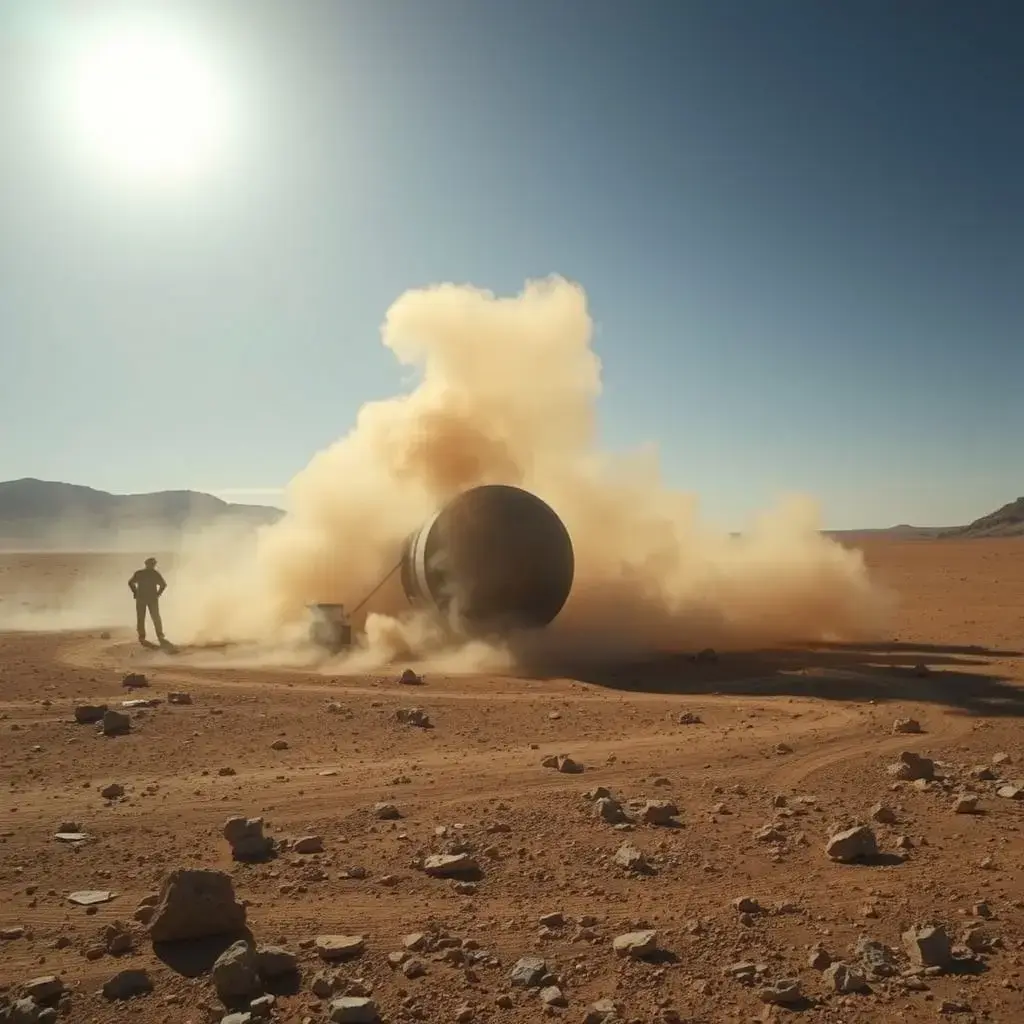
How did Gondwana's supercontinent spur life on Earth?
The Background: A Supercontinent's Shadow
For decades, geologists have pieced together the history of Earth's landmasses, revealing a cyclical process of continents merging into supercontinents and then breaking apart. Gondwana, a colossal landmass that existed from the Neoproterozoic Era (around 750 million years ago) through the Jurassic Period (around 180 million years ago), was one of the most significant of these supercontinents. It comprised most of the landmasses in today's Southern Hemisphere, including Antarctica, South America, Africa, Australia, India, and Arabia. Its immense size and unique geological history are now understood to have played a crucial role in the evolution and diversification of life on our planet.
The existence and breakup of Gondwana are not just geological curiosities; they are intrinsically linked to major shifts in Earth's climate, ocean currents, and atmospheric composition. These environmental changes, driven by the supercontinent's formation and subsequent fragmentation, created novel ecological niches and pressures that spurred the development of new life forms. Understanding Gondwana's past is therefore key to understanding the deep history of life itself.
The Mechanism: Plate Tectonics and Evolutionary Leaps
Gondwana's influence on life began with its formation. As tectonic plates converged, vast continental shelves were created, providing shallow, nutrient-rich marine environments. These conditions are ideal for the proliferation of early life, particularly microbial communities and the first multicellular organisms. The sheer scale of Gondwana also influenced global climate patterns, potentially leading to periods of glaciation and subsequent warming, which in turn can drive evolutionary innovation through adaptation and extinction events.
The breakup of Gondwana, which began around 180 million years ago, was equally transformative. As the supercontinent rifted apart, new oceans formed, altering ocean circulation and atmospheric conditions. This fragmentation isolated populations of organisms, leading to divergent evolution and the development of unique species on the newly formed continents. Furthermore, the geological processes associated with rifting, such as volcanic activity, released vast amounts of carbon dioxide into the atmosphere, contributing to significant climate shifts and potentially triggering mass extinction events that cleared the way for new life to emerge and diversify.
Who is Affected and How: A Deep Evolutionary Legacy
The most profound impact of Gondwana's existence and breakup is on the biodiversity we see today. The evolutionary pathways that led to the diverse array of plants and animals on continents like South America, Africa, and Australia were shaped by their shared history as part of Gondwana and their subsequent separation. For instance, the distribution of certain plant families and animal groups across these continents provides strong evidence of their Gondwanan ancestry.
For ordinary people, this means that the familiar flora and fauna of their home continents are, in part, a product of this ancient geological supercontinent. The unique ecosystems found in places like Madagascar or Australia, with their endemic species, are a direct consequence of their long isolation following Gondwana's fragmentation. Understanding this deep history helps explain the patterns of biodiversity and biogeography we observe, offering a richer appreciation of the natural world and our place within it.
What Happens Next: Unraveling Ancient Ecosystems
Future research will continue to refine our understanding of Gondwana's precise role in the evolution of life. Scientists are using advanced geological dating techniques, paleoclimate modeling, and comparative genomics to reconstruct the environmental conditions of the time and trace the evolutionary histories of various lineages. This ongoing work aims to pinpoint specific periods of Gondwanan activity that may have acted as 'evolutionary hotspots' or 'extinction filters'.
Further insights could come from the discovery of new fossil sites that shed light on early life forms and their environments during Gondwana's reign. Advances in computational biology may also allow for more sophisticated reconstructions of ancient genomes, revealing genetic adaptations that allowed life to thrive under the conditions presented by the supercontinent. Ultimately, this research promises to fill in crucial gaps in our knowledge of life's origins and diversification, providing a more complete narrative of Earth's biological history.
Share this article
Send the story to readers on social or messengers.
Comments
Loading comments…

New Times Reporter
Editorial coverage from New Times Reporter.