How does SpaceX's Falcon 9 rocket work and why is it important?
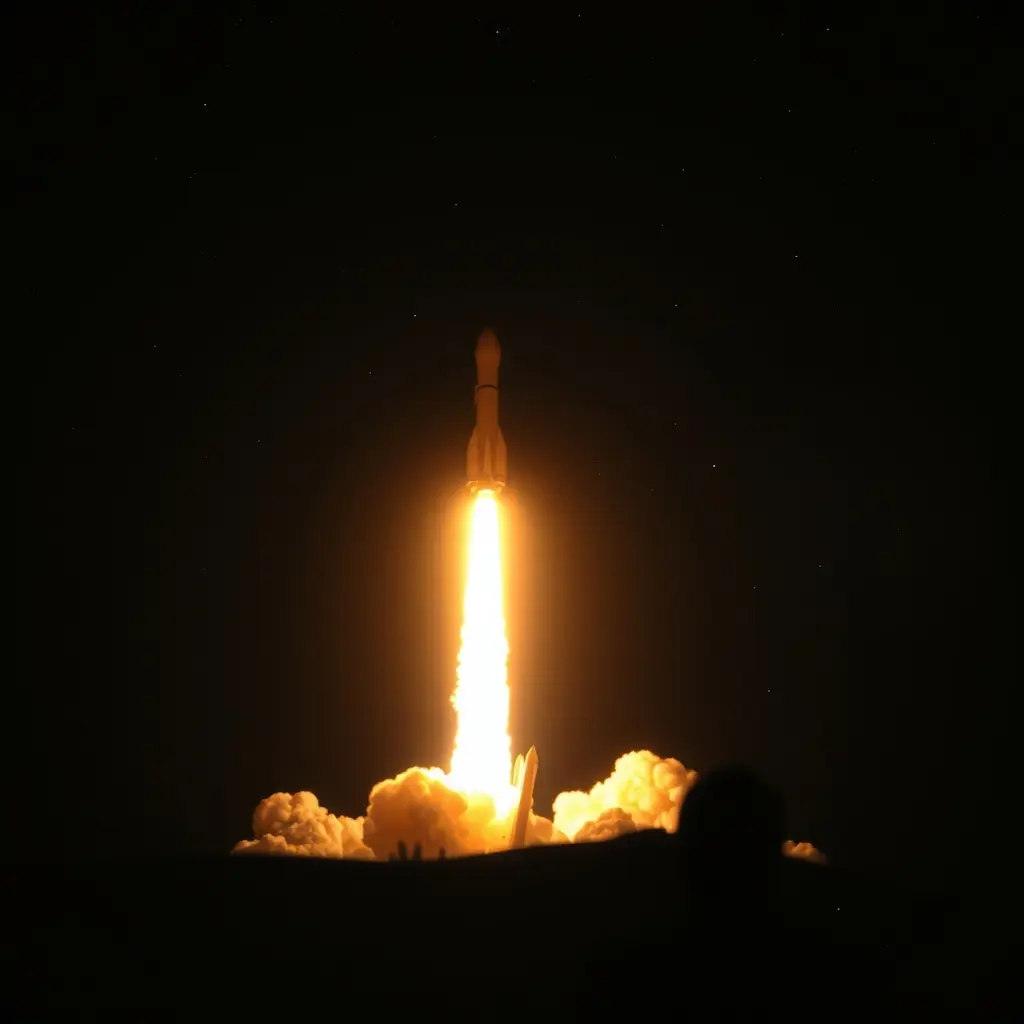
The Falcon 9's Enduring Success
SpaceX's Falcon 9 rocket has achieved a significant milestone, marking its 700th launch by the end of October 2026. This reusable two-stage rocket, developed and manufactured by SpaceX, is the workhorse of the company's launch operations, responsible for deploying satellites into orbit and transporting cargo and astronauts to the International Space Station. Its consistent performance and increasing launch cadence underscore a revolution in space access, making launches more frequent and cost-effective than ever before.
The Falcon 9's reliability and the company's ambitious launch schedule, exemplified by this recent milestone, have reshaped the commercial space industry. It has enabled a surge in satellite constellations, particularly for internet services like Starlink, and has become the primary vehicle for NASA's human spaceflight program to the ISS. The sheer volume of launches signifies a maturing market and SpaceX's dominant position within it.
How the Falcon 9 Works
The Falcon 9 is a two-stage rocket. The first stage is powered by nine Merlin engines, which ignite to lift the rocket off the launchpad. These engines are designed to be throttled and shut down individually, allowing for precise control during ascent. After reaching an altitude of approximately 80 kilometers (50 miles), the first stage separates from the second stage.
The second stage, powered by a single Merlin vacuum engine, then ignites to continue pushing the payload into orbit. This engine is optimized for the vacuum of space and burns for several minutes to achieve the desired orbital velocity. For missions requiring higher orbits or interplanetary trajectories, the second stage can perform multiple burns.
A key innovation of the Falcon 9 is its reusability. Following stage separation, the first stage engines are reignited for a boost-back burn, guiding the booster back towards its launch site or a drone ship positioned at sea. The landing legs then deploy, and the stage performs a final landing burn to touch down vertically. This recovery and refurbishment process significantly reduces the cost of subsequent launches.
Who is Affected and How
The Falcon 9's success directly impacts a wide range of stakeholders. For satellite operators, it means more frequent and affordable access to space, enabling the deployment of larger constellations for services like global internet (Starlink), Earth observation, and telecommunications. Companies that previously found launch costs prohibitive can now pursue ambitious space-based projects.
For national space agencies like NASA, the Falcon 9 has become a critical asset. It is the sole vehicle currently used for crewed missions to the International Space Station under NASA's Commercial Crew Program, providing a reliable and cost-effective alternative to the Space Shuttle. This partnership has allowed NASA to focus resources on deep space exploration.
Consumers are also indirectly affected. The proliferation of satellite internet services, made possible by the Falcon 9's ability to launch many Starlink satellites at once, promises to bring high-speed internet to remote and underserved areas worldwide. Furthermore, the overall reduction in launch costs can eventually translate to more affordable satellite-based services and potentially new space-enabled technologies.
What Happens Next
SpaceX plans to continue increasing the launch rate of the Falcon 9, aiming for even more frequent missions. The company is also focused on refining the reusability process, further reducing turnaround times between launches and lowering costs. Future iterations of the Falcon 9 may incorporate further upgrades to its engines and structure.
Beyond the Falcon 9, SpaceX is developing the Starship system, a fully reusable super heavy-lift launch vehicle. Starship is intended to eventually supersede the Falcon 9 for many missions, including lunar and Martian exploration. The success and lessons learned from the Falcon 9 program are foundational to the development of Starship.
For the broader space industry, the Falcon 9's continued dominance will likely spur further innovation and competition. Other launch providers will need to match SpaceX's cost-effectiveness and reliability to remain competitive. This ongoing evolution promises to accelerate humanity's expansion into space, with potential applications ranging from asteroid mining to orbital manufacturing.
Share this article
Send the story to readers on social or messengers.
Comments
Loading comments…

New Times Reporter
Editorial coverage from New Times Reporter.