How fast is SpaceX's Crew Dragon to the ISS?
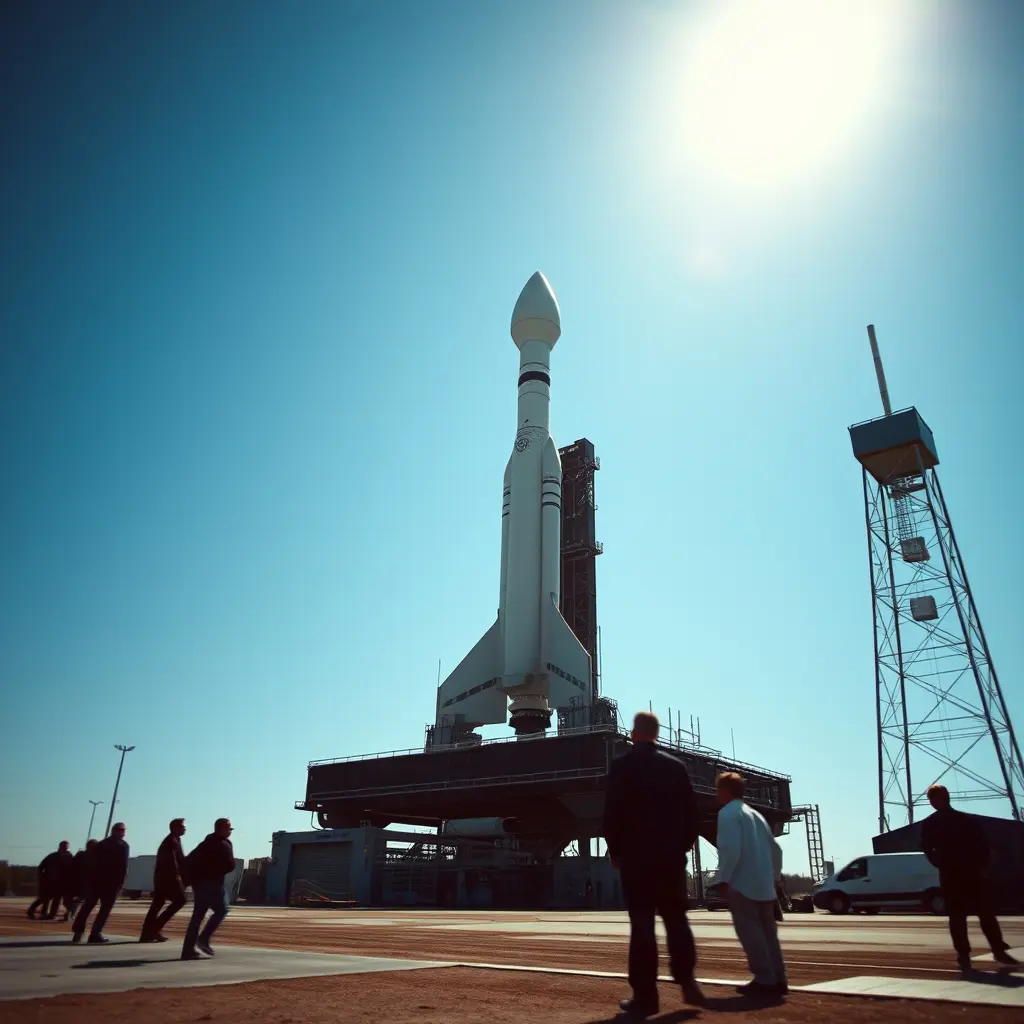
SpaceX's Crew-13 mission marked another milestone on October 2, 2026, with astronauts reaching the International Space Station (ISS) in a record-setting time for a US-launched mission. The Crew Dragon spacecraft, named 'Endeavour' for this flight, docked with the station just over 8 hours after its launch from Kennedy Space Center in Florida. This rapid transit is a significant achievement in commercial spaceflight, reducing travel time for astronauts and increasing the efficiency of crew rotations.
The speed of this journey is a testament to the advanced capabilities of SpaceX's Falcon 9 rocket and Crew Dragon capsule. The Falcon 9 is a two-stage rocket designed for reliability and reusability, capable of delivering significant payloads into orbit. The Crew Dragon is a capsule designed to carry astronauts, featuring a sophisticated life support system, navigation, and emergency escape capabilities. The combination allows for direct, high-speed trajectories to the ISS, optimizing mission timelines.
The Mechanism: A Direct and Efficient Trajectory
The expedited journey to the ISS is achieved through a carefully calculated direct ascent profile. Unlike earlier space shuttle missions that often involved multiple orbits or complex rendezvous maneuvers over longer periods, SpaceX's approach prioritizes a swift, efficient path. After the Falcon 9 rocket successfully places the Crew Dragon into Earth orbit, the capsule performs a series of precisely timed engine burns. These burns increase the spacecraft's velocity and adjust its orbital path to intercept the ISS, which is continuously orbiting the Earth at approximately 17,500 miles per hour.
The Crew Dragon's onboard guidance, navigation, and control systems work in concert with mission control at SpaceX's Hawthorne, California, headquarters and NASA's Johnson Space Center in Houston, Texas. This coordination ensures the capsule remains on its optimal trajectory. The docking process itself, using the station's Common Docking Adapter, is automated but closely monitored by both the crew and ground teams, allowing for a swift connection once the two spacecraft are in close proximity.
Who is Affected and How, Concretely
Astronauts are the most immediate beneficiaries of these faster transit times. For the Crew-13 astronauts, including NASA astronauts Matthew Dominick, Michael Barratt, Jeanette Epps, and Roscosmos cosmonaut Alexander Grebenkin, the reduced travel time means less time spent in the confined space of the capsule and more time available for their scientific research and station maintenance duties upon arrival. This efficiency can also translate to reduced psychological stress and physical strain associated with long-duration space travel.
For NASA and its international partners, quicker crew rotations mean more continuous scientific operations aboard the ISS. It allows for more efficient handover between departing and arriving crews, minimizing downtime. Furthermore, the success of these rapid flights demonstrates the viability and increasing maturity of commercial partnerships in human spaceflight, potentially paving the way for more frequent and cost-effective access to space for both government and private missions in the future.
What Happens Next, and What Would Have to Be True
This record-setting flight suggests that SpaceX's Crew Dragon system is becoming a routine and highly efficient means of transporting astronauts to the ISS. Future missions will likely continue to leverage these rapid transit capabilities, potentially even shaving off more time as the systems and procedures are further refined. The success of Crew-13 reinforces SpaceX's position as a key partner for NASA's human spaceflight program, under contracts like the Commercial Crew Program.
For even faster transit times in the future, further advancements would be necessary. This could involve more powerful launch vehicles capable of higher initial velocities, or spacecraft designed for even greater speeds and thermal protection for atmospheric re-entry. However, the current trajectory is largely dictated by the orbital mechanics of reaching the ISS and the need for safe docking procedures. The primary driver for further reductions would be the scientific or operational necessity to shorten mission durations, balanced against the engineering challenges and costs associated with higher-speed travel.
The Background: A New Era of Commercial Spaceflight
The arrival of Crew-13 on the ISS on October 2, 2026, is part of a broader shift in space exploration, heavily influenced by commercial companies like SpaceX. Since the retirement of the Space Shuttle program in 2011, NASA relied on Russian Soyuz spacecraft to ferry astronauts to the ISS, a situation that carried both geopolitical and logistical complexities. The development of the Commercial Crew Program, initiated in the early 2010s, aimed to foster private sector development of human-rated spacecraft to restore US launch capability.
SpaceX, founded by Elon Musk in 2002, was one of the key companies selected for this program. Their Crew Dragon spacecraft, built upon the Dragon cargo vehicle, underwent extensive testing and development. The first uncrewed test flight to the ISS occurred in March 2019, followed by the first crewed test flight, Demo-2, in May 2020, which successfully carried NASA astronauts Bob Behnken and Doug Hurley to the station. This marked the return of human spaceflight launches from American soil and the beginning of a new era of public-private partnership in space.
Share this article
Send the story to readers on social or messengers.
Comments
Loading comments…

New Times Reporter
Editorial coverage from New Times Reporter.