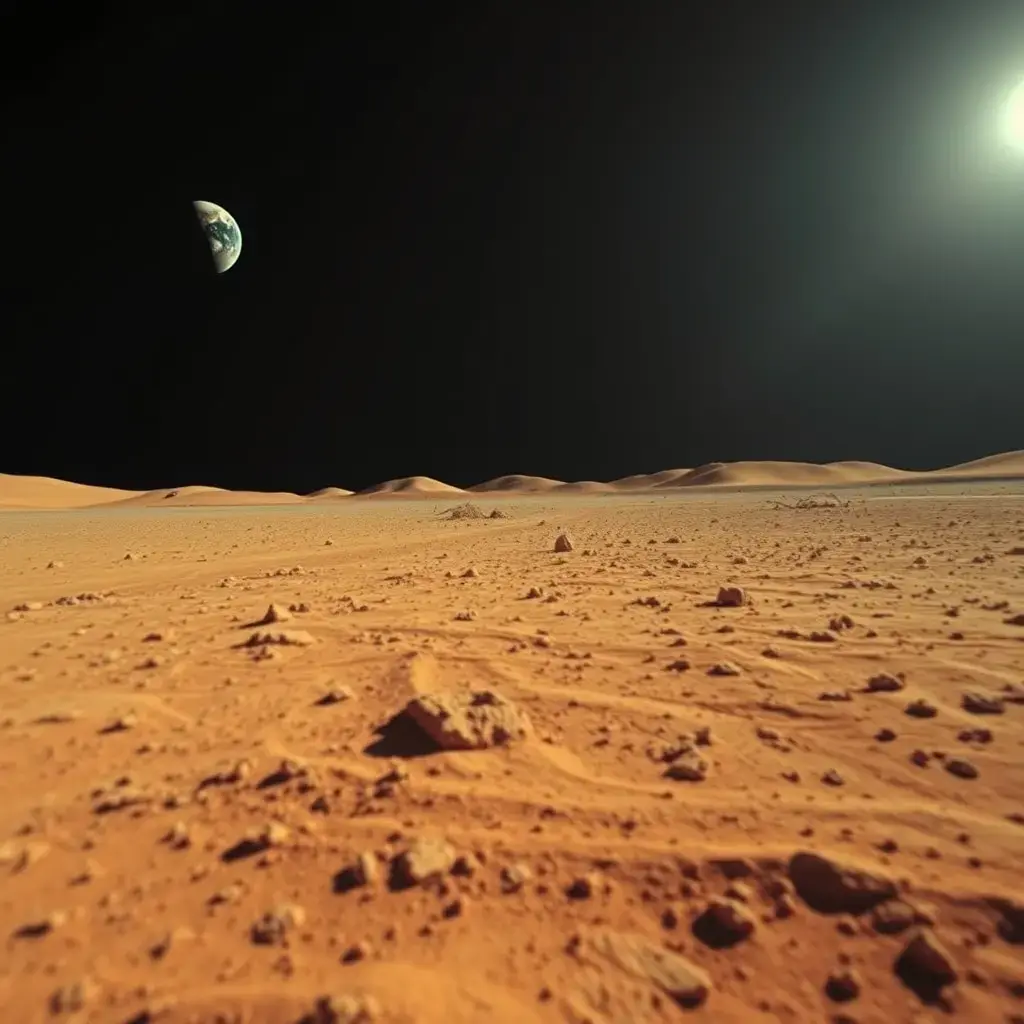
'It's a hole': SpaceX rocket leaves crater on Moon, first images show

The Background: Space Debris and Lunar Exploration
For decades, the Moon has served as a relatively clean slate for scientific observation and potential future human habitation. However, the increasing volume of space activity has raised concerns about lunar contamination. The impact of the Falcon 9 rocket stage, designated as DM-2, on March 4, 2022, marked the first time a discarded rocket stage intentionally impacted the Moon. This event, while seemingly minor in the grand scheme of space exploration, highlights a growing issue: space debris. As more missions are launched, the potential for accidental or intentional impacts on celestial bodies increases, raising questions about planetary protection and the long-term preservation of pristine environments like the Moon.
The Mechanism: A Controlled, Unintentional Crash
The SpaceX Falcon 9 rocket stage in question was part of the CRS-25 mission, launched in May 2022. After completing its primary task of delivering cargo to the International Space Station, the stage was left in orbit. Unlike some earlier SpaceX missions where spent boosters were recovered or guided to controlled ocean splashdowns, this particular stage was not equipped with the necessary systems for a de-orbit burn. It drifted in orbit for several years, its trajectory eventually bringing it into a collision course with the Moon. The impact occurred at a high velocity, creating a crater approximately 18 meters (60 feet) in diameter and 3 meters (10 feet) deep. Images captured by NASA's Lunar Reconnaissance Orbiter (LRO) and the South Korean Danuri lunar orbiter clearly show the resulting scar on the lunar surface, distinguishing it from natural impact craters due to its double-lobed shape, a characteristic of tumbling objects.
Who is Affected and How, Concretely
The primary entities affected are the scientific community and space agencies worldwide. The creation of this crater, while small, represents a physical alteration of the lunar surface. For scientists studying lunar geology and impact dynamics, this event provides a unique, albeit artificial, case study. NASA's LRO, which has been mapping the Moon since 2009, has now documented this human-made feature. The South Korean Lunar Exploration and Science Center also contributed crucial imagery from its Danuri orbiter. The event raises broader concerns for organizations like the United Nations Committee on the Peaceful Uses of Outer Space (COPUOS), which grapples with the increasing problem of space debris and its potential impact on astronomical observations and future lunar activities. For the general public, this event serves as a tangible reminder of humanity's growing footprint in space and the need for responsible spacefaring practices.
What Happens Next, and What Would Have to Be True for Each Outcome
Moving forward, the impact of the SpaceX rocket stage serves as a catalyst for discussions on space debris mitigation and lunar environmental protection. One potential outcome is the development and adoption of stricter international guidelines for managing spent rocket stages and other space hardware, particularly for missions targeting the Moon and other celestial bodies. This would require consensus among spacefaring nations and organizations, potentially through revisions to the Outer Space Treaty or new agreements under the auspices of the UN. Another outcome is increased monitoring and cataloging of lunar objects to prevent future unintentional impacts. This would necessitate further investment in lunar observation capabilities. Conversely, if no significant regulatory changes or technological advancements occur, the risk of future, potentially larger or more numerous, artificial impacts on the Moon or other bodies remains. This could lead to a degradation of pristine lunar environments, complicating scientific research and future exploration efforts. The long-term consequence will depend on the collective response of the international space community to this unprecedented event.
Share this article
Send the story to readers on social or messengers.
Comments
Loading comments…

New Times Reporter
Editorial coverage from New Times Reporter.