Indiana Senate GOP Leader Steps Down After Trump Redistricting Clash
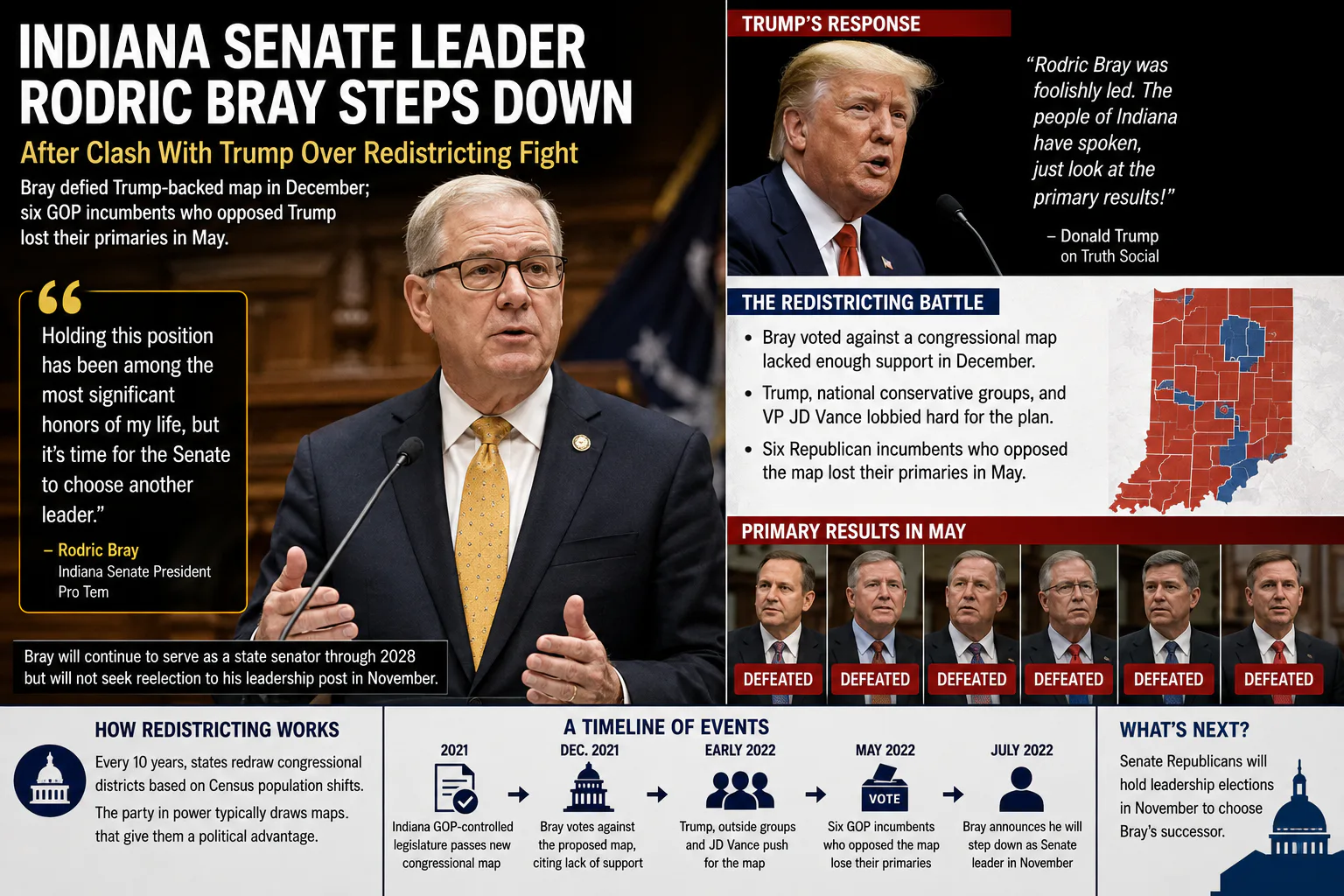
Indiana Senate President Pro Tem Rodric Bray announced Friday he will relinquish his leadership post, a decision that follows a significant political confrontation with former President Donald Trump over a congressional redistricting plan. Six incumbent Republican lawmakers who opposed Trump's preferred map in the state lost their primary elections in May, a defeat attributed by some to Trump's direct intervention.
Bray's departure from leadership comes after he defied Trump's lobbying efforts in December, voting against a redistricting proposal that he stated lacked sufficient support. This move placed him at odds with the former president, national conservative groups, and Vice President JD Vance, who had all advocated for the plan. Bray, who has served as Senate President Pro Tem since 2018, will continue his term as a state senator through 2028 but will not seek reelection to his leadership position when Senate Republicans convene for their leadership elections in November.
Trump publicly commented on Bray's decision via social media, characterizing Bray's leadership as "foolishly led" and referencing the primary defeats of those who opposed his redistricting agenda. Bray, in his statement, did not directly mention Trump or the redistricting dispute, instead stating that holding the leadership role "has been among the most significant honors of my life, but it's time for the Senate to choose another leader."
The redistricting process in Indiana, as in many states, is a critical exercise in political power, shaping the electoral landscape for years to come. Congressional districts are redrawn every ten years following the U.S. Census to reflect population shifts. The party controlling a state legislature typically has significant influence over this process, often drawing maps to favor their own candidates.
In 2021, the Indiana General Assembly, with a Republican supermajority, passed a new congressional map. This map was the subject of intense debate and lobbying, particularly from former President Trump, who sought to ensure specific incumbents aligned with his interests were placed in districts he favored. The conflict highlighted the enduring influence of Trump within the Republican party and his willingness to engage directly in state-level political battles.
Bray's vote against the plan, despite pressure, indicated a division within the state's Republican leadership regarding the extent of Trump's influence and the fairness of the proposed map. The subsequent primary election results, where several incumbents who sided with Bray were defeated, underscored the political cost of opposing Trump's directives in key Republican strongholds.
This leadership change within the Indiana Senate reflects broader trends in national Republican politics, where loyalty to Donald Trump remains a significant factor in electoral success and political standing. The outcome of the upcoming leadership election will signal the direction the Indiana Senate Republicans intend to take in navigating their relationship with the former president and his influential base.
While Bray is stepping down from leadership, his continued presence as a state senator means he will still be involved in legislative matters. However, his influence in shaping the Senate's agenda and direction will be diminished without the leadership title. The transition opens the door for a new leader to emerge, potentially with a different approach to party politics and external influences.
Share this article
Send the story to readers on social or messengers.
Comments
Loading comments…

New Times Reporter Staff
Compiled and edited by the New Times Reporter newsroom from wire and publisher reporting, with the original source credited on every story.