'The world's first solar-powered ambulance': Mobile clinic brings healthcare off-grid
The Background: Bridging the Healthcare Gap
In many remote and underserved regions worldwide, accessing basic medical care remains a significant challenge. This is often due to a combination of factors: vast distances to the nearest healthcare facilities, poor road infrastructure, and critically, a lack of reliable electricity. The World Health Organization estimates that approximately 1 billion people globally rely on healthcare services that operate with unreliable or no electricity at all. This deficit severely limits the ability to provide even fundamental medical services, from diagnostics to life-saving treatments. The Stella Juva, developed by a team of 23 students at Eindhoven University of Technology, aims to directly address this critical gap by creating a mobile medical unit that is not dependent on external power sources.
This initiative is part of a broader trend in humanitarian technology, where innovative solutions are being developed to overcome logistical and infrastructural barriers to essential services. Similar to how drones are being explored for medicine delivery in hard-to-reach areas, the Stella Juva rethinks the delivery of healthcare itself. Instead of focusing solely on transporting patients to a facility, it brings the facility to the patient. This approach is particularly relevant in areas where fuel for traditional vehicles is scarce and electricity grids are non-existent or unstable, fundamentally changing the paradigm of mobile healthcare delivery.
The Mechanism: How Stella Juva Works
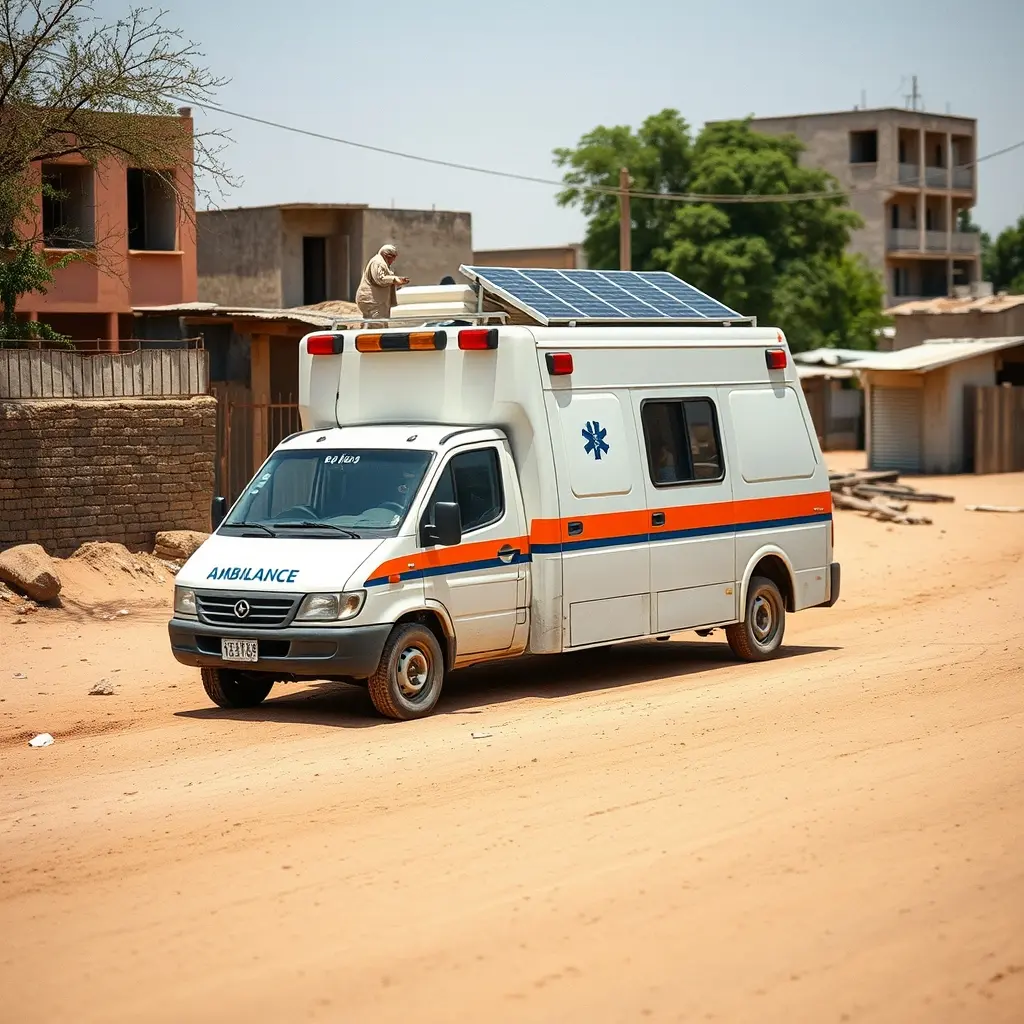
The Stella Juva operates as a self-sufficient mobile clinic, powered entirely by solar energy. Its roof is covered with high-efficiency AIKO solar cells utilizing All Back Contact technology. This design maximizes sunlight absorption by moving electrical contacts to the rear of the cells, a crucial advantage for a vehicle with limited surface area. The captured solar energy is stored in a substantial 50-kWh lithium-based battery pack. This stored energy serves two primary purposes: powering the vehicle's movement and operating the medical equipment within the climate-controlled cabin.
Crucially, the Stella Juva employs a dual electrical system. One system is dedicated to the vehicle's propulsion and general functions, while a separate, prioritized system powers the medical equipment. This separation ensures that even if the vehicle's driving range is compromised due to low battery levels, essential medical functions can continue to operate. The vehicle also uses pure sine wave inverters to provide stable and clean electricity, vital for the sensitive nature of medical devices. Under optimal solar conditions, the team estimates the Stella Juva can achieve a range of up to 715 kilometers (approximately 444 miles) in a single day, with a top speed of around 75 mph.
Who is Affected and How
This innovation directly impacts communities in remote, rural, and underdeveloped regions where access to healthcare is severely limited. Individuals living far from hospitals or clinics, often in areas with challenging terrain and unreliable infrastructure, stand to benefit the most. For them, the Stella Juva represents a significant reduction in travel time and a potential lifeline for timely medical intervention.
Healthcare workers in these regions will also see a substantial improvement in their ability to provide care. They can travel to communities, set up a functional clinic, and perform a range of services without the constant worry of power outages. The vehicle is equipped to support tuberculosis screening, pregnancy ultrasounds, malaria testing, vaccinations, and includes an automated external defibrillator. Refrigeration for vaccines and medications ensures their efficacy, even in hot climates. This enhanced capability means more people can receive preventative care and treatment closer to home, potentially reducing the burden of disease and improving overall health outcomes.
What Happens Next
The Stella Juva, as a student project, represents a proof-of-concept for a new type of off-grid healthcare delivery. The immediate next steps for Solar Team Eindhoven would likely involve further testing, refinement, and potentially seeking partnerships for larger-scale production or deployment. For this technology to have a widespread impact, several factors would need to align.
First, the durability of the solar cells and the vehicle's components in harsh, off-road conditions needs to be proven through extended real-world use. The AIKO solar cells' design for improved durability against vibration and microcracks is a positive step, but long-term performance data will be crucial. Second, the cost-effectiveness of producing and maintaining such vehicles will be a key determinant of their adoption. If the Stella Juva can be manufactured at a price point accessible to NGOs, governments, or healthcare organizations operating in low-resource settings, its potential for impact increases dramatically. Finally, successful integration into existing healthcare systems, including training for local healthcare providers on operating the mobile clinic, will be essential for its long-term success and sustainability.
Share this article
Send the story to readers on social or messengers.
Comments
Loading comments…

New Times Reporter
Editorial coverage from New Times Reporter.