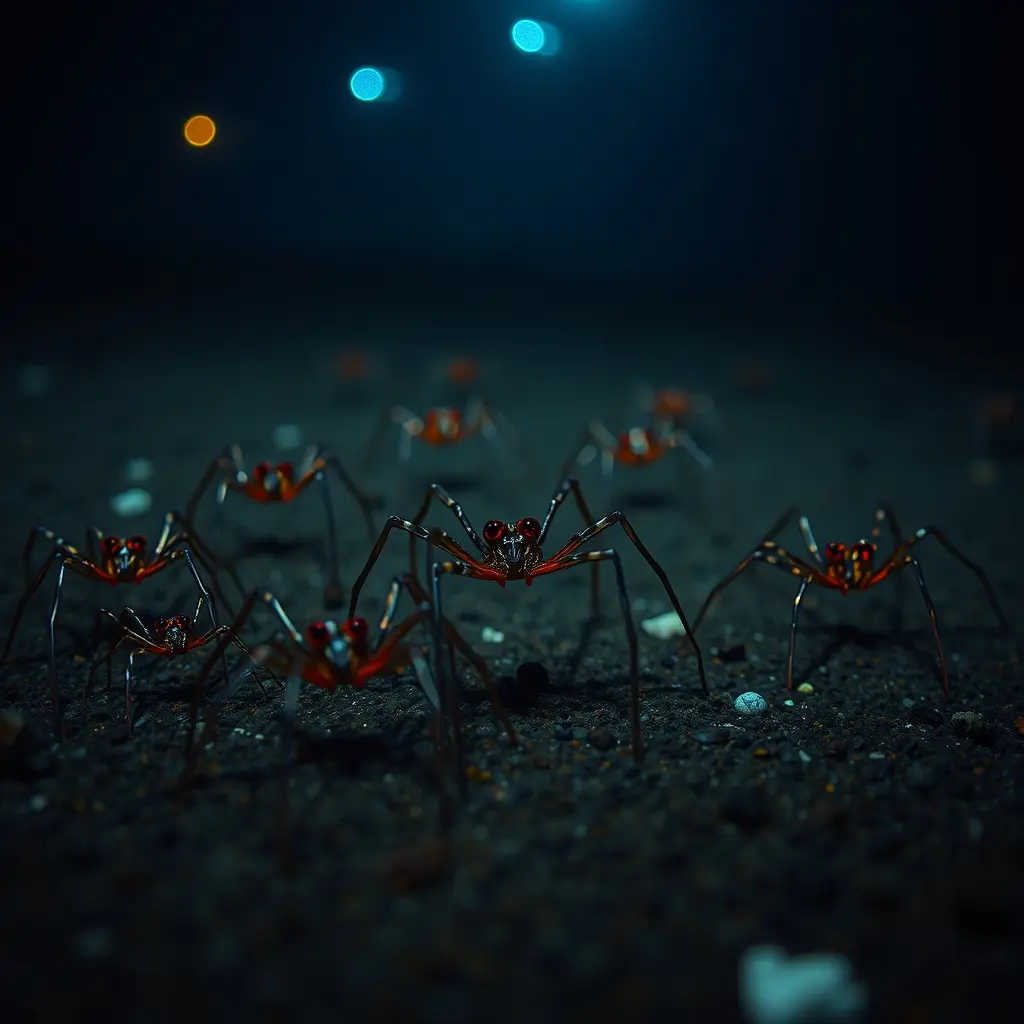
What are Colossendeis, the deep-sea spiders scientists call 'nightmare fuel'?
The Background: Unveiling the Deep Sea's Mysteries
For centuries, the deep ocean has remained one of Earth's least explored frontiers. The crushing pressures, perpetual darkness, and extreme cold create an environment that is both alien and inhospitable to human exploration. Yet, life persists, evolving in remarkable and often bizarre ways. Recent expeditions, employing advanced submersibles and remotely operated vehicles (ROVs), have begun to pierce the veil of this hidden world, revealing species that defy conventional understanding of biology. Among these discoveries are the pycnogonids, commonly known as sea spiders, a group of marine arthropods that have inhabited the oceans for at least 500 million years. While many species of sea spiders are small and relatively inconspicuous, some, like the newly described Colossendeis species, are giants of the deep, possessing an appearance that has led some researchers to label them as "nightmare fuel."
These extraordinary creatures inhabit the abyssal plains and trenches of the world's oceans, often at depths exceeding thousands of meters. Their existence in such extreme environments highlights the incredible adaptability of life. The scientific community's ongoing fascination with these organisms stems from their unique morphology and their role in the deep-sea ecosystem. Understanding these newly discovered species provides crucial insights into the biodiversity of the planet's largest biome and the evolutionary pressures that shape life in the deep.
The Mechanism: How Colossendeis Spiders Live and Feed
The Colossendeis genus, to which these newly described species belong, is characterized by its exceptionally long, slender legs, which can be many times the length of its small, compact body. This body plan is a common adaptation for deep-sea arthropods, allowing them to cover large distances across the seafloor with minimal energy expenditure and to navigate soft, silty substrates without sinking. The "hairy" appearance often noted by scientists refers to the presence of numerous setae, or sensory bristles, covering their legs and bodies. These setae are crucial for detecting vibrations, chemical cues, and changes in water currents, helping the spiders to locate prey and avoid predators in the absolute darkness of their habitat.
Their feeding mechanism is equally specialized. Unlike terrestrial spiders that use venom and digestive enzymes to liquefy prey externally, most deep-sea pycnogonids, including Colossendeis, possess a proboscis – a tube-like mouthpart used to pierce the tissues of their prey and suck out the liquefied contents. Their diet typically consists of sessile or slow-moving invertebrates such as cnidarians (like sea anemones and hydroids) and sponges. The "red eyes" mentioned in descriptions are likely due to the presence of specific pigments, possibly related to light sensitivity or other physiological functions, though their exact purpose in an environment devoid of sunlight remains a subject of scientific inquiry. The sheer size of some Colossendeis specimens, with leg spans reaching up to 70 centimeters (about 2.3 feet), makes them formidable predators in their specialized niche.
Who is Affected and How, Concretely
While these deep-sea discoveries might seem remote from daily life, they have several indirect but significant implications. For marine biologists and oceanographers, the discovery of new species like these Colossendeis represents a vital expansion of our knowledge of biodiversity. It underscores how much of the ocean's life remains unknown and highlights the importance of continued deep-sea exploration and research. This knowledge is foundational for understanding the health and resilience of marine ecosystems, which in turn support global fisheries and play a critical role in regulating climate.
For the broader public, these findings contribute to our understanding of life's incredible diversity and adaptability. The "nightmare fuel" moniker, while sensational, captures the public's imagination and can serve as a gateway to learning about the deep sea and the unique creatures that inhabit it. Such discoveries can inspire interest in science, conservation, and the exploration of our planet. Furthermore, as human activities, such as deep-sea mining and fishing, increasingly encroach upon these previously untouched environments, understanding the existing biodiversity and ecological roles of species like Colossendeis becomes paramount for developing effective conservation strategies and mitigating potential environmental damage. The "red eyes" and "hairy legs" are concrete features that make these creatures memorable and accessible points of entry for public engagement with complex scientific research.
What Happens Next, and What Would Have to Be True
The discovery of new Colossendeis species is likely the beginning of a deeper investigation into their biology and ecological significance. Future research will focus on detailed genetic analysis to understand their evolutionary relationships within the pycnogonid family and to confirm their species status. Scientists will aim to collect more specimens, if possible, to study their anatomy, physiology, and reproductive strategies in greater detail. This could involve deploying advanced sampling techniques and long-term monitoring with ROVs to observe their behavior in their natural habitat.
For these findings to lead to broader impacts, several things would have to be true. First, sustained funding for deep-sea research expeditions and technological development is crucial. Without continued investment, the exploration of these remote environments will stall. Second, the scientific community needs to effectively communicate these discoveries to the public and policymakers. Translating the scientific significance of finding a "hairy-legged, red-eyed" spider into tangible reasons for conservation or policy changes requires clear, compelling narratives. Third, international cooperation will be essential, as many deep-sea habitats span national boundaries, and understanding these ecosystems requires a global effort. If these conditions are met, the discovery of these deep-sea spiders could contribute to a greater appreciation for marine biodiversity, inform crucial conservation decisions regarding deep-sea resource exploitation, and potentially uncover novel biochemical compounds with applications in medicine or industry, stemming from the unique adaptations of these creatures to extreme environments.
Share this article
Send the story to readers on social or messengers.
Comments
Loading comments…

New Times Reporter
Editorial coverage from New Times Reporter.