What are quantum black holes and the theory of everything?
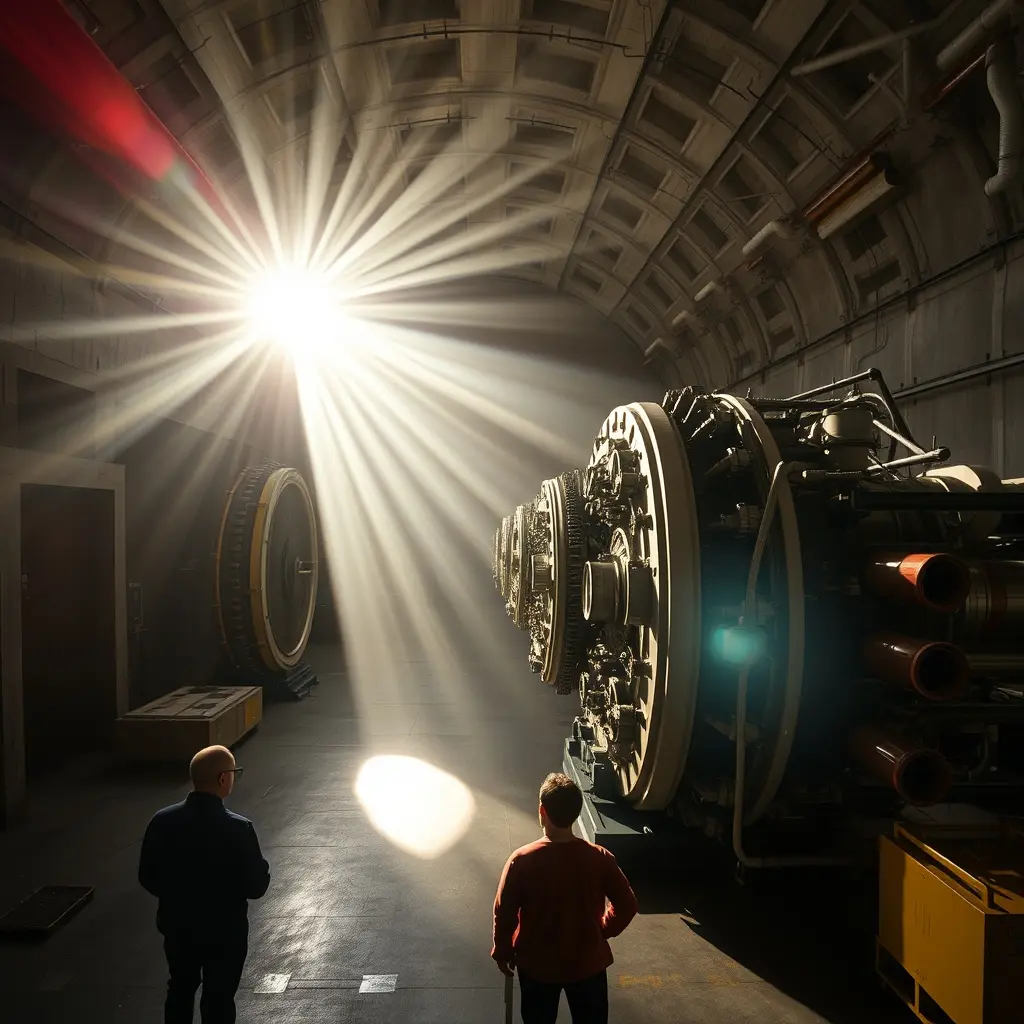
The Large Hadron Collider (LHC) continues its quest to uncover evidence of quantum black holes and potentially a "theory of everything." Recent analyses of data from the LHC, a 27-kilometer (17-mile) ring of superconducting magnets near Geneva, Switzerland, have ruled out certain energy ranges where these elusive phenomena might have been expected. Physicists are sifting through the results of high-energy particle collisions, searching for anomalies that could point to physics beyond the Standard Model.
The Standard Model is the current best description of fundamental particles and forces, but it doesn't explain gravity or account for dark matter and dark energy. A theory of everything aims to unify all fundamental forces, including gravity, into a single framework. Quantum black holes, if they exist, are hypothetical, microscopic black holes that would behave differently from the astrophysical black holes described by general relativity. Their existence is predicted by some theories that attempt to reconcile quantum mechanics and gravity, such as string theory.
The Background: Searching for New Physics
The Large Hadron Collider, operated by the European Organization for Nuclear Research (CERN), began operations in 2008. Its primary mission is to collide protons at extremely high energies, recreating conditions similar to those just moments after the Big Bang. By studying the debris from these collisions, physicists can observe known particles and search for evidence of new, undiscovered particles or forces. Since its inception, the LHC has been instrumental in confirming the existence of the Higgs boson in 2012, a pivotal discovery that solidified the Standard Model. However, the LHC's high-energy collisions also offer a window into phenomena that lie beyond this model, including the potential for microscopic black holes and the unification of fundamental forces.
Recent research, building on years of data collection and analysis, has focused on specific energy signatures. For instance, analyses of data from the LHC's ATLAS and CMS experiments have systematically excluded certain mass ranges for hypothetical quantum black holes. These exclusions are based on the absence of specific decay patterns or energy excesses that would be expected if such particles were produced in the collisions. The ongoing search is driven by the persistent questions the Standard Model leaves unanswered, such as the nature of gravity at the quantum level and the hierarchy problem (why gravity is so much weaker than other forces).
The Mechanism: How the LHC Hunts for the Unknown
The LHC accelerates two beams of protons in opposite directions around its circular tunnel. These beams are steered by powerful superconducting magnets, cooled to near absolute zero, to maintain their trajectory and achieve immense speeds. At specific points around the ring, the beams are made to collide head-on.
The energy of these collisions, measured in tera-electronvolts (TeV), can reach up to 13.6 TeV per beam in current operations. When protons collide at such energies, their constituent quarks and gluons can interact and produce a shower of other particles. These particles, if they are short-lived, decay almost instantaneously into more stable particles or energy.
Physicists use massive, sophisticated detectors positioned at the collision points to record the trajectories, energies, and identities of these resulting particles. For quantum black holes, scientists look for specific signatures: an excess of high-energy particles, unusual decay patterns, or particles with properties that cannot be explained by the Standard Model. The absence of such signals within a particular energy range allows researchers to rule out the existence of quantum black holes in that specific energy domain, effectively narrowing down the search space for future experiments.
Who is Affected and How, Concretely
While the direct impact of discovering quantum black holes or a theory of everything on daily life is not immediate, the implications for fundamental science are profound. For physicists and researchers, these findings would revolutionize our understanding of the universe's basic building blocks and forces. It could lead to new theoretical frameworks that might, in the long term, inspire technological advancements, much like the discoveries in electromagnetism or quantum mechanics did in the past.
For students and educators in physics, the ongoing search represents a vibrant and active field of research. It highlights the iterative nature of scientific progress, where ruling out possibilities is as crucial as confirming them. For the general public interested in science, the LHC's quest fuels curiosity about the universe's origins and fundamental laws. The potential discovery could reshape our cosmic perspective, similar to how the discovery of the Higgs boson did. The exclusion of certain parameters for quantum black holes means that theorists must refine their models, guiding future experimental designs and theoretical investigations.
What Happens Next, and What Would Have to Be True
The search for quantum black holes and a theory of everything at the LHC is an ongoing process. Future upgrades to the collider, such as the High-Luminosity LHC (HL-LHC) project scheduled to begin operations in the mid-2030s, will increase the number of collisions by a factor of ten. This will allow physicists to probe even higher energy scales and search for rarer phenomena with greater sensitivity.
For quantum black holes to be discovered, future LHC data must reveal statistically significant deviations from the Standard Model's predictions, manifesting as specific particle signatures or energy excesses within the explored or extended energy ranges. If these signals are found, they would need to be consistent across different detectors and analyses to be confirmed.
For a theory of everything to be validated, experimental results would need to align with the predictions of a specific unified theory, such as string theory or loop quantum gravity. This would likely involve not only LHC data but also potential corroboration from other areas of physics, like cosmology or gravitational wave astronomy. If no definitive evidence for quantum black holes or new physics emerges even with the HL-LHC, it might suggest that these phenomena occur at energies far beyond what current or near-future colliders can reach, or that our current theoretical approaches need fundamental revision.
Share this article
Send the story to readers on social or messengers.
Comments
Loading comments…

New Times Reporter
Editorial coverage from New Times Reporter.