What is the Gorgosaurus and why is its fossil valuable?
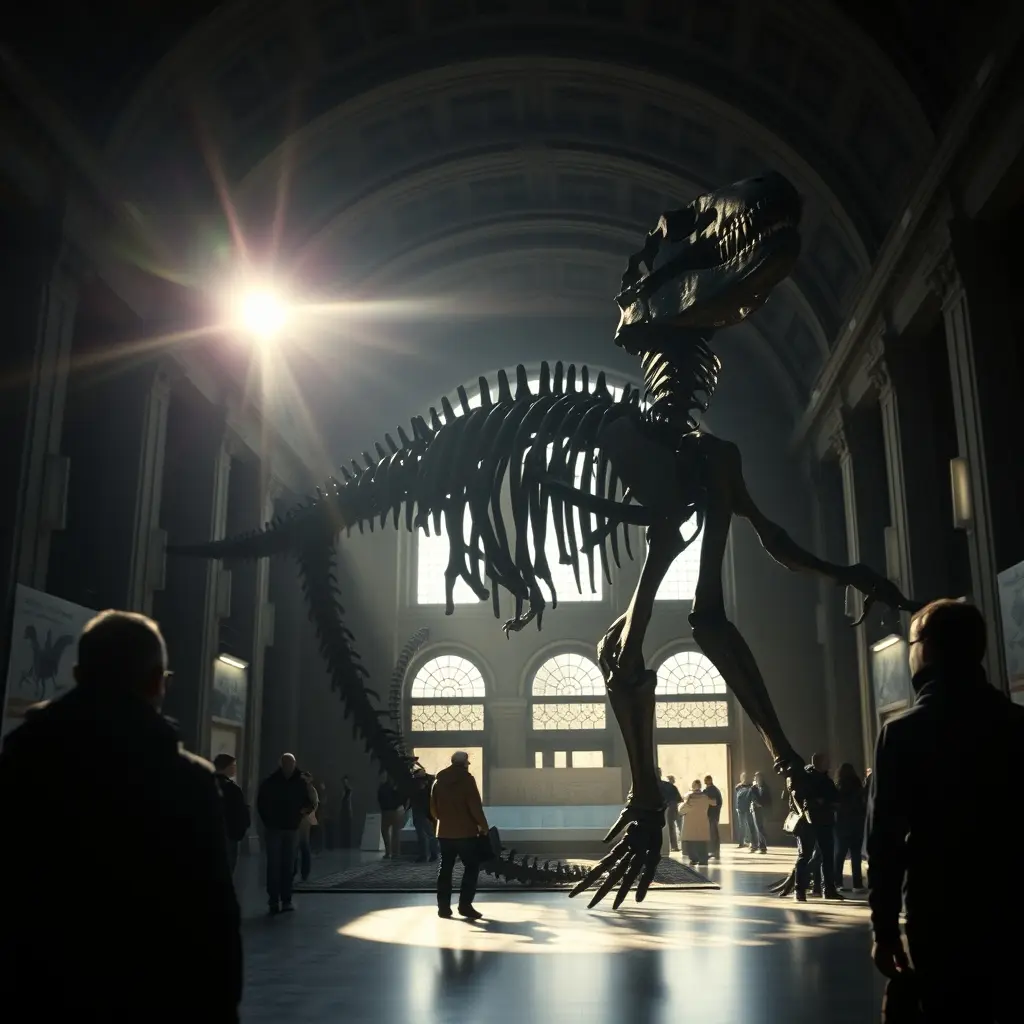
A remarkably complete fossil of a Gorgosaurus, a predatory dinosaur that lived about 77 million years ago, has gone on public display in New York. This specimen, nicknamed 'Stephanie', is significant not only for its rarity but also for its potential sale at auction, offering a rare glimpse into the commercialisation of paleontological discoveries.
The Gorgosaurus libratus was a large theropod dinosaur, belonging to the tyrannosaurid family, which also includes the more famous Tyrannosaurus rex. While T. rex lived at the very end of the Cretaceous period, Gorgosaurus roamed North America during the mid-Cretaceous, roughly 10 million years earlier. It was a formidable predator, estimated to be around 30 feet (9 meters) long and weighing up to 2 tons, possessing a powerful bite and sharp teeth, adapted for hunting large prey.
The Background: A Prehistoric Predator Unearthed
The Gorgosaurus fossil was discovered in the Judith River Formation of Montana, a geological area renowned for yielding significant dinosaur remains. This particular specimen is exceptionally well-preserved, with an estimated 90% of its bones recovered. Such completeness is rare in the fossil record, as decomposition, scavenging, and geological processes often result in fragmented or incomplete skeletons. The Gorgosaurus lived in an ecosystem that included other dinosaurs like hadrosaurs (duck-billed dinosaurs) and ceratopsians (horned dinosaurs), which would have been its primary food sources.
Fossils of Gorgosaurus are considerably rarer than those of T. rex, making this find particularly noteworthy. While T. rex fossils are found primarily in formations dating to the very end of the Cretaceous, Gorgosaurus fossils are found in older rock layers. This specimen's journey from discovery to public display and potential auction highlights the growing market for dinosaur fossils, driven by both scientific interest and private collectors.
The Mechanism: From Ground to Gallery to Auction Block
The process begins with paleontological fieldwork, where teams meticulously search for fossiliferous sites. Once a significant find like the Gorgosaurus is located, careful excavation takes place to remove the specimen without damaging it. This often involves using specialized tools and techniques to extract the fossilised bones, which are then encased in protective plaster jackets for transport.
Back in a laboratory, the fossils undergo a painstaking process of preparation. Technicians remove the surrounding rock (matrix) using fine tools, often air scribes or dental picks, to reveal the bones. They are then stabilized and repaired if necessary. For a specimen destined for auction, this preparation is often done to a high standard to maximise its visual appeal and perceived value.
Following preparation, the fossil is typically put on public display, as seen in New York. This serves multiple purposes: it generates public interest, provides educational opportunities, and allows potential buyers to view the specimen before the auction. The auction itself is a competitive bidding process where interested parties, including museums, institutions, and private collectors, place offers. The highest bidder acquires ownership of the fossil, which can then be kept in private collections or, in some cases, loaned or donated to public institutions.
Who is Affected and How, Concretely
This Gorgosaurus fossil's journey affects several groups. For the scientific community, it represents a valuable opportunity to study a rare dinosaur, potentially revealing new insights into its anatomy, behaviour, and evolutionary relationships. However, if sold to a private collector, access for scientific research could become limited or impossible, a concern frequently raised when significant fossils enter private hands. Museums and educational institutions are directly affected as they compete for such specimens to enrich their collections and engage the public. The auction house and its clients benefit financially and through acquisition. For the general public, the display offers a rare chance to see a magnificent prehistoric creature up close, fostering interest in natural history and science. However, the high cost of such fossils can place them out of reach for many institutions, meaning fewer public displays in the long run.
What Happens Next, and What Would Have to Be True
The immediate next step is the auction itself. If the fossil sells for a record-breaking price, it could further inflate the market for large, complete dinosaur specimens, making them even more inaccessible to public institutions. If it sells to a private collector, its long-term fate – whether it remains hidden or is eventually loaned to a museum – will depend on the owner's intentions. Should the fossil be acquired by a museum or research institution, it would likely undergo further study and become a permanent fixture for public and scientific engagement.
For the scientific value to be fully realised, the fossil would need to be accessible for ongoing research, regardless of ownership. If it enters a private collection, its future scientific contribution hinges on the owner's willingness to grant access to researchers. If the auction price is lower than anticipated, it might signal a cooling of the market or a shift in collector preferences, potentially making other significant fossils more attainable for museums in the future. The long-term preservation and study of the specimen will depend on the resources and commitment of its eventual owner.
Share this article
Send the story to readers on social or messengers.
Comments
Loading comments…

New Times Reporter
Editorial coverage from New Times Reporter.