Why did Finland halt Google's €13bn data centre project?
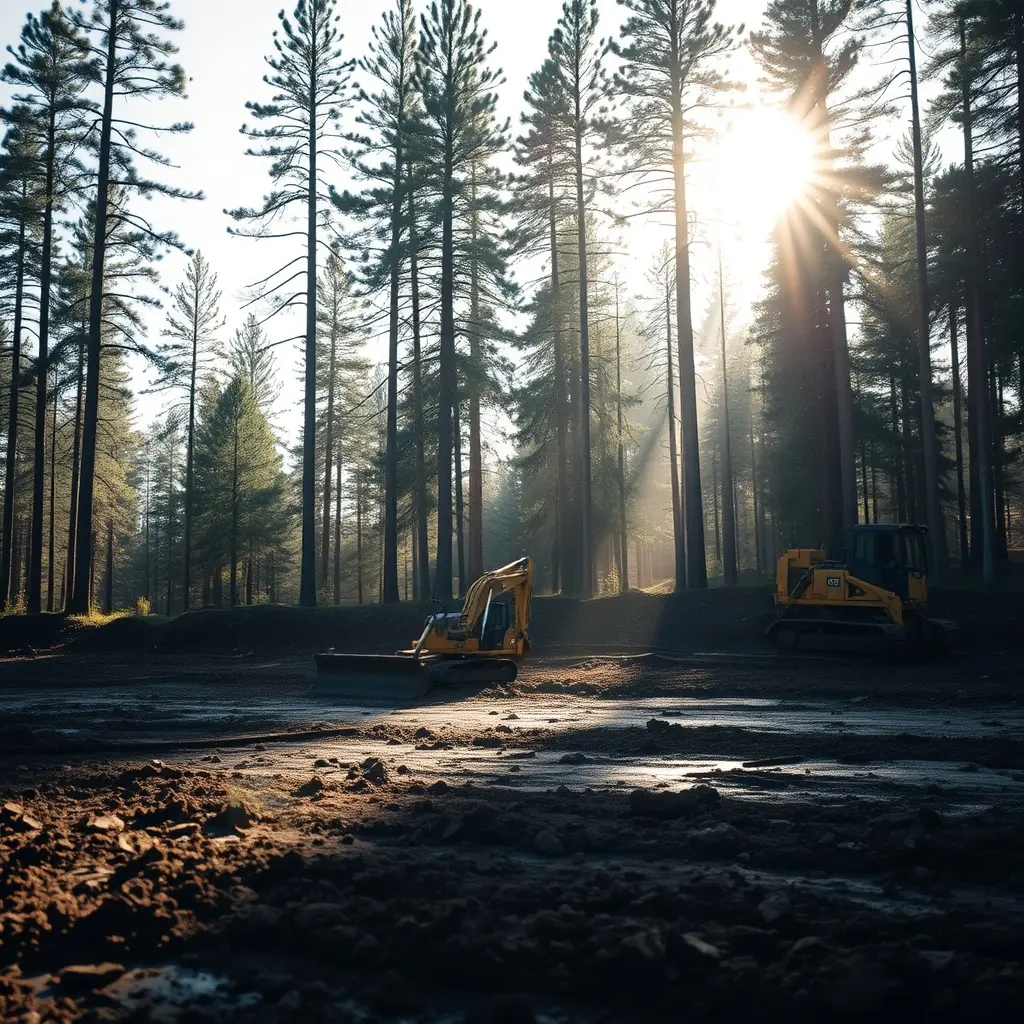
Finnish authorities have ordered a halt to preparatory work on two planned Google data centres in Muhos and Kajaani, citing concerns over forest clearance and a lack of mandatory environmental impact assessments. The orders, issued by the Finnish Supervisory Agency (LVV) and effective from October 23, 2026, target activities such as tree and topsoil removal, site road construction, and ditch alterations. This action comes less than a month after Google announced a record €13 billion investment in Finland, intended to expand its data centre capacity to meet growing demand for services like Search, Maps, and its AI assistant, Gemini.
The halt affects the initial stages of construction for facilities that are part of Google's largest single investment in Europe. The company has stated it fell short of its own high standards in this instance and will comply with the agency's guidance. Google's investment, planned for 2027 and 2028, was projected to create over 37,000 jobs and contribute an average of €3.6 billion annually to Finland's economy. The project also includes a significant power purchase agreement with Fortum for up to half the capacity of the Loviisa nuclear power plant, supporting its operation until 2050. Finland's cool climate and low-carbon electricity are key factors attracting data centre development.
The Background: Data Centres and Environmental Scrutiny
Data centres are crucial infrastructure for the digital economy, housing the servers and networking equipment that power everything from cloud computing and online streaming to artificial intelligence. As the demand for these services grows, so does the need for more data centres, leading to increased scrutiny of their environmental impact. In Finland, the allure of a cool climate and abundant renewable energy sources has made the country a prime location for such developments. However, the expansion of these facilities often involves significant land use, including the clearing of forests, which has triggered environmental concerns.
Google's planned investment in Finland, announced in September 2026, was its largest in Europe, aiming to build new data centres in Kajaani, Muhos, and Vaala, in addition to expanding its existing facility in Hamina. This expansion was intended to support the increasing demand for Google's services, particularly with the rise of AI technologies. The project was heralded as a major economic boost for Finland, promising substantial job creation and economic contribution. However, environmental groups, such as the Finnish Association for Nature Conservation, had previously raised alarms about the potential impact on natural habitats, calling for a halt to work until environmental requirements were fully examined.
The Mechanism: Environmental Assessments and Enforcement
The Finnish Supervisory Agency (LVV) ordered the suspension of work at the Muhos and Kajaani sites based on a review of the preparatory construction activities. According to Tommi Muilu, head of environment at LVV, the work included clearing more than 300 hectares of forest, removing topsoil, building access roads, and altering drainage ditches. The agency stated that such measures, which significantly alter the environment, require a mandatory environmental impact assessment (EIA) before they can commence. The LVV found that this assessment was not adequately conducted for the initial phases of the project.
Tuike Finland, the entity responsible for Google's data centre projects in the country, has been formally requested to provide an explanation for the actions taken and to outline its future plans by October 14, 2026. The LVV has warned that if the company fails to comply with these demands, it could initiate enforcement proceedings. These proceedings could involve fines or further orders to cease or rectify the work, potentially causing significant delays and additional costs for Google. The agency's mandate is to ensure that major construction projects adhere to environmental protection laws, particularly concerning land use and biodiversity.
Who is Affected and How, Concretely
Primarily, the halt directly impacts Google and its Finnish subsidiary, Tuike Finland. The company faces potential delays in its ambitious expansion plans and could incur additional costs associated with rectifying environmental compliance issues. Google has acknowledged falling short of its standards and committed to adhering to the LVV's guidance, indicating a willingness to address the concerns. The company plans to mitigate some of the environmental impact by planting trees across 130 hectares at the Muhos site as part of its landscaping and biodiversity initiatives.
Local communities in Muhos and Kajaani, where the data centres are planned, will experience a temporary slowdown in construction-related economic activity. While the long-term economic benefits of the data centres are significant, the immediate halt means a pause in job creation and local spending associated with the initial construction phase. Environmental organizations, such as the Finnish Association for Nature Conservation, see this as a validation of their concerns and a step towards ensuring that large-scale industrial projects are carried out with due regard for ecological preservation. The broader Finnish economy, which was anticipating the substantial contribution from Google's investment, may see a slight delay in realizing those benefits.
What Happens Next, and What Would Have to Be True
Google and Tuike Finland must provide a satisfactory explanation and a clear plan for proceeding by October 14, 2026. If the LVV deems the response inadequate, enforcement proceedings could commence, potentially leading to further work stoppages or remediation orders. For the project to resume smoothly, Google would likely need to conduct a more thorough environmental impact assessment for the preparatory phases or demonstrate that existing assessments adequately cover the work undertaken. This might involve additional ecological surveys and revised plans for forest management and site development.
If Google complies and addresses the LVV's concerns, work could resume, albeit with potential delays. The company might implement stricter internal protocols for environmental compliance on future projects. Alternatively, if the dispute escalates or if significant environmental damage is deemed to have occurred, the project could face substantial delays, redesigns, or even partial cancellation, impacting the projected economic benefits for Finland. The outcome will hinge on the thoroughness of Google's response, the LVV's interpretation of environmental regulations, and the willingness of both parties to find a compliant path forward. The precedent set by this case could influence how future large-scale infrastructure projects are reviewed for environmental compliance in Finland.
Share this article
Send the story to readers on social or messengers.
Comments
Loading comments…

New Times Reporter
Editorial coverage from New Times Reporter.