Why did the Reflecting Pool vandalism case collapse?
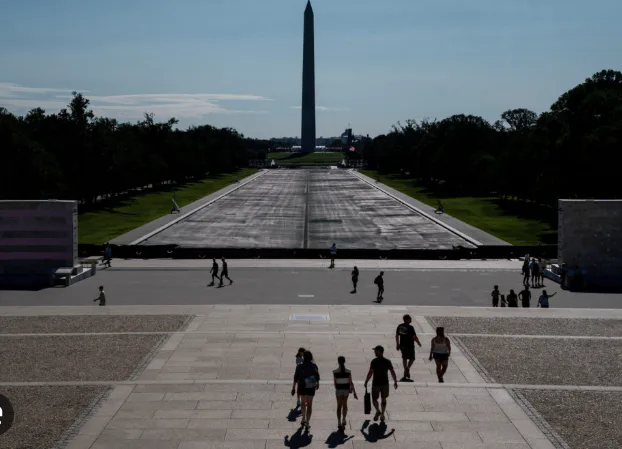
The decision by federal prosecutors in Washington D.C. to drop charges against an Olympian accused of vandalizing the Reflecting Pool in August 2024 has sparked controversy, particularly from former President Donald Trump. The case, which involved alleged damage to the pool's linoleum lining during a protest, unraveled due to significant admitted flaws in the prosecution's evidence and the handling of the investigation.
Prosecutors cited "construction flaws" and "botched" evidence collection as primary reasons for dismissing the charges. The defense successfully argued that the damage attributed to the Olympian was either minimal, pre-existing, or a result of the pool's own structural issues. This led to a situation where the prosecution could not confidently prove guilt beyond a reasonable doubt, prompting the decision to drop the case rather than proceed with a trial that was likely to fail.
The Background: A Protest and a Pool
In August 2024, during a period of heightened political activism, an Olympian was arrested and accused of vandalizing the National Mall's Reflecting Pool. The accusation centered on damage allegedly caused to the pool's lining, which prosecutors initially claimed was linoleum and had been significantly marred. The incident occurred during a protest, and the Olympian was identified through security footage.
The case quickly became a focal point for discussions about protest rights, prosecutorial discretion, and the integrity of evidence. Former President Trump publicly criticized the decision to drop the charges, asserting that the pool was indeed vandalized and that the Department of Justice was being too lenient. This ignited a public debate, amplified by media coverage, about the specifics of the evidence and the legal standards applied.
The Mechanism: How the Case Fell Apart
The collapse of the Reflecting Pool vandalism case was not a sudden event but a gradual unraveling of the prosecution's evidence. Several key factors contributed to this outcome:
- Admitted Construction Flaws: Prosecutors acknowledged that the Reflecting Pool itself suffered from structural issues. The lining, initially described as linoleum, was revealed to be more complex and prone to wear and tear. This made it difficult to definitively attribute any observed damage solely to the Olympian's actions.
- Evidence Collection Issues: The investigation and evidence collection process were described as "rushed and botched." This suggests potential mishandling of evidence, inadequate documentation, or a failure to follow proper forensic procedures. Such lapses can severely undermine the credibility of evidence in court.
- Defense Challenges: The defense team effectively challenged the prosecution's narrative. They argued that the alleged vandalism was either minor, already present, or a consequence of the pool's existing condition. The inability of prosecutors to counter these arguments with solid, unassailable evidence was crucial.
- Reasonable Doubt: Ultimately, the prosecution concluded that they could not meet the high legal standard of proving guilt beyond a reasonable doubt. When significant doubts exist about the evidence or the perpetrator's sole responsibility, prosecutors often opt to drop charges to avoid a public trial that would likely result in an acquittal and further damage public trust in the justice system.
Who is Affected and How, Concretely?
The individuals most directly affected are the Olympian who faced charges and the prosecutors who handled the case. The Olympian, whose name was not widely publicized in the initial reports, is no longer under threat of legal penalties for this incident. This allows them to continue their athletic career without the cloud of a pending criminal case.
Prosecutors involved in the case face scrutiny. The admission of "rushed and botched" evidence collection and "construction flaws" reflects poorly on the investigative and legal processes. This could lead to internal reviews or a general erosion of public confidence in the U.S. Attorney's Office for the District of Columbia's handling of sensitive cases.
Former President Donald Trump and his supporters are also impacted, as the case's dismissal contradicts their narrative of widespread vandalism and a weak justice system. Trump's public criticism of prosecutor Mary McCord, who was involved in the decision, highlights the political dimension of the event. For the public, the outcome raises questions about accountability, the effectiveness of law enforcement in protest situations, and the reliability of evidence presented in high-profile cases.
What Happens Next?
In the immediate aftermath, the dropped charges mean the legal proceedings against the Olympian related to the Reflecting Pool incident are concluded. However, the controversy surrounding the case is likely to persist. Former President Trump and his allies may continue to use the incident to criticize the Department of Justice and its leadership.
For the prosecutors, there may be internal reviews to assess how the evidence was handled and why the case was so weak. This could lead to changes in training or protocols for evidence management and case assessment, particularly in politically charged situations.
The long-term implications depend on whether similar cases in the future are handled with greater rigor or if the perceived leniency in this instance emboldens further acts of vandalism. If future cases involving damage to national monuments or public spaces are similarly dismissed due to flawed evidence, it could foster a perception that such actions carry little consequence. Conversely, if future investigations are more thorough and cases are prosecuted successfully, the Reflecting Pool incident may be seen as an anomaly.
The precedent set is that even in high-profile cases involving public figures and politically charged events, the integrity of evidence and adherence to legal standards remain paramount. The case underscores the importance of thorough investigation and the potential for prosecutorial missteps to derail justice.
Share this article
Send the story to readers on social or messengers.
Comments
Loading comments…

New Times Reporter Staff
Compiled and edited by the New Times Reporter newsroom from wire and publisher reporting, with the original source credited on every story.