Why did two firefighting helicopters collide in Greece?
The Background
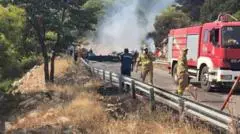
Greece has been battling severe wildfires across the country throughout the summer of 2026, exacerbated by prolonged heatwaves and dry vegetation. The incident occurred on Sunday, July 28, 2026, while two Bell helicopters were engaged in efforts to extinguish a large blaze on the Attica-Boeotia border, approximately 65 km west of Athens. Wildfires are a recurring challenge for Greece during its hot, dry summers, but the intensity and scale of this year's blazes have prompted widespread evacuations and significant resource deployment. The use of leased helicopters, including those operated by private pilots, is standard practice for Greece and other European nations facing similar fire crises. This year, France and Spain have also contended with major wildfires, with some near Madrid and Bordeaux now contained after significant evacuations.
The Mechanism
The collision involved two Bell helicopters operating in close proximity to each other during a firefighting mission. Video footage suggests that the rotor blades of one helicopter made contact with the propellers of the other aircraft. This impact caused the second helicopter to catch fire and crash into a ravine. The other helicopter, though damaged, managed to execute an emergency landing in an area with low vegetation. The Greek Fire Service protocol dictates that all Bell helicopters in the country are grounded following such an incident for investigation and safety checks. The survivors, a British pilot and a Greek fire service liaison officer from the second helicopter, were able to guide rescuers to the crash site after their emergency landing.
Who Is Affected and How
Two crew members, a Danish pilot and a Greek fire service liaison officer, lost their lives in the crash. Their families and colleagues are deeply affected by this tragic loss. The surviving British pilot and Greek co-ordinator sustained minor injuries and were hospitalized for observation. Their immediate families, though relieved they survived, will be concerned for their recovery. The Greek government, led by Prime Minister Kyriakos Mitsotakis, has expressed profound sorrow. The grounding of all Bell helicopters across Greece impacts the ongoing firefighting efforts, potentially reducing aerial capacity as crews assess the situation. Firefighters on the ground continue their "titanic battle" against the blazes in areas like Porto Germeno, Psatha, Fokida, Megara, and Kefalonia, facing increased pressure without the full support of aerial resources. The incident also raises broader questions about the safety protocols for aerial firefighting operations in challenging conditions.
What Happens Next
An investigation into the precise cause of the mid-air collision will be conducted by Greek aviation authorities, likely in conjunction with the helicopter manufacturers and leasing companies. The grounding of Bell helicopters will remain in effect until the investigation provides clarity and any necessary safety recommendations are implemented. This could lead to a temporary reduction in Greece's aerial firefighting capabilities, potentially prolonging the duration and increasing the difficulty of controlling existing wildfires. If the investigation reveals systemic safety issues or operational errors, it could lead to stricter regulations for aerial firefighting missions, including revised flight protocols, improved communication systems, or enhanced pilot training requirements. The outcome of the investigation will determine the future operational status of the grounded fleet and could influence procurement decisions for future firefighting aircraft.
Share this article
Send the story to readers on social or messengers.
Comments
Loading comments…

New Times Reporter
Editorial coverage from New Times Reporter.