Why do migrants risk Channel crossings in unsafe boats?
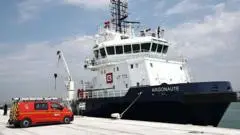
Migrants attempting to cross the English Channel in small boats are often driven by a lack of safe alternatives and the desperation to reach safety or economic opportunity, even when faced with extreme risks. The incident on Tuesday morning, where over 150 migrants were rescued after their boat caught fire while en route to the UK, highlights the perilous nature of these journeys. Despite the dangers, the flow of people seeking to cross continues, fueled by complex global factors including conflict, persecution, and poverty, and often facilitated by criminal smuggling networks.
These crossings have become a primary route for irregular migration into the UK. Between January 1 and August 1, 2026, 14,526 people crossed the Channel in small boats, a figure that, while down 43% from the same period the previous year, still represents a significant number. The average number of people per boat has also more than doubled since 2021, increasing overcrowding and risk. Many of those arriving claim asylum, a right protected under international law, meaning they can remain in the UK while their applications are processed. In the year to March 2026, small boat arrivals constituted 42% of all asylum applications.
The Background: A Perilous Journey for Safety
The English Channel has become a focal point for irregular migration into the UK, a trend that intensified significantly after 2020. The journeys are undertaken by individuals fleeing a range of circumstances, including war, political instability, and economic hardship in their home countries. For many, the crossing is a last resort after exhausting other avenues for seeking safety or a better life. The routes are often orchestrated by organized criminal gangs who exploit the vulnerability of migrants, charging substantial sums for passage and providing unseaworthy vessels.
The UK government, in conjunction with French authorities, has sought to deter these crossings through various measures. A significant agreement, struck in April 2026, saw the UK commit £662 million (773 million euros) over three years to France. This deal included provisions for increased surveillance, such as drones and helicopters, and the deployment of French police to patrol beaches. Despite these efforts, the fundamental drivers of migration remain, leading individuals to continue attempting the dangerous crossing. The number of arrivals has fluctuated, with recent periods showing a decrease compared to previous years, but the inherent risks persist.
The Mechanism: How the Crossings Happen
Migrants typically embark on their journey from the coast of northern France, often from clandestine assembly points. They board small, inflatable dinghies or rigid-hulled inflatable boats (RHIBs), which are frequently overcrowded and lack adequate safety equipment. These vessels are generally powered by a single outboard motor, which can be unreliable and prone to failure.
The crossing itself is fraught with danger. The English Channel is one of the world's busiest shipping lanes, presenting a constant risk of collision with large commercial vessels. Weather conditions can change rapidly, turning calm seas into hazardous ones. The fragility of the boats means they can easily be swamped by waves or suffer structural damage. In the incident on Tuesday morning, the engine of one such boat caught fire, leading to a rapid deterioration of the vessel's integrity and necessitating a rescue operation involving both French and UK maritime authorities.
When migrants are detected in distress, rescue efforts are coordinated between French and British coastguards and border forces. Vessels involved in the Tuesday rescue included French patrol boats, the RNLI Eastbourne lifeboat, and UK Border Force vessels. Despite the presence of rescue services, migrants sometimes refuse assistance if they believe it will lead to their return to France, opting to continue towards the UK unless their situation becomes critically dangerous. This was observed in the Tuesday incident, where some migrants initially refused aid.
Who is Affected and How
The primary individuals affected are the migrants themselves, who face life-threatening conditions and exploitation by smuggling gangs. The incident on Tuesday, where 157 people were rescued after their boat's engine caught fire, underscores the direct physical danger. While no injuries were reported in this specific case, the potential for fatalities is high, with 84 deaths recorded during Channel crossings in 2024. Beyond the immediate peril, migrants who reach the UK are often subject to lengthy asylum processes. Furthermore, some individuals arriving by small boat are identified as potential victims of human trafficking or modern slavery, a group that included at least 2,000 people detected between January and December 2025.
Beyond the migrants, the crossings place a strain on the resources of both French and UK authorities responsible for search and rescue, border control, and processing asylum claims. The UK government has allocated substantial funding, such as the £662 million deal with France, to manage and deter these crossings. Politicians and public figures, including Prime Minister Andy Burnham and opposition leaders, are continually engaged in debates and policy formulation regarding migration control, with differing views on how to address the issue effectively and humanely. The public discourse is often polarized, reflecting societal concerns about border security, humanitarian responsibilities, and the economic impact of immigration.
What Happens Next
The immediate aftermath of the Tuesday incident saw the 157 rescued migrants taken to Boulogne-sur-Mer for processing. UK Border Security Minister Anna Turley stated that all individuals on board would be returned to France, consistent with current bilateral agreements and UK policy on illegal crossings. This reflects a continuing effort by both nations to deter further attempts.
Looking ahead, the UK government is likely to continue its strategy of working with French authorities to disrupt smuggling networks and prevent departures. The effectiveness of this strategy hinges on sustained cooperation and sufficient funding, as outlined in the multi-year deal. However, the underlying pressures driving migration—conflict, poverty, and persecution—are unlikely to diminish in the short term. This suggests that small boat crossings, though subject to fluctuations, will remain a feature of the migration landscape.
For the number of crossings to significantly decrease, several factors would need to align. These could include a substantial improvement in conditions in migrants' countries of origin, the establishment of more accessible and efficient legal routes for asylum seekers to reach the UK, or a more robust international effort to combat the root causes of displacement. Conversely, if geopolitical instability or economic hardship worsens in key source regions, or if deterrence measures become less effective, the numbers could potentially rise again, despite the inherent dangers. The long-term trajectory will depend on a complex interplay of international relations, economic conditions, and the effectiveness of implemented border policies.
Share this article
Send the story to readers on social or messengers.
Comments
Loading comments…

New Times Reporter
Editorial coverage from New Times Reporter.