Why do narwhals have tusks? New X-ray findings reveal sensory function
The Sensory Tusk
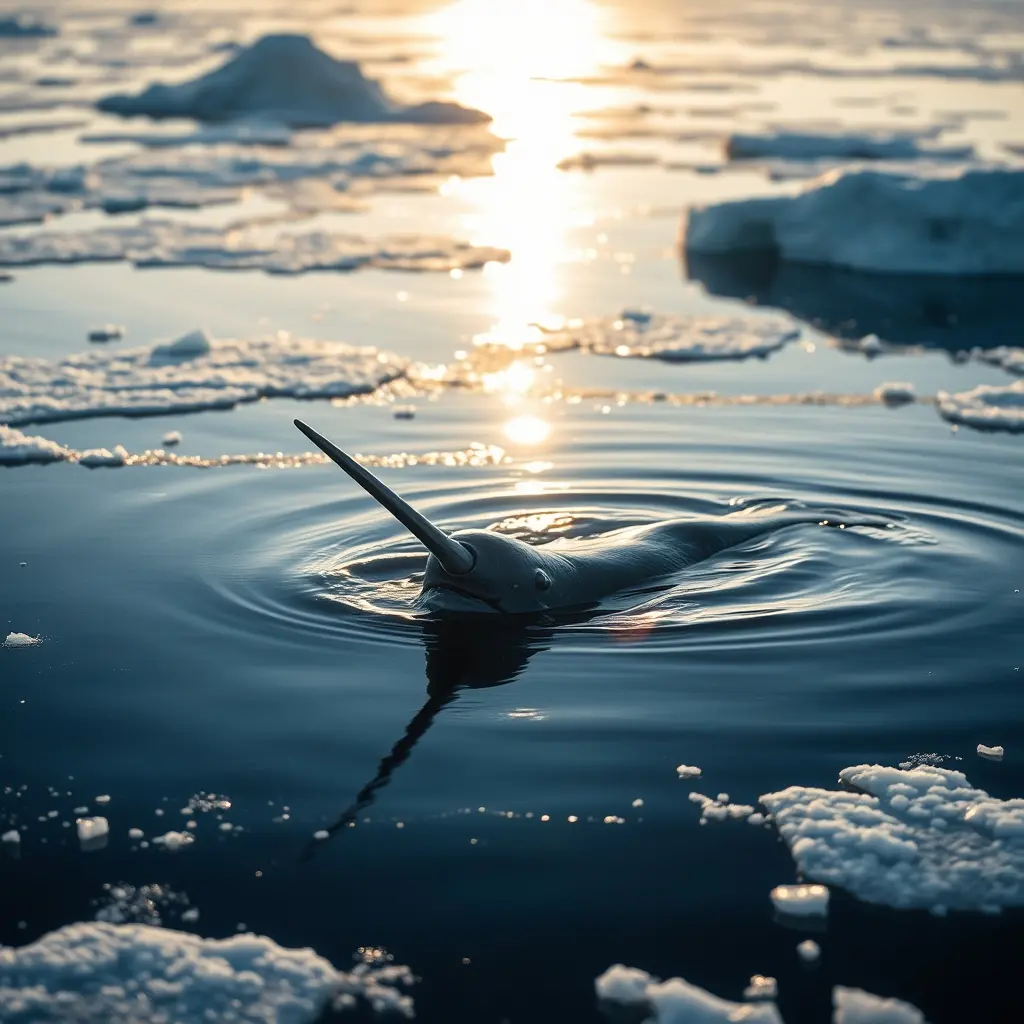
Narwhals, the Arctic whales often called "unicorns of the sea," possess a unique, spiralled tusk that has long baffled scientists. While it was previously thought to be a secondary sexual characteristic, primarily for display or combat between males, new research has revealed a surprising sensory function. X-ray analysis of narwhal tusks has shown that they are not solid ivory but are riddled with nerve pathways, suggesting they act as sophisticated sensory organs, potentially detecting changes in water temperature, pressure, and salinity.
This discovery fundamentally shifts our understanding of the tusk's purpose. Instead of a mere ornamental or aggressive appendage, the tusk appears to be a vital tool for navigating and understanding the narwhal's environment. The presence of millions of nerve endings, similar to those found in a tooth's dentin, indicates that the tusk can transmit information directly to the whale's brain, allowing for a detailed sensory map of its surroundings. This sensory capability could be crucial for foraging, mating, and avoiding predators in the challenging Arctic waters.
The Tusk's Anatomy and Function
The narwhal tusk is actually an elongated canine tooth that grows through the upper lip, typically only in males, though some females also develop them. Its helical structure is distinctive, and its internal composition, as revealed by X-rays, is key to its newly understood function. The tusk is porous, with a pulp cavity extending from the base to near the tip, and it contains a dense network of nerve fibres.
These nerves are believed to be sensitive to changes in the surrounding water. Researchers theorise that the tusk can detect subtle variations in temperature, pressure, and salinity. This would provide the narwhal with a constant stream of data about its environment, helping it locate food sources, identify potential mates, and navigate through ice-covered seas. The tusk's sensitivity might also play a role in social interactions, perhaps allowing narwhals to gauge the physiological state of other whales through contact.
Who is Affected and How
This scientific revelation directly impacts marine biologists, conservationists, and anyone interested in Arctic ecosystems. For scientists, it opens new avenues of research into narwhal behaviour, communication, and adaptation to climate change. Understanding the tusk's sensory role could provide insights into how narwhals perceive their world and how they might respond to the rapid environmental shifts occurring in the Arctic.
For conservation efforts, this new knowledge is critical. Narwhals are particularly vulnerable to changes in their habitat due to climate change, including sea ice melt and increased human activity. If their tusks are indeed vital sensory organs, then any disruption to these tusks, whether through pollution, injury, or changes in water chemistry, could have severe consequences for their survival. Protecting narwhal populations now requires a deeper understanding of their unique biological adaptations and the environmental factors that could threaten them.
What Happens Next
Future research will likely focus on further validating the sensory function of the narwhal tusk. Scientists aim to conduct more detailed physiological studies, potentially using non-invasive techniques, to map the nerve pathways and understand the precise range of stimuli the tusk can detect. Comparative studies with other toothed whales might also shed light on the evolutionary development of such specialised sensory organs.
Furthermore, researchers will be keen to observe narwhal behaviour in controlled environments or through advanced tracking technologies to see how they utilise their tusks in real-time. Understanding how these sensory inputs are processed and acted upon will be the next frontier. If the sensory hypothesis holds true, conservation strategies may need to be re-evaluated to account for the tusk's crucial role in narwhal survival, particularly in the face of increasing anthropogenic pressures on the Arctic environment.
Share this article
Send the story to readers on social or messengers.
Comments
Loading comments…

New Times Reporter
Editorial coverage from New Times Reporter.