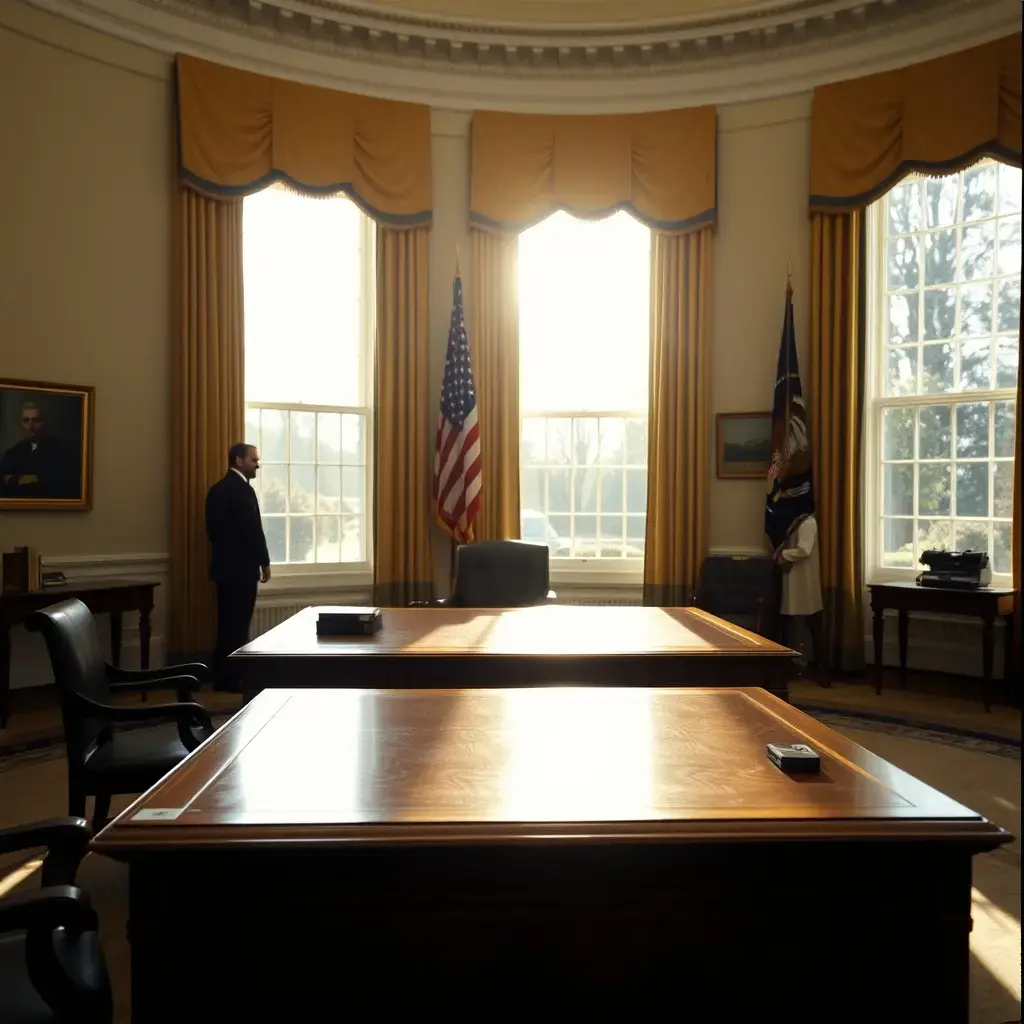
How can a President end birthright citizenship?
President Trump has signed executive orders aimed at ending birthright citizenship for children born in the U.S. to non-citizen parents, and curbing "birth tourism." These actions seek to challenge the long-standing interpretation of the 14th Amendment, which has been understood to grant citizenship to virtually anyone born on American soil. The orders are expected to face immediate legal challenges, with critics arguing they exceed presidential authority and are unconstitutional.
The administration's stated goal is to deter individuals from entering the U.S. solely to give birth and obtain U.S. citizenship for their children, a practice often referred to as "birth tourism." This move is part of a broader effort to tighten immigration controls and reassert national sovereignty over who becomes a citizen. The legal and practical implications of these orders are significant, potentially impacting millions of families and raising fundamental questions about the definition of American citizenship.
The Background: A Constitutional Quandary
The U.S. Constitution's 14th Amendment, ratified in 1868, states: "All persons born or naturalized in the United States, and subject to the jurisdiction thereof, are citizens of the United States and of the State wherein they reside." For over a century, this clause has been widely interpreted by courts and legal scholars to mean that any child born within U.S. territory, regardless of their parents' immigration status, is automatically a U.S. citizen. This principle of jus soli, or "right of soil," is a cornerstone of American nationality.
However, the precise scope of "subject to the jurisdiction thereof" has been a subject of debate. Some legal interpretations, particularly those favored by the Trump administration, suggest that individuals not legally present in the U.S. or subject to its laws in a permanent sense might not be fully "subject to its jurisdiction." This argument has been used to justify executive actions that seek to redefine or limit the application of birthright citizenship, particularly in cases involving parents who are in the country unlawfully or without a clear intent to remain permanently.
Previous attempts to challenge birthright citizenship have largely failed in the courts. The Supreme Court case United States v. Wong Kim Ark (1898) affirmed that a child born in the U.S. to Chinese parents who were legal residents but not citizens was indeed a U.S. citizen. While the current executive orders aim to circumvent this by administrative action rather than legislative change, they are likely to encounter similar legal scrutiny.
The Mechanism: Executive Action and Legal Hurdles
President Trump's executive orders are designed to instruct federal agencies, primarily the State Department and the Department of Homeland Security, to alter their policies and practices regarding the granting of citizenship. For the State Department, this could mean denying visas to pregnant individuals or those perceived to be traveling for the purpose of childbirth. For Homeland Security, it could involve stricter enforcement and documentation requirements for individuals seeking to enter the U.S., potentially leading to the denial of entry or immediate deportation for pregnant women.
The orders do not directly amend the Constitution but rather seek to reinterpret and enforce existing immigration laws and regulations in a manner that disfavors birthright citizenship for children of non-citizens. The administration's legal strategy relies on the argument that the President has broad authority to direct immigration policy and enforce national security interests. The State Department, for example, could be directed to classify births in the U.S. to non-resident parents as a reason for visa denial, effectively preventing such individuals from entering the country with the intent to give birth.
However, the constitutionality of these orders is highly questionable. Critics, including the American Civil Liberties Union (ACLU), argue that such a sweeping reinterpretation of the 14th Amendment through executive action is beyond the President's power and would require a constitutional amendment or a new Supreme Court ruling. Legal experts anticipate that any attempt to deny citizenship based on parental status would be challenged in federal courts, likely leading to a protracted legal battle that could ultimately reach the Supreme Court.
Who is Affected and How, Concretely?
These executive orders would most directly affect individuals who are not U.S. citizens but are residing in the United States, whether legally or unlawfully, and are pregnant or planning to become pregnant. Children born to these individuals in the U.S. could be denied citizenship, impacting their legal status and future opportunities. This could create a class of stateless children born on American soil, unable to claim citizenship from either the U.S. or their parents' country of origin.
Families already living in the U.S. could face immense uncertainty. If a child is denied citizenship, they would not be eligible for Social Security benefits, public schooling (though this is often provided regardless of status), or the right to work legally in the U.S. upon reaching adulthood. This could lead to families being separated, as parents who are not citizens might be deported, leaving their U.S.-born, non-citizen children behind or attempting to take them to a country where they have no ties.
Furthermore, the orders could impact the perception of the U.S. as a welcoming nation and could have economic repercussions. "Birth tourism" itself, while a concern for the administration, is a relatively small phenomenon compared to the broader implications for families and communities. The broader impact would be on the legal status and integration of millions of people, potentially creating a permanent underclass of individuals born in the U.S. but denied its fundamental rights.
What Happens Next, and What Would Have to Be True?
The immediate next step is the expected filing of lawsuits challenging the executive orders. Organizations like the ACLU have already stated their intention to fight these actions in court. For the orders to be upheld, a court would need to agree with the administration's interpretation of the 14th Amendment, a significant departure from established legal precedent. This would likely involve a lengthy legal process, potentially spanning several years and multiple court levels.
If the courts rule against the executive orders, they would be rendered ineffective, and birthright citizenship would continue to be applied as it has been for over a century. For the orders to be implemented as intended, the judiciary would need to fundamentally alter its understanding of the 14th Amendment, or Congress would need to pass legislation clarifying the scope of citizenship, which is unlikely given current political divisions. Alternatively, the administration might seek to appoint judges who are more amenable to its legal theories.
In the long term, the debate over birthright citizenship could lead to a constitutional amendment, although this is a complex and politically challenging process requiring broad consensus. Without such an amendment or a definitive Supreme Court ruling in favor of the administration's interpretation, the executive orders are likely to be seen as a temporary measure, subject to reversal by future administrations or invalidated by the courts.
Share this article
Send the story to readers on social or messengers.
Comments
Loading comments…

New Times Reporter
Editorial coverage from New Times Reporter.