How did adult T. rex move? New trackway offers clues
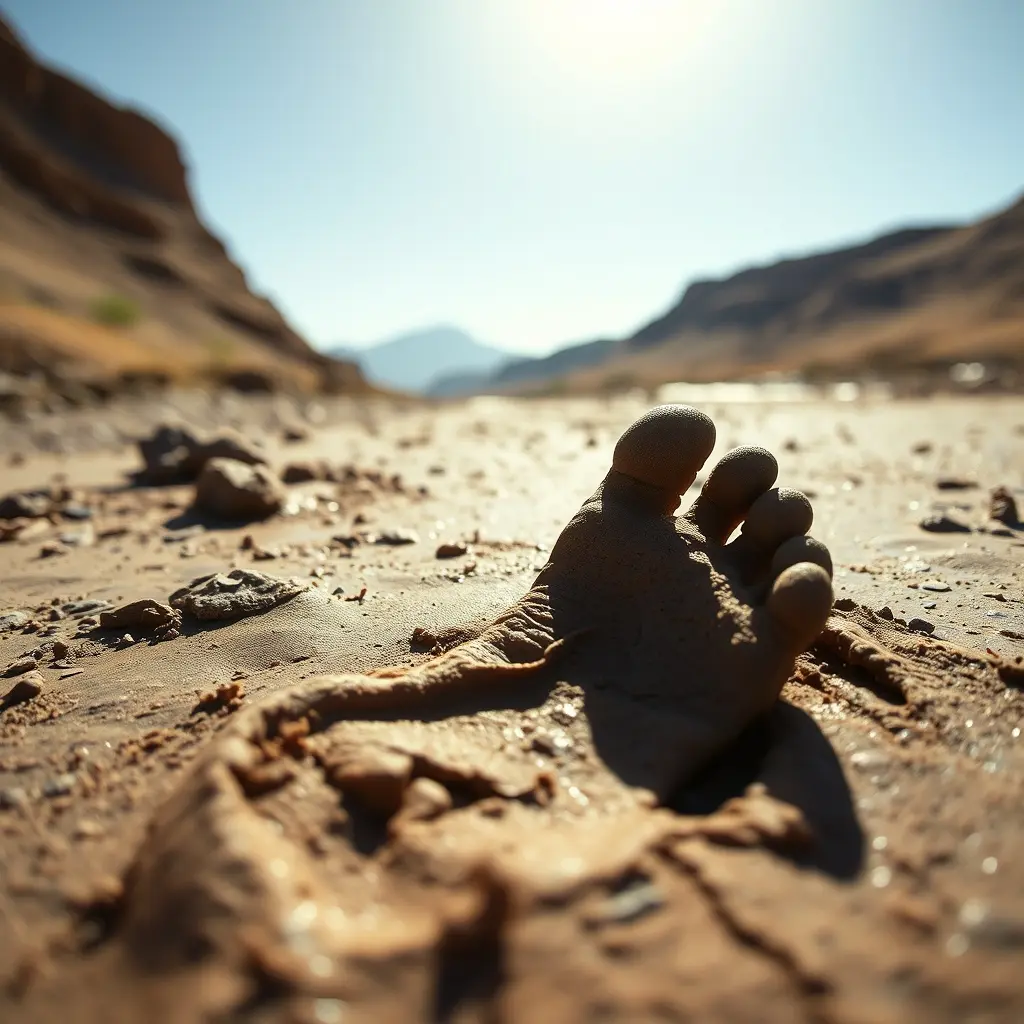
The discovery of the first-ever adult Tyrannosaurus rex trackway in North Dakota's Theodore Roosevelt National Park provides unprecedented insights into the locomotion of the iconic predator. Previously, understanding of T. rex movement relied heavily on isolated footprints and skeletal analyses, which offered limited information about gait, stride length, and how these massive animals navigated their environment. This new evidence, documented in September 2026, offers a more dynamic picture, revealing how a fully grown T. rex walked and potentially interacted with its surroundings.
The trackway consists of multiple, distinct footprints left by a single adult T. rex over a period of time, allowing paleontologists to study the sequence of steps. This is crucial for understanding biomechanics. Unlike single footprints which can be distorted or difficult to interpret in isolation, a trackway preserves the pattern of movement. Researchers can measure the distance between footprints (stride length) and the width of the trackway to infer hip height and leg length, and subsequently, walking speed and posture. The preservation of this trackway allows for a more comprehensive analysis of how this apex predator moved through its Cretaceous ecosystem.
The Background: What We Knew About T. rex Movement Before
For decades, the locomotion of Tyrannosaurus rex has been a subject of intense scientific debate. Early reconstructions often depicted T. rex as a slow, bipedal animal, perhaps similar to a modern-day ostrich or emu, but on a much larger scale. Fossilized footprints, though numerous, have often been isolated specimens, making it challenging to reconstruct a complete gait. The largest T. rex footprint ever found, for instance, measured 32 inches long, but without a series of prints, its significance for understanding movement patterns was limited.
Skeletal studies have provided some clues. The powerful hind limbs, large tail for balance, and relatively short forelimbs suggest a bipedal stance. However, the exact speed and efficiency of its movement remained speculative. Computer models and biomechanical analyses have produced a range of estimated speeds, from a brisk walk of around 10-15 miles per hour to a faster trot. The lack of complete trackways from adult individuals meant that direct evidence of their walking style and speed was missing, leaving many questions unanswered about how T. rex hunted, migrated, or simply traversed its territory.
The Mechanism: How the Trackway Reveals T. rex Gait
Trackways are essentially fossilized records of an animal's passage, capturing a series of footprints left in soft sediment that later hardened into rock. The newly discovered adult T. rex trackway in North Dakota is significant because it preserves multiple, sequential prints from a single individual. Paleontologists can analyze several key features within such a trackway to deduce movement patterns:
- Stride Length: The distance between successive footprints of the same foot. A longer stride suggests faster movement or a longer leg.
- Step Length: The distance between the footprint of one foot and the next footprint of the opposite foot. This, combined with stride length, helps determine gait (e.g., whether it walked with a consistent alternation of legs).
- Trackway Width: The distance between the left and right footprints. This provides information about the animal's stance and hip width.
- Footprint Morphology: The shape and depth of individual prints can indicate the animal's weight distribution and how its feet interacted with the substrate. For adult T. rex, the prints would show three large, forward-facing toes and a smaller, often less distinct, rear-facing toe.
By measuring these parameters, scientists can create a more accurate picture of the T. rex's gait, estimating its walking speed and posture. The consistency or variation in these measurements across the trackway can also reveal if the animal was moving at a steady pace, accelerating, or changing direction, offering a dynamic snapshot of its behavior.
Who is Affected and How, Concretely
This discovery directly impacts the scientific community, particularly paleontologists specializing in dinosaurs and vertebrate paleontology. For them, it's a treasure trove of new data that can refine existing theories and open new avenues of research into dinosaur biomechanics and paleoecology. Museums and educational institutions will benefit from more accurate reconstructions and educational materials about T. rex.
For the general public, the impact is more indirect but significant. It enhances our understanding and appreciation of these prehistoric giants. Accurate scientific information can dispel myths and provide a more nuanced view of dinosaur life, moving beyond the purely sensational. This could influence educational curricula, documentaries, and popular media representations of T. rex, making them more scientifically grounded. Furthermore, it contributes to the broader understanding of evolution and the history of life on Earth, fostering a greater sense of wonder and connection to the natural world.
What Happens Next, and What Would Have to Be True
The immediate next steps involve detailed analysis and publication of the findings. Paleontologists will meticulously measure and document every aspect of the trackway, potentially using 3D scanning technology to create digital models. Comparative studies with other dinosaur trackways and skeletal remains will be crucial.
For this discovery to significantly alter our understanding, several things would need to be true:
- High-Quality Preservation: The trackway must be exceptionally well-preserved, allowing for precise measurements and clear identification of individual prints and their sequence. If the prints are heavily eroded or incomplete, their scientific value will be diminished.
- Confirmation of Species: While the size and morphology strongly suggest adult T. rex, further analysis might be needed to definitively rule out other large theropods if any ambiguity exists. However, given the location and typical T. rex fossils found in the region, this is less likely to be a major hurdle.
- Further Discoveries: To solidify these findings, similar adult T. rex trackways would need to be discovered in other locations. A single trackway, while important, represents a snapshot. Multiple trackways would provide a more robust dataset for understanding variation in gait and speed.
If these conditions are met, the findings could lead to revised estimates of T. rex's agility, speed, and even its hunting strategies, potentially changing how we visualize this formidable predator in textbooks and popular culture for years to come.
Share this article
Send the story to readers on social or messengers.
Comments
Loading comments…

New Times Reporter
Editorial coverage from New Times Reporter.