How did the SpaceX rocket crash create a crater on the Moon?
The Background: A Rocket's Final Journey
In February 2024, an inert upper stage of a SpaceX Falcon 9 rocket, which had been in orbit around Earth for years, was on a collision course with the Moon. This particular rocket stage, designated B1048, had been launched in 2015 and, after completing its mission, was left in a decaying orbit. Without the means to control its trajectory, it was destined to eventually impact a celestial body. The Moon, being the closest and most significant gravitational influence, became its final destination. The event marked the first time an uncontrolled rocket stage intentionally impacted the lunar surface, raising questions about the long-term implications of space debris.
The Mechanism: Impact and Crater Formation
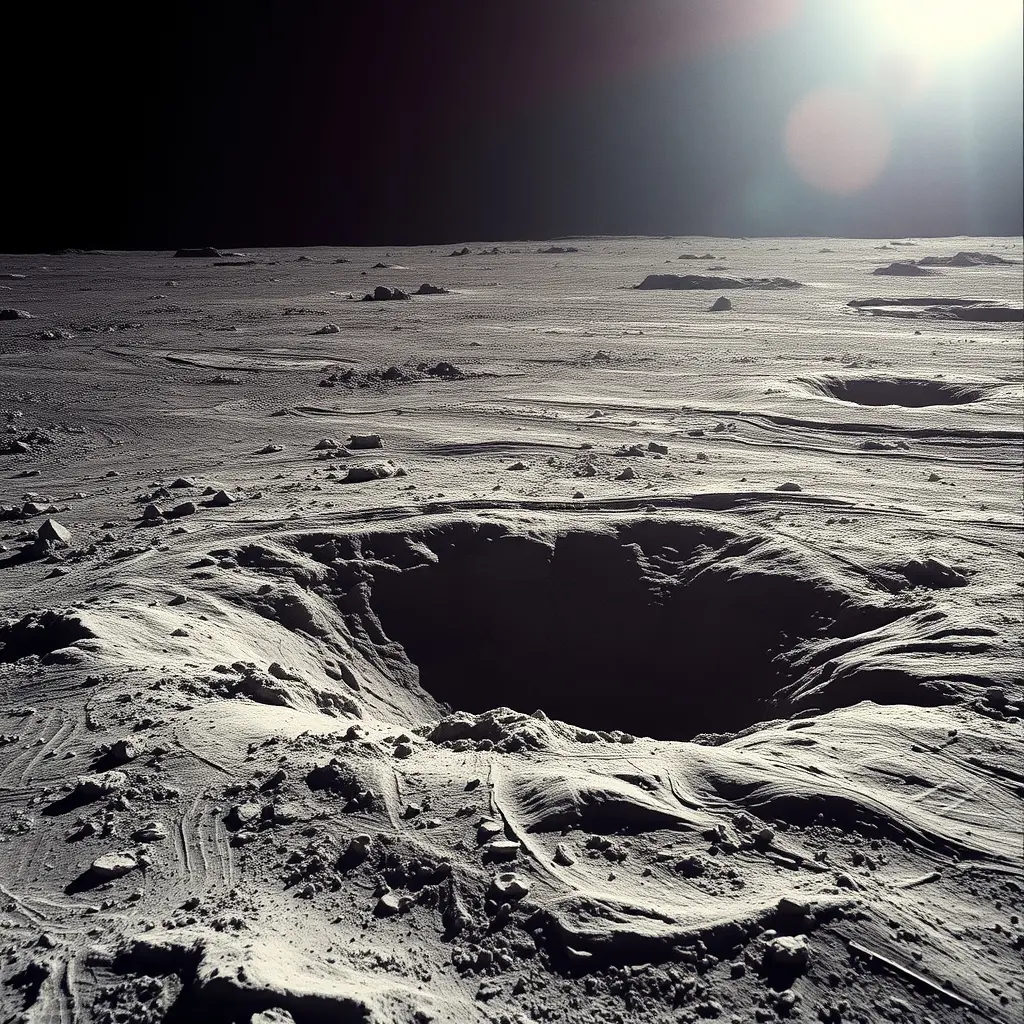
NASA's Lunar Reconnaissance Orbiter (LRO) captured images of the impact site, revealing the consequences of the Falcon 9 stage's collision. The rocket stage, weighing several tons, struck the lunar surface at an estimated speed of over 5,500 miles per hour. The impact gouged out a crater approximately 60 feet (18 meters) in diameter. Notably, the impact was not symmetrical; one side of the crater is shallower and wider, while the other is deeper and narrower. This asymmetry is attributed to the rocket stage's configuration: its massive engine on one end and its empty fuel tanks on the other, causing it to tumble end-over-end as it approached impact. The force of the collision ejected lunar soil and rock, creating the visible scar on the Moon's surface.
Who is Affected and How: Scientific and Environmental Implications
The primary entities affected are the scientific community and those concerned with the preservation of celestial environments. For scientists, the impact provides a unique opportunity to study the effects of a high-velocity impact on lunar regolith, offering insights into cratering processes. The LRO's detailed imagery allows for precise measurements and analysis of the ejected material. Environmentally, the event highlights the growing problem of space debris. While this particular rocket stage was inert, the uncontrolled descent of large objects in space poses potential risks. Future missions could be affected by the accumulation of debris in lunar orbit or on the surface. The long-term 'Magnificent Desolation' of the Moon now bears a man-made mark, prompting discussions about responsible space exploration and the management of orbital and lunar junk.
What Happens Next: Monitoring and Future Debris
NASA's LRO will continue to monitor the impact site, observing any changes that may occur over time due to subsequent micrometeorite impacts or thermal stresses. The data gathered will contribute to a better understanding of lunar geology and impact dynamics. The incident also serves as a stark reminder for space agencies and private companies like SpaceX to develop more robust strategies for de-orbiting or safely disposing of spent rocket stages. Future missions will likely face increased scrutiny regarding debris mitigation plans. The possibility of other defunct spacecraft or rocket bodies on similar trajectories means that such impacts, though rare, could become more frequent without proactive measures. The development of international guidelines and technologies for space debris removal will be crucial in preventing future, potentially more damaging, collisions.
Share this article
Send the story to readers on social or messengers.
Comments
Loading comments…

New Times Reporter
Editorial coverage from New Times Reporter.