How will the Nancy Grace Roman Space Telescope find 100,000 new worlds?
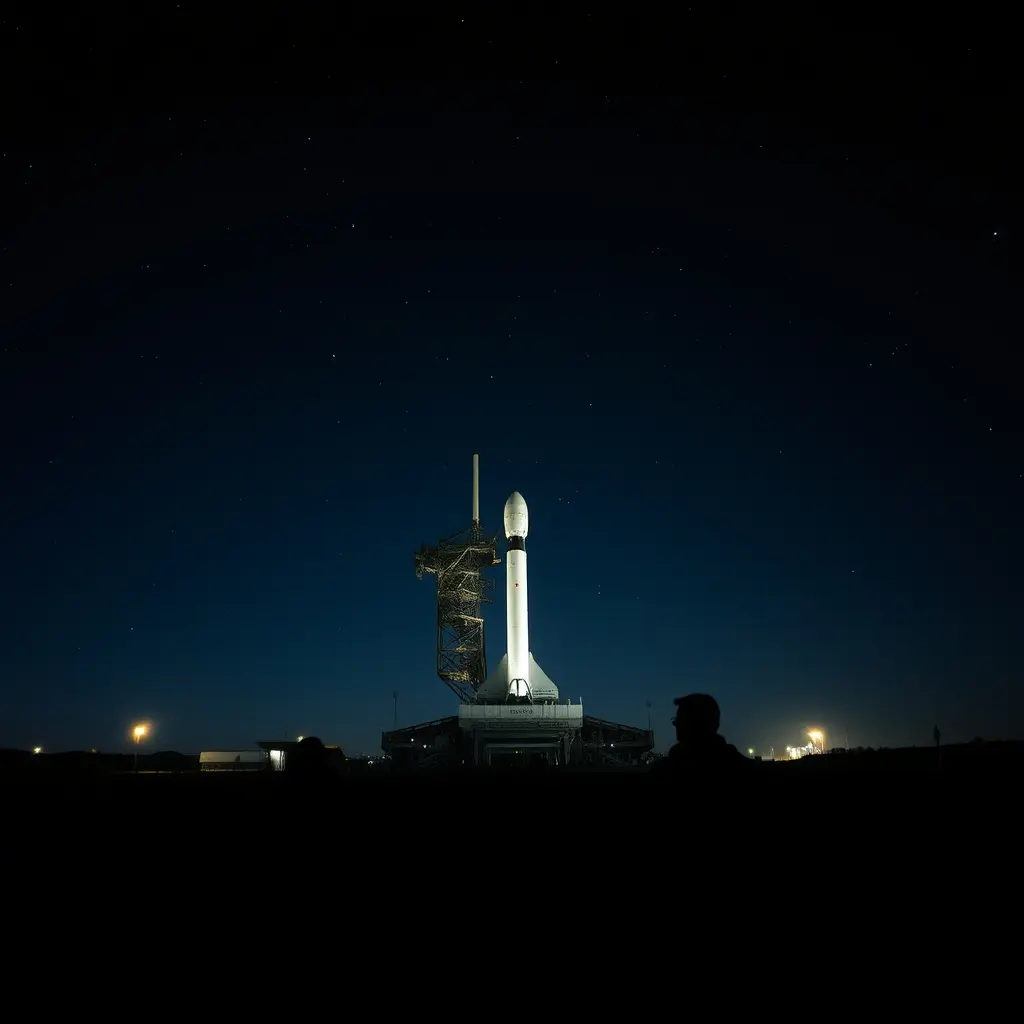
The Nancy Grace Roman Space Telescope, scheduled for launch on August 30, 2026, is poised to revolutionize exoplanet discovery. Its mission is to identify approximately 100,000 new worlds, a number that dwarfs the combined discoveries of all previous planet-hunting observatories. This leap in capability is largely due to its advanced Wide Field Instrument, which can capture images of the sky 100 times larger than those from the Hubble Space Telescope in a single observation. This expansive view allows Roman to survey vast areas of space much more efficiently, significantly accelerating the pace of exoplanet detection.
The Roman Space Telescope's primary goal is to address fundamental questions in cosmology and astrophysics, with exoplanet science being a major component. It will employ several techniques to find these distant worlds. One key method is microlensing, which detects planets by observing how their gravity bends and magnifies the light from a background star. This technique is particularly adept at finding planets that are far from their stars, or even rogue planets that do not orbit any star. Additionally, Roman will use transit photometry, observing the slight dimming of a star as a planet passes in front of it, and direct imaging, capturing actual pictures of exoplanets. The sheer volume of sky it can observe means it will stumble upon many more of these events than ever before.
The Background: A Legacy of Discovery
Since the dawn of exoplanet research in the 1990s, astronomers have sought to understand the diversity of planetary systems in our galaxy. Early discoveries, such as 51 Pegasi b in 1995, were often large, gas-giant planets orbiting close to their stars, challenging existing theories of planet formation. Subsequent missions, like NASA's Kepler Space Telescope, which operated from 2009 to 2018, dramatically expanded our catalog of known exoplanets, revealing that planets are common, with most stars likely hosting at least one. Kepler discovered thousands of exoplanets primarily using the transit method. The Transiting Exoplanet Survey Satellite (TESS), launched in 2018, has continued this work, surveying brighter, closer stars. However, these missions have limitations: Kepler's field of view was relatively small, and TESS focuses on nearby stars, potentially missing planets in more distant or different types of systems. Roman aims to complement and surpass these efforts by offering an unprecedented combination of wide-field imaging and advanced detection capabilities.
The Mechanism: How Roman Will Find Planets
The Nancy Grace Roman Space Telescope employs a suite of instruments and observational techniques to achieve its ambitious exoplanet census. At its heart is the Wide Field Instrument (WFI), a camera with a field of view so large it could encompass approximately 100 times the area of the Hubble Space Telescope's view in a single snapshot. This allows Roman to survey vast swathes of the Milky Way galaxy, increasing the statistical significance of its findings. The telescope will utilize three primary methods for exoplanet detection:
- Gravitational Microlensing: This is Roman's most powerful tool for discovering planets, especially those located far from their host stars or even free-floating. When a foreground star with planets passes in front of a background star, the foreground star's gravity acts like a lens, bending and magnifying the light from the background star. The presence of planets around the foreground star causes additional, smaller blips in the magnified light curve. Roman's ability to monitor millions of stars continuously makes it ideal for capturing these rare microlensing events.
- Transit Photometry: Similar to Kepler and TESS, Roman will detect planets by observing the slight, periodic dip in a star's brightness as a planet crosses in front of it from our perspective. The WFI's wide field of view allows it to monitor thousands of stars simultaneously for these transits.
- Direct Imaging: While more challenging, Roman is also designed to directly capture images of exoplanets, particularly larger planets orbiting farther from their stars. This is achieved using advanced coronagraphy, which blocks out the overwhelming light of the host star, allowing the fainter light of the planet to be detected.
Who is Affected and How
The scientific community, particularly astronomers and astrophysicists, stands to be profoundly affected by the Roman Space Telescope's discoveries. The identification of 100,000 new exoplanets will provide an unprecedented dataset for statistical analysis, allowing researchers to refine models of planet formation and evolution. This could lead to a more definitive understanding of the conditions under which habitable planets form and whether life might exist elsewhere in the universe. For the general public, the mission offers a renewed sense of wonder and connection to the cosmos. The potential discovery of Earth-like planets or even signs of biosignatures would be a paradigm-shifting event, impacting humanity's perception of its place in the universe. Furthermore, the technological advancements developed for Roman, such as its high-sensitivity camera and data processing techniques, could find applications in other fields, from medical imaging to Earth observation.
What Happens Next
Following its launch on August 30, 2026, the Nancy Grace Roman Space Telescope will undergo a period of commissioning and calibration. This phase involves testing all instruments and ensuring they are functioning optimally. Once operational, the telescope will begin its primary science mission, which is expected to last for at least five years, with potential for extension. The data collected will be made publicly available, allowing scientists worldwide to analyze the findings. The discoveries will fuel ongoing research into exoplanet atmospheres, compositions, and potential habitability. If Roman's initial observations confirm its expected capabilities, the rate of exoplanet discovery could increase exponentially. Future missions might then be designed to follow up on the most promising candidates identified by Roman, perhaps with even more advanced instruments capable of detailed atmospheric analysis. The success of Roman could also influence funding for future large-scale space observatories, demonstrating the value of broad, efficient sky surveys in answering fundamental scientific questions.
Share this article
Send the story to readers on social or messengers.
Comments
Loading comments…

New Times Reporter
Editorial coverage from New Times Reporter.