'Saturday night sonic booms': SpaceX launch to shake Central Florida skies
The Background: Satellite Constellations and Space Access
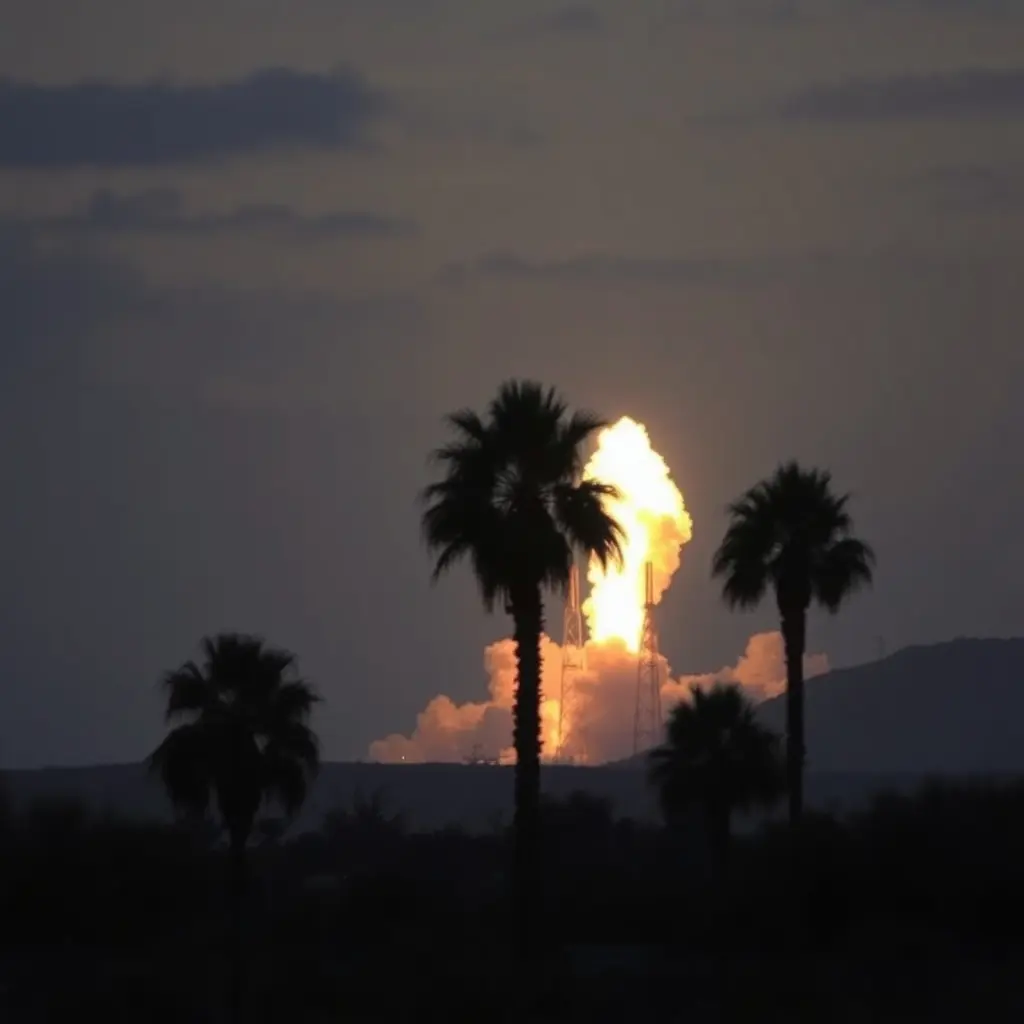
SpaceX's recent launch from Cape Canaveral is part of a broader trend of increasing satellite deployment and the commercialization of space. This particular mission, designated USSF-366, involved deploying replenishment satellites for Globalstar, a company that provides mobile satellite communication services. These services are crucial for areas with limited terrestrial network coverage, including maritime, aviation, and remote land operations.
The increasing number of satellite launches, by companies like SpaceX, Amazon (with its Project Kuiper), and others, is driven by the growing demand for global internet connectivity, advanced surveillance, and other data-dependent services. This surge in activity, however, also brings with it potential environmental concerns and the need for robust space traffic management to avoid collisions.
The Mechanism: How Sonic Booms Happen
A sonic boom is the sound associated with the shock waves created when an object, such as a rocket or aircraft, travels through the air at supersonic speeds – faster than the speed of sound. As the object accelerates past Mach 1 (approximately 767 miles per hour or 1,235 kilometers per hour at sea level), it compresses the air in front of it, creating pressure waves. These waves cannot get out of the way fast enough and merge into a single shock wave.
When this shock wave reaches an observer on the ground, it causes a sudden change in air pressure, perceived as a loud noise, often described as a "boom." For rocket launches, the most significant sonic booms typically occur during the ascent phase when the rocket is accelerating through the sound barrier. The intensity and reach of the boom depend on factors like the rocket's size, speed, altitude, atmospheric conditions, and the observer's distance from the flight path.
Who is Affected and How
Residents in Central Florida, particularly those within a certain radius of the Cape Canaveral launch site, are the primary individuals affected by the sonic booms. Areas that might experience these audible effects include Brevard County and potentially extending into other nearby counties like Volusia, Orange, Seminole, and Osceola, depending on the rocket's trajectory and atmospheric conditions on launch night. The booms can be startling and may cause vibrations in homes. While generally not harmful, they can disturb sleep, pets, and individuals sensitive to loud noises.
Beyond the immediate auditory experience, the increased launch cadence from Cape Canaveral means that such sonic booms are becoming a more regular occurrence for these communities. This has led to ongoing discussions and some local opposition regarding the quality of life impacts, prompting authorities and launch providers to consider trajectory adjustments and public notification strategies to mitigate disturbances.
What Happens Next
The immediate next step is the successful execution of the USSF-366 mission. Following this, SpaceX will continue with its regular launch schedule, which includes numerous missions for its Starlink satellite internet constellation, as well as commercial and government payloads. The frequency of these launches means that sonic booms will likely continue to be a feature of life for residents in the surrounding areas.
For the sonic booms themselves, their occurrence is directly tied to the supersonic phases of rocket launches. Future outcomes depend on several factors: the continued growth of the commercial space industry and its reliance on Florida's launch infrastructure; the development of quieter launch technologies (though this is a long-term prospect); and the ongoing efforts by space agencies and local governments to manage the impact on communities through improved communication and, where possible, flight path optimization. If launch rates continue to climb, so too will the frequency of these sonic events, potentially leading to further calls for mitigation strategies or even regulatory considerations.
Share this article
Send the story to readers on social or messengers.
Comments
Loading comments…

New Times Reporter
Editorial coverage from New Times Reporter.