Spain Criticizes EU Partners Over Ceuta Migrant Surge
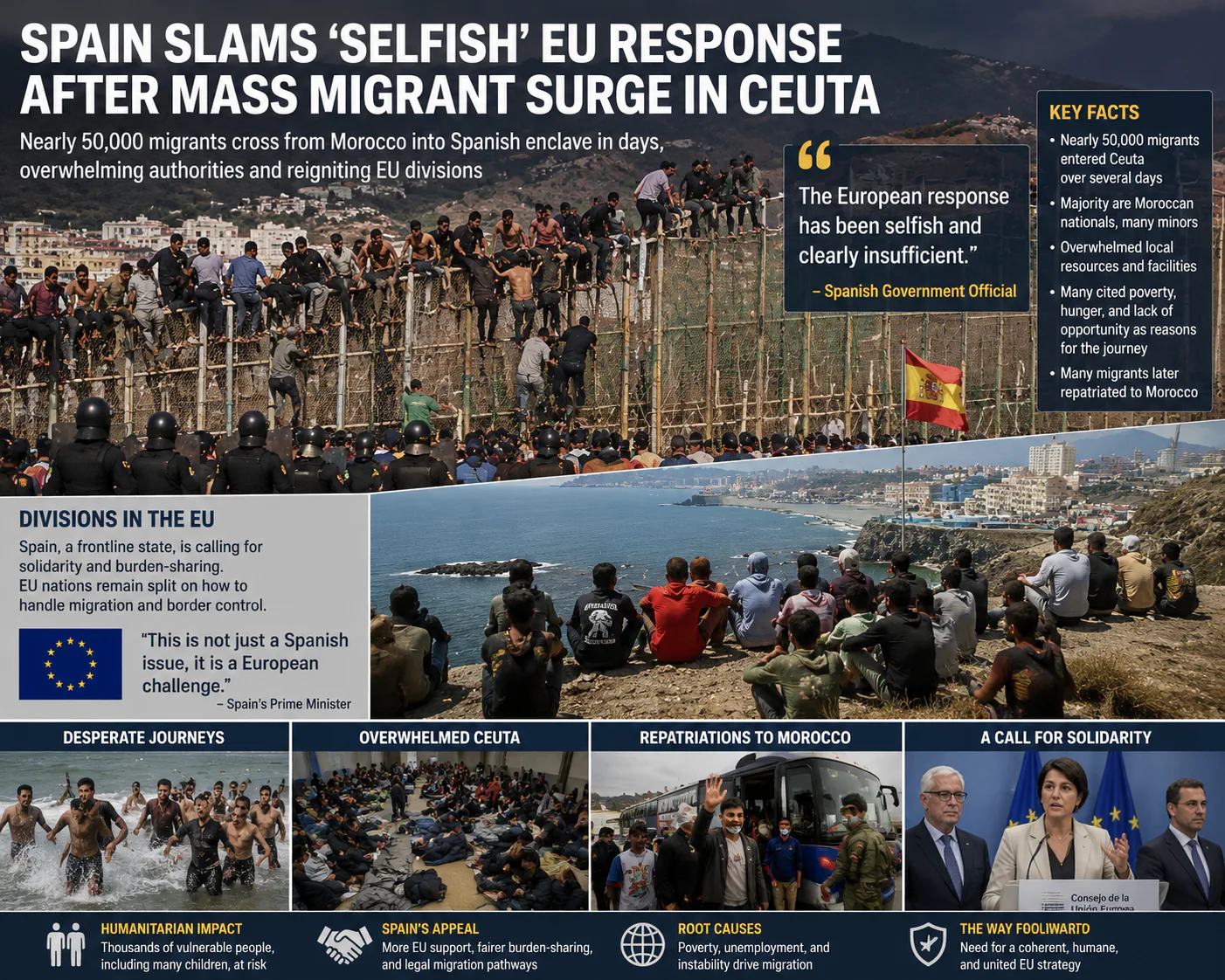
Spain has sharply criticized what it terms a 'selfish' and inadequate response from some European Union member states following a massive surge of nearly 50,000 migrants into the Spanish enclave of Ceuta, located on Morocco's northern coast. The unprecedented influx, which occurred over a period of days, overwhelmed local authorities and highlighted deep divisions within the EU on migration policy. Spanish officials expressed frustration that solidarity was lacking as the humanitarian crisis unfolded, with a significant number of the arrivals being minors.
The sheer scale of the crossing, which saw tens of thousands of Moroccans, including many young people, swim or climb over border fences into Ceuta, has brought the complex and often fraught relationship between Spain, Morocco, and the wider European bloc into sharp focus. Migrants cited a desperate search for better economic opportunities and a chance at a more stable future as their primary motivations for undertaking the perilous journey. However, many also spoke of hunger and hostility faced in Morocco, pushing them towards the Spanish territory.
This event has reignited debates within the EU about border management, burden-sharing, and the ethical responsibilities of member states towards asylum seekers and migrants. Spain, as a frontline state, often bears the brunt of arrivals from North Africa, and the scale of the Ceuta incident underscored its plea for a more unified and supportive European approach. The Spanish government has emphasized that the situation in Ceuta was not merely a bilateral issue but a European challenge requiring collective action and solidarity.
Following the initial surge, a significant number of migrants, including children, were repatriated to Morocco. Reports from those returned indicated a desire for a better life in Europe, but also a grim reality of their current circumstances. Some migrants expressed a willingness to return to Morocco, citing the difficulties of life in Ceuta and the hope of finding alternative, perhaps safer, routes or opportunities in the future. This complex reality underscores the multifaceted nature of migration, driven by a mix of push and pull factors.
The incident also brought to the fore the political sensitivities surrounding migration, particularly in the context of Spain's diplomatic relations with Morocco. The timing of the surge coincided with a period of diplomatic tension between the two countries, leading to questions about whether the crossings were facilitated or exploited. Spanish authorities have been careful not to directly accuse Morocco but have stressed the need for cooperation in managing their shared border.
European leaders have acknowledged the challenges faced by Spain but have offered varying degrees of support, reflecting the diverse perspectives on migration across the continent. While some nations have reiterated calls for stronger external border controls and returns, others have emphasized the need for humanitarian assistance and integration policies. The events in Ceuta serve as a stark reminder of the ongoing migratory pressures on Europe's southern borders and the persistent need for a coherent and humane EU-wide strategy.
The long-term implications of the Ceuta crisis are still unfolding. It has intensified calls for a more robust EU policy that addresses the root causes of migration in countries of origin, while also improving legal pathways for those seeking opportunity. The humanitarian cost, including the risks taken by vulnerable individuals, remains a central concern for international organizations and rights groups monitoring the situation.
Share this article
Send the story to readers on social or messengers.
Comments
Loading comments…

New Times Reporter Staff
Compiled and edited by the New Times Reporter newsroom from wire and publisher reporting, with the original source credited on every story.