The Strategic Rift: Trump Signals Possible Troop Withdrawal from Germany Amid Iran Policy Clash
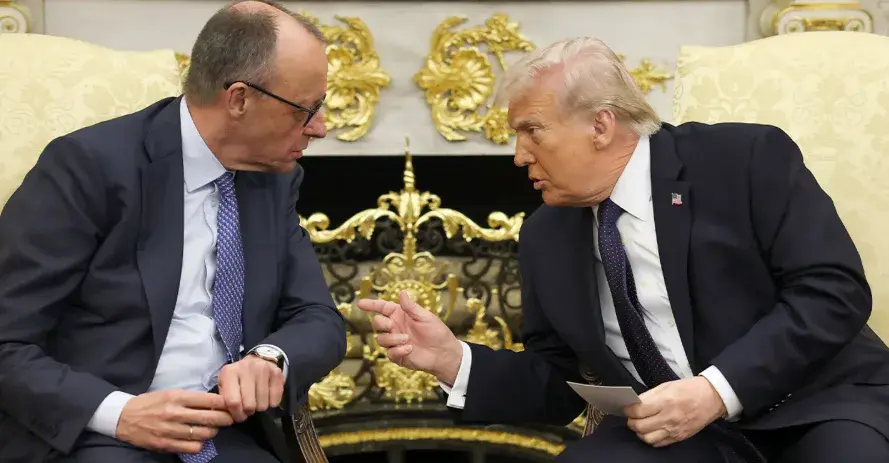
The geopolitical landscape of Europe is bracing for a potential seismic shift. President Donald Trump has officially signaled that the United States is evaluating a significant reduction of its military presence in Germany. This development follows a sharp public escalation between the White House and German Chancellor Friedrich Merz regarding the ongoing conflict in Iran and the broader security architecture of the Middle East.
A Tense Standoff Over Tehran The primary catalyst for this latest friction is a fundamental disagreement on how to handle Iran’s nuclear ambitions and the current regional war. While the Trump administration has pursued a policy of "maximum pressure"—recently highlighted by massive strikes that reportedly neutralized a vast majority of the Iranian regime's missile capabilities—Chancellor Merz has voiced concerns over the trajectory of the conflict.
During a recent address in Marsberg, Merz suggested that the U.S. approach was leading to a "humiliation" at the hands of Iranian leadership, calling for a swift diplomatic conclusion to the hostilities.
Trump responded characteristically via Truth Social, accusing Merz of being soft on nuclear proliferation. The President asserted that Merz "doesn't know what he's talking about" and claimed that the German leader's stance would effectively allow Iran to hold the world hostage with nuclear weapons.
The Military Leverage: 36,000 Troops on the Line Germany currently hosts more than 36,000 active-duty U.S. service members, the largest American military contingent in any European nation. These bases, including Ramstein Air Base, serve as critical logistics hubs for U.S. operations across Europe, Africa, and the Middle East.
By tying the presence of these troops to diplomatic alignment, the Trump administration is revisiting a strategy of "transactional diplomacy." The President’s message was clear: if Berlin remains at odds with Washington’s primary foreign policy objectives—particularly regarding Iran—the historic defense partnership could be downsized.
Economic and NATO Implications The feud isn't limited to military strategy. President Trump also linked Germany's economic performance to its leadership's decisions, suggesting that the country is "doing poorly" because of its current direction. This rhetoric echoes long-standing complaints from Washington regarding NATO defense spending and trade imbalances.
For Europe, the threat of a "NATO divorce" or a significant U.S. drawdown is no longer a theoretical exercise. With the U.S. urging allies to help secure the Strait of Hormuz and take a harder line against Tehran, the rift with Germany represents a pivotal moment for the future of the Atlantic alliance.
As the White House conducts its "review" of troop levels over the coming weeks, the international community will be watching to see if this is a high-stakes negotiating tactic or the beginning of a permanent retreat from one of America's oldest strategic outposts.

Share this article
Send the story to readers on social or messengers.
Comments
Loading comments…

Clara Whitmore
Clara Whitmore covers technology and science, exploring how innovation reshapes economies and daily life.