UEFA Nations Threaten World Cup Boycott Over FIFA Investment
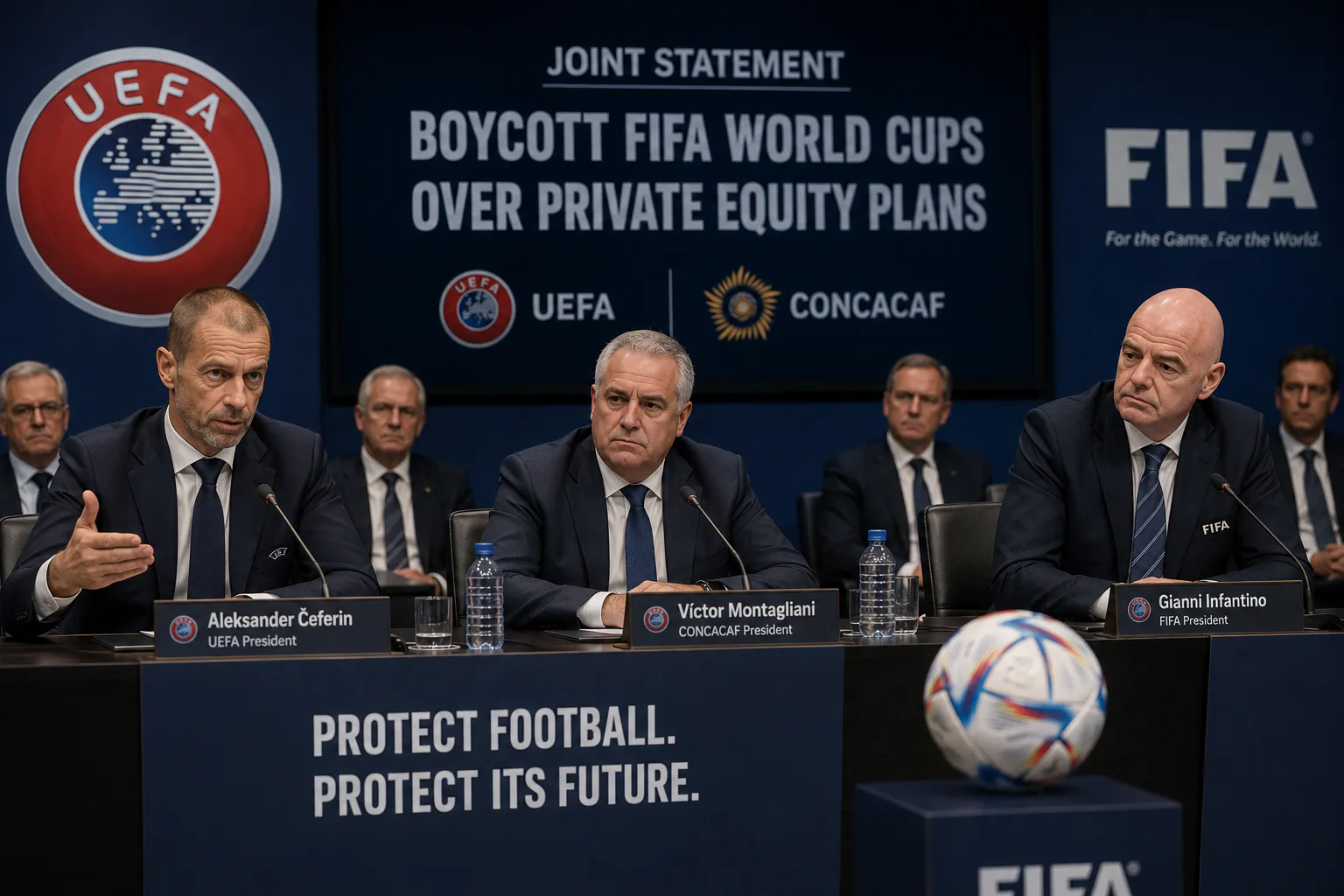
Dozens of European football federations, united under UEFA, have declared their intention to boycott future FIFA World Cups, including the upcoming 2030 tournament, in protest against FIFA's controversial plans to sell private equity stakes in its major tournaments. The unprecedented move, announced via official statements from both UEFA and CONCACAF, signals a deep rift between the continental governing bodies and global football's ruling organization, led by President Gianni Infantino. The core of the dispute lies in FIFA's pursuit of private investment for its flagship events, a strategy that UEFA argues jeopardizes the integrity and future of the sport.
UEFA, representing 55 national associations, and CONCACAF, comprising 41 member associations from North, Central America, and the Caribbean, have collectively voiced strong opposition to FIFA's proposed private equity deals. These deals, reportedly involving billions of dollars, would see external investors gain significant influence over the commercial aspects of World Cups and other FIFA competitions. UEFA's statement emphasized that such a move would fundamentally alter the governance of football, potentially undermining the democratic principles and long-term interests of the sport's stakeholders.
FIFA, however, has defended its financial strategy, with President Infantino asserting that the organization is not "selling football." He maintains that the private investment is intended to secure long-term financial stability and fund development programs worldwide. Infantino has remained resolute, indicating no intention to back down from the proposed investment plans, despite the widespread backlash from continental confederations. This stance has further escalated tensions, pushing the dispute towards a potential crisis point for international football.
The disagreement centers on the control and commercialization of football's most prestigious tournaments. FIFA's proposal aims to raise capital by selling stakes in entities that manage the commercial rights of its events, such as media and sponsorship rights. Proponents argue this could unlock significant revenue streams, enabling greater investment in infrastructure, grassroots development, and member associations globally. The exact figures involved in the proposed private equity deals have not been fully disclosed, but reports suggest they could amount to several billion dollars.
UEFA's primary concern is that ceding control to private investors could lead to decisions being driven by profit motives rather than the sporting interests of member nations. The European body fears that private equity firms, focused on short-term returns, might push for more frequent tournaments, changes to competition formats, or prioritize lucrative markets over the traditional values of the sport. This could impact everything from qualification pathways to the fan experience, potentially alienating long-time supporters and compromising the competitive balance.
CONCACAF's alignment with UEFA amplifies the pressure on FIFA. The North and Central American confederation, in its statement, echoed concerns about the potential dilution of control and the impact on the sport's governance. By joining forces, UEFA and CONCACAF present a formidable bloc, representing a significant portion of the global football landscape and its commercial value, making their boycott threat a serious challenge to FIFA's authority and its proposed financial future.
The potential boycott extends beyond just the men's senior World Cup, with implications for all FIFA-sanctioned tournaments. This includes the Women's World Cup, youth championships, and club competitions. The unified stance suggests a willingness to withdraw participation from any FIFA event where these private investment plans are implemented, creating a significant logistical and commercial void for the global governing body.
FIFA's defense has focused on transparency and the benefits for global football development. The organization claims that any private investment would be structured to ensure FIFA retains ultimate control and that revenues generated would be reinvested into football programs worldwide, particularly in developing nations. However, critics remain skeptical, pointing to past instances where private involvement in sports organizations has led to governance issues and a prioritization of commercial interests over sporting integrity.
The current standoff highlights a fundamental difference in vision for the future of football governance and finance. FIFA, under Infantino, appears eager to embrace new financial models and partnerships to fuel growth, while UEFA and CONCACAF are advocating for a more traditional, member-driven approach, emphasizing caution and preservation of existing structures. The coming weeks and months will be crucial in determining whether a compromise can be reached or if the sport will face a deeply divisive schism.
Share this article
Send the story to readers on social or messengers.
Comments
Loading comments…

New Times Reporter Staff
Compiled and edited by the New Times Reporter newsroom from wire and publisher reporting, with the original source credited on every story.