What caused the new crater discovered by NASA on the Moon?
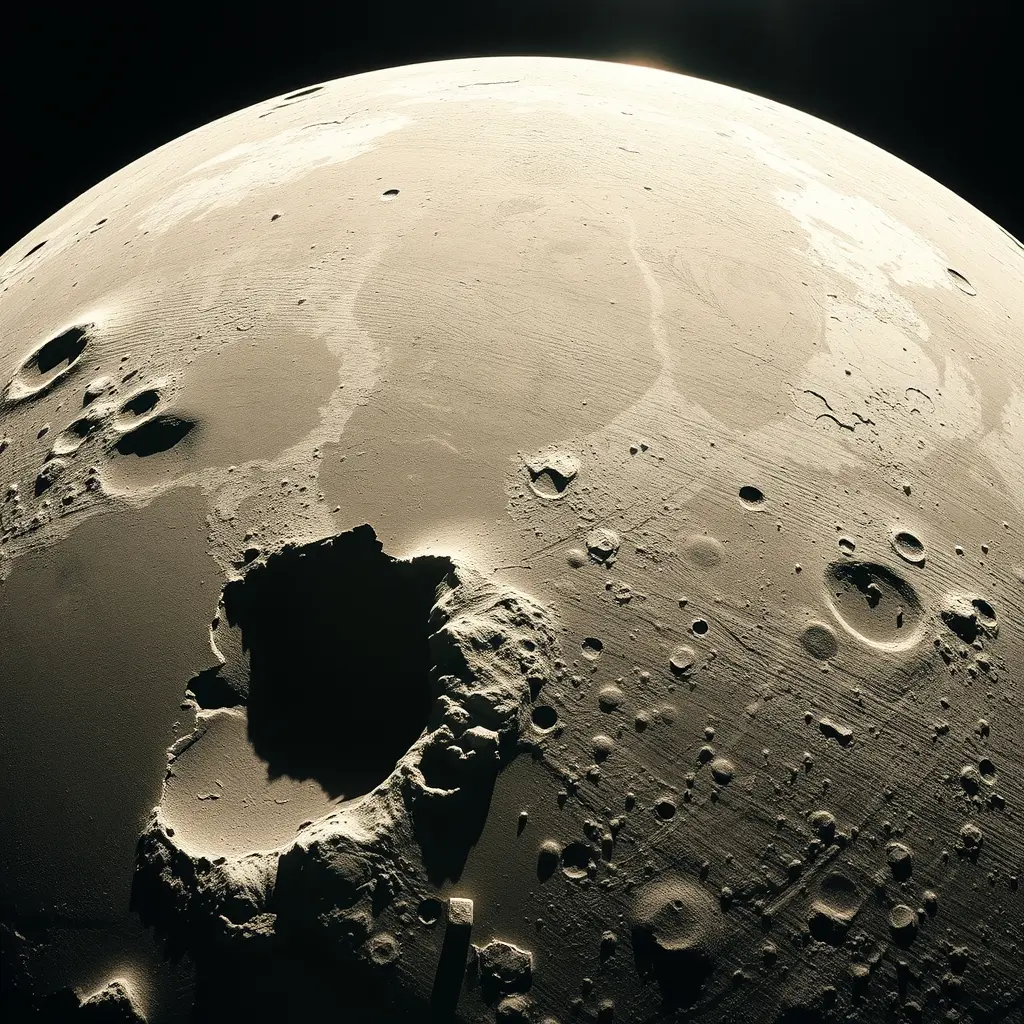
A recent discovery by NASA's Lunar Reconnaissance Orbiter (LRO) has identified a substantial new crater on the Moon, a finding that prompts questions about its origin and implications for lunar science. The crater, measuring approximately 100 meters (330 feet) in diameter, was spotted during routine mapping operations. Its fresh appearance suggests a relatively recent impact event, a rare occurrence that offers scientists a unique opportunity to study the dynamics of crater formation and the composition of the lunar surface.
The LRO, launched in 2009, has been instrumental in providing high-resolution images and data about the Moon's topography, geology, and environment. Its instruments, including the Lunar Orbiter Laser Altimeter (LOLA) and the Narrow Angle Camera (NAC), are designed to map the lunar surface with unprecedented detail. The discovery of this new crater is a testament to the orbiter's ongoing mission and its ability to detect subtle changes on the Moon's surface over time.
The Background: Understanding Lunar Craters
Craters are the most prominent features on the Moon's surface, bearing witness to billions of years of bombardment by asteroids, comets, and meteoroids. These impacts have shaped the Moon's appearance, creating vast basins, mountain ranges, and the characteristic pockmarked landscape. The size and shape of a crater, as well as the ejecta blanket surrounding it, provide clues about the impactor's size, speed, and the geological properties of the lunar regolith at the time of impact.
Historically, the study of lunar craters has been crucial for understanding the history of the solar system. By analyzing crater populations on different celestial bodies, scientists can estimate their ages and infer the density of impactors over time. The Moon, being geologically inactive and lacking an atmosphere or significant erosion, serves as a pristine record of these cosmic collisions. The discovery of a new crater, however, is particularly significant because it represents a recent event, allowing for a more direct study of the impact process itself, rather than relying solely on ancient geological evidence.
The Mechanism: How New Craters Form
The formation of a new lunar crater is a rapid and violent process. When an object from space strikes the Moon at high velocity, it generates an immense amount of energy. This energy is released in a fraction of a second, creating a shock wave that propagates through the lunar crust.
- Initial Impact and Compression: The impactor penetrates the surface, compressing the lunar regolith and bedrock beneath it. This compression generates extreme heat and pressure.
- Excavation: The shock wave causes the material to be violently ejected outwards, forming a bowl-shaped depression. The ejected material, known as ejecta, is thrown out in all directions, forming a raised rim around the crater and an ejecta blanket that extends outwards.
- Crater Modification: Immediately after excavation, the crater walls may collapse due to gravity, and the ejecta blanket settles. Depending on the size of the impactor and the local geology, secondary craters may also form from larger pieces of ejecta.
The specific characteristics of the newly discovered crater, such as its precise dimensions, the morphology of its rim, and the distribution of ejecta, will be analyzed by scientists to infer details about the impactor and the impact event. For instance, a sharp, well-defined rim suggests a very recent impact, as erosion processes on the Moon are minimal but not entirely absent over geological timescales.
Who is Affected and How, Concretely
While the discovery of a new lunar crater doesn't directly impact daily life on Earth, it holds significant value for the scientific community and the future of space exploration. For planetary geologists and astrophysicists, this crater is a valuable natural laboratory. It provides an opportunity to:
- Calibrate Impact Models: The data gathered from this new crater can be used to refine computer models that simulate impact events. This is crucial for understanding the formation of craters on all rocky bodies in the solar system, including Earth.
- Study Lunar Composition: Analyzing the ejecta can reveal information about the composition of the lunar subsurface at the impact site. This data contributes to our broader understanding of the Moon's geological history and resource potential.
- Enhance Navigation and Hazard Assessment: For future lunar missions, understanding impact rates and the characteristics of fresh craters is vital for selecting safe landing sites and planning surface operations. Knowing where and how often new impacts occur helps mitigate risks for astronauts and robotic explorers.
Furthermore, the discovery underscores the dynamic nature of the Moon, which is often perceived as a static, unchanging body. It serves as a reminder that the solar system is an active environment, and celestial bodies are continually subject to change. This has implications for long-term lunar habitation and the planning of infrastructure on the Moon.
What Happens Next
Following the initial detection, NASA scientists will conduct further analysis of the LRO data to characterize the new crater in detail. This will involve using various instruments on the LRO to obtain multi-spectral imagery, topographic data, and potentially thermal data if the impact has generated residual heat.
- Detailed Analysis: Researchers will compare the crater's features with those of known impact craters of similar size to determine its age and the nature of the impactor. They will also examine the surrounding terrain for evidence of secondary craters or other impact-related features.
- Publication and Dissemination: The findings will likely be published in peer-reviewed scientific journals, making the data and analysis available to the global research community. This will allow other scientists to build upon the discovery.
- Future Monitoring: The LRO will continue to monitor the area. If future observations show any changes to the crater or its surroundings, it could indicate ongoing geological activity or provide further insights into the impact process.
For this discovery to have a lasting impact beyond the scientific community, it would require the crater to be of exceptional scientific interest, perhaps revealing unique mineral compositions or providing evidence of a particularly unusual impact event. If the crater is found to be associated with rare resources or offers unprecedented insights into the Moon's formation, it could spur increased interest in lunar exploration and resource utilization, potentially influencing future mission planning by agencies like NASA and private space companies.
Share this article
Send the story to readers on social or messengers.
Comments
Loading comments…

New Times Reporter
Editorial coverage from New Times Reporter.