What happens when a rocket crashes on the Moon?
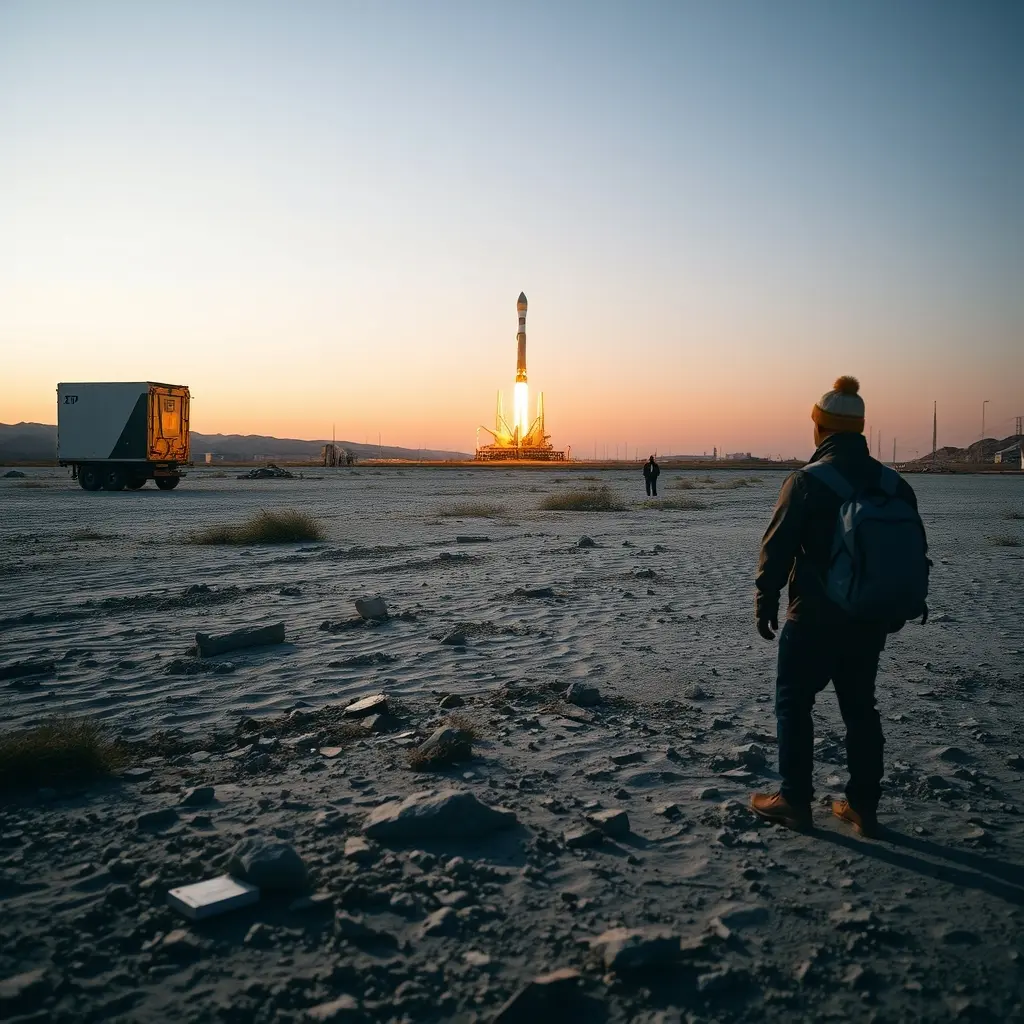
The Background: Accidental Lunar Debris
On March 4, 2022, an object traveling at approximately 5,500 miles per hour (8,850 km/h) impacted the lunar surface. This object was identified as the upper stage of a SpaceX Falcon 9 rocket, specifically the booster from the CRS-23 mission that had been launched in September 2021. The rocket stage had been in a chaotic orbit around the Earth and Moon for several years after completing its primary mission. Its trajectory eventually directed it towards the Moon, where it made an unintentional collision. This event marked the first time a human-made object of this size had inadvertently crashed into the Moon, raising questions about space debris and lunar environmental impact.
The Mechanism: Impact and Observation
The SpaceX rocket's upper stage, weighing several tons, struck the Moon in a region near the equator known as the Hertzsprung crater. The impact itself was not directly observed by human eyes, but its consequences were. The force of the collision was expected to create a crater on the lunar surface. Scientists anticipated that the impact would excavate lunar soil and rock, potentially revealing subsurface material. Following the predicted impact, observations were made by multiple lunar reconnaissance missions. Notably, NASA's Lunar Reconnaissance Orbiter (LRO) and South Korea's Danuri lunar orbiter captured images of the impact site. These images, taken before and after the event, allowed scientists to identify the resulting crater and analyze its characteristics, such as its size and shape.
Who is Affected and How, Concretely
The most direct impact is on the scientific understanding of lunar geology and the long-term effects of space debris. For astronomers and planetary scientists, the event provides a unique opportunity to study the composition of the lunar subsurface. The material ejected from the impact site could offer clues about the Moon's geological history. For space agencies like NASA and the Korea Aerospace Research Institute (KARI), which operates the Danuri orbiter, it highlights the challenges of tracking and managing space objects in cislunar space. The incident also has implications for future lunar missions, as it underscores the potential for accidental collisions with defunct spacecraft. For the general public, it serves as a reminder of the growing amount of artificial material in space and the need for responsible space exploration practices to prevent future contamination or hazards.
What Happens Next, and What Would Have to Be True
The scientific community will continue to analyze the data from the Danuri and LRO missions to fully characterize the impact crater and any ejected material. This analysis could lead to revised models of lunar impact dynamics and the long-term fate of space debris. Future lunar missions will likely incorporate more robust tracking and avoidance protocols for defunct rocket stages and other large orbital objects. If the analysis reveals unexpected geological insights or significant environmental changes, it could influence international regulations regarding space object disposal and orbital management. For instance, if the impact site reveals evidence of volatile compounds or unique subsurface structures, it might spur further robotic or even human exploration of such regions. Conversely, if the crater is unremarkable and the debris poses no immediate threat, the focus may shift to other lunar exploration priorities, though the precedent of an accidental lunar impact will remain.
Share this article
Send the story to readers on social or messengers.
Comments
Loading comments…

New Times Reporter
Editorial coverage from New Times Reporter.