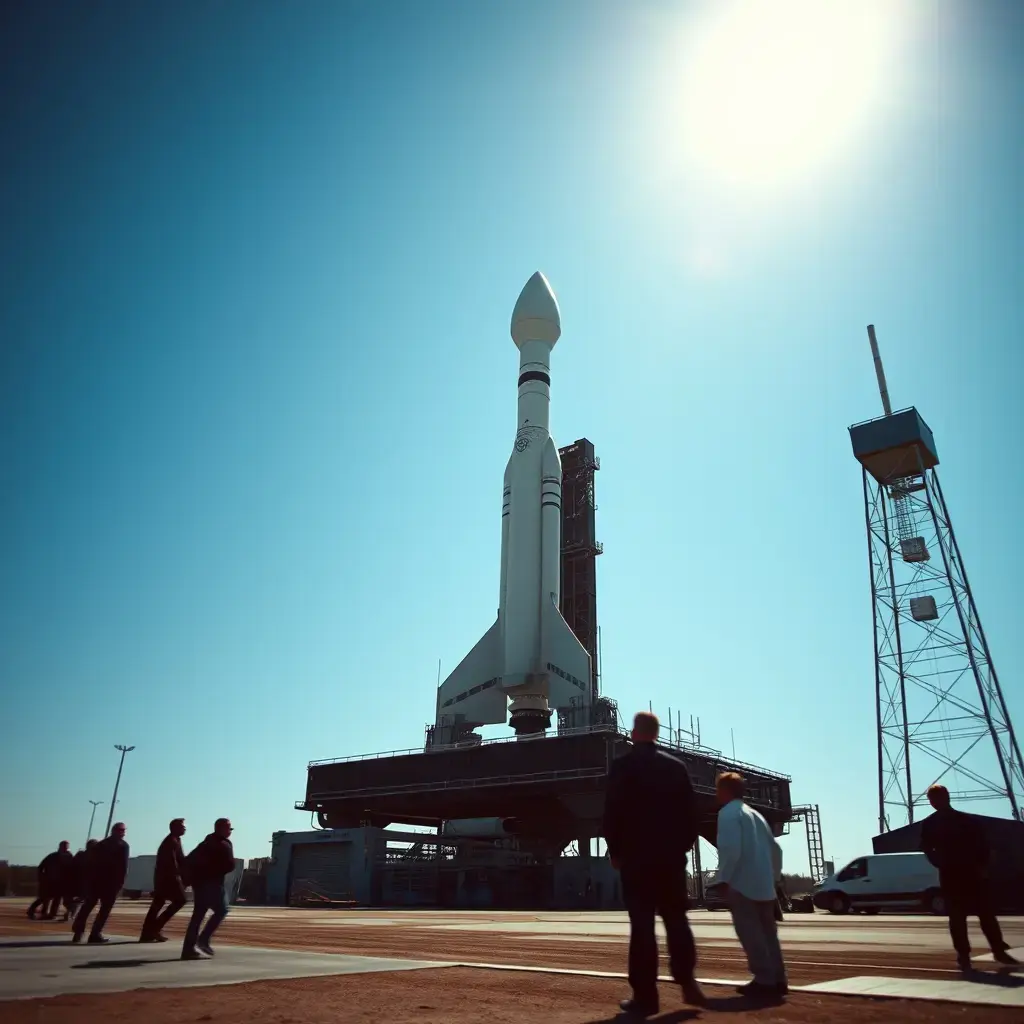
What happens when a SpaceX rocket hits the moon?

The Background: Space Junk and Lunar Impacts
On March 4, 2022, a spent Falcon 9 rocket booster, launched by SpaceX in February 2015 for a deep-space climate mission, is expected to impact the Moon. This object, designated as object 2015-007B, has been drifting in an unstable orbit for years. Its trajectory was altered by gravitational forces, particularly from Earth and the Moon, leading it on a collision course. This event marks the first time a piece of human-made space debris is known to have intentionally or unintentionally impacted the lunar surface.
While the Moon has been bombarded by asteroids and comets for billions of years, this specific impact is notable due to its artificial origin and the predictable, albeit accidental, nature of the collision. The booster is travelling at approximately 5,400 miles per hour (8,700 km/h) at the time of impact. Scientists have been tracking its path, with NASA's Lunar Reconnaissance Orbiter (LRO) tasked with observing the impact site and any resulting changes.
The Mechanism: A Long Drift to Collision
The Falcon 9 booster in question is the second stage of the rocket that launched NASA's Deep Space Climate Observatory (DSCOVR) in February 2015. After completing its primary mission of propelling the DSCOVR satellite towards its destination, the booster was left in a high Earth orbit. Unlike many rocket stages that are recovered or intentionally de-orbited, this particular stage was not. Over the years, its orbit has gradually decayed and shifted due to complex gravitational interactions with Earth, the Moon, and the Sun.
These gravitational tugs have nudged the booster's path, eventually setting it on a trajectory that will intersect with the Moon. The object is not under any form of propulsion or control; it is a passive piece of space junk following a path dictated by orbital mechanics. Astronomers and space agencies have been monitoring its trajectory for some time, calculating the precise moment and location of its inevitable lunar impact. The energy released upon impact is estimated to be equivalent to approximately 11.8 gigajoules, comparable to a small conventional bomb.
Who is Affected and How: Scientific Observation and Lunar Scars
The primary entities affected by this event are the scientific community and the Moon itself. Astronomers and planetary scientists are keenly interested in observing the impact. NASA's Lunar Reconnaissance Orbiter (LRO), which has been orbiting the Moon since 2009, is equipped with instruments capable of imaging the lunar surface with high resolution. LRO is expected to photograph the impact site before and after the collision to document any changes, such as the creation of a new crater. The size and characteristics of this crater will depend on the booster's mass, composition, and the angle of impact.
For the Moon, the impact will create a small, artificial crater. While the Moon's surface is constantly being altered by natural impacts, this event adds a new, albeit minor, element to its geological history. The impact itself is not expected to pose any risk to Earth or any ongoing lunar missions. The debris will be confined to the Moon's surface, and the energy released is not significant enough to cause any widespread geological effects on the Moon. The main consequence is the addition of a new data point for scientists studying lunar impacts and the long-term fate of space debris.
What Happens Next: Post-Impact Analysis and Future Debris
Following the impact on March 4, 2022, the immediate next step will be scientific observation and analysis. NASA's LRO will attempt to capture images of the impact site. Scientists will then analyze these images to determine the size, shape, and characteristics of the newly formed crater. This data will contribute to a better understanding of impact dynamics and the lunar regolith. The event also serves as a case study for the long-term orbital evolution of defunct spacecraft.
Looking further ahead, this incident highlights the growing challenge of space debris. As more missions are launched into Earth orbit and beyond, the potential for accidental collisions and uncontrolled de-orbiting increases. Future efforts in space exploration and debris management may need to account for such long-term orbital drift. The International Astronomical Union's Minor Planet Center has provisionally identified the object as 2015-007B. While this particular booster's fate is sealed, the broader question of how to manage defunct hardware in space remains a critical issue for the future of space activities. The Moon, as a relatively inactive celestial body, serves as a quiet repository for such impacts, but Earth's orbit is becoming increasingly crowded.
Share this article
Send the story to readers on social or messengers.
Comments
Loading comments…

New Times Reporter
Editorial coverage from New Times Reporter.