Why are the Northern Lights visible in so many US states?
The Science Behind the Aurora
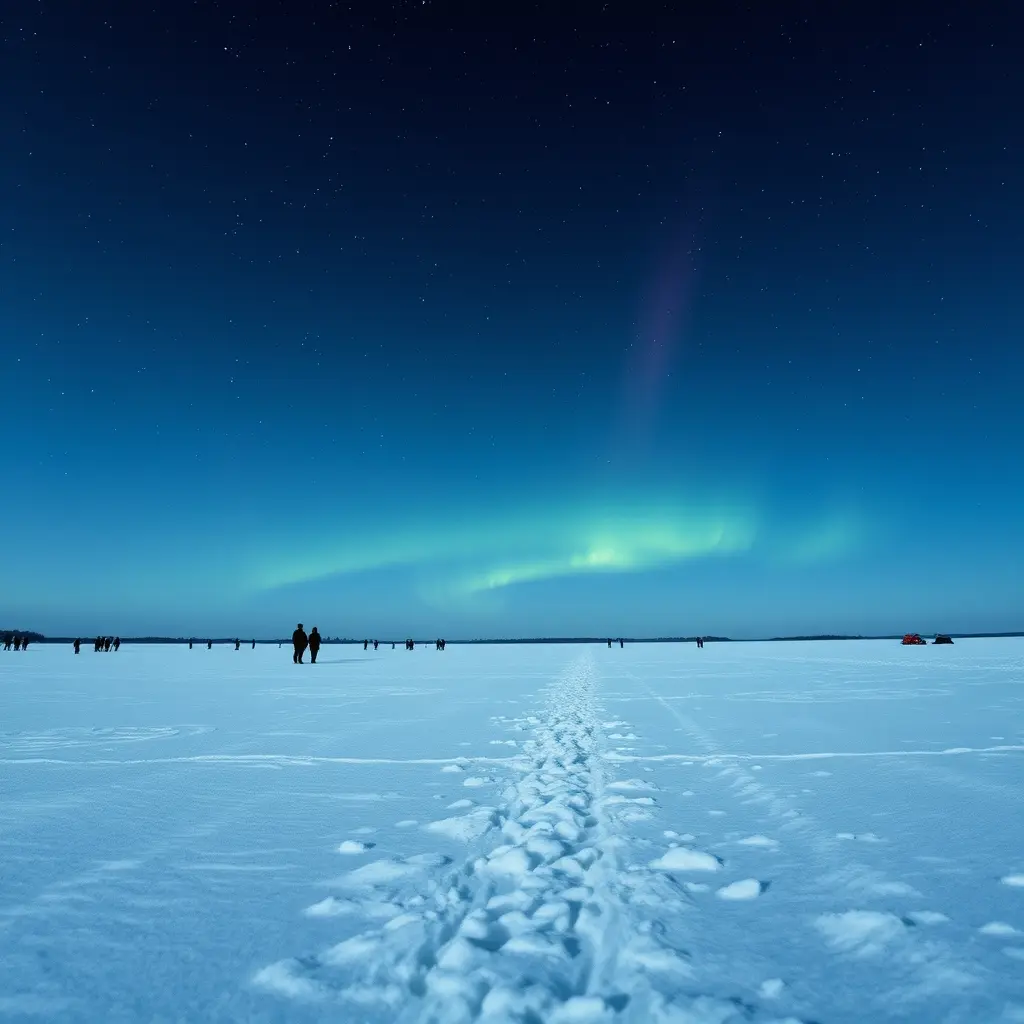
The Northern Lights, or aurora borealis, are a celestial phenomenon caused by charged particles from the sun colliding with gases in Earth's upper atmosphere. These collisions excite the atmospheric gases, causing them to emit light in vibrant colors, most commonly green, but also pink, red, and violet. The intensity and visibility of the aurora depend on the strength and direction of solar activity, specifically coronal mass ejections (CMEs) and solar flares, which release streams of charged particles into space.
When these particles reach Earth, they are guided by the planet's magnetic field towards the polar regions. However, during periods of intense solar activity, the geomagnetic storm can be powerful enough to extend the aurora's visibility to lower latitudes than usual. The specific colors observed are determined by the type of gas molecule and the altitude at which the collision occurs: oxygen typically produces green and red light, while nitrogen is responsible for blue and purple hues.
How Solar Activity Drives Aurora Visibility
The recent forecast for increased aurora visibility across 11 US states is directly linked to heightened solar activity. The sun has been experiencing a surge in its activity cycle, leading to more frequent and intense solar flares and CMEs. These events eject vast amounts of plasma and charged particles, known as the solar wind, into space.
When this solar wind travels towards Earth and interacts with our planet's magnetosphere, it can trigger geomagnetic storms. The strength of these storms dictates how far south the aurora will be visible. A particularly strong or sustained geomagnetic storm can push the auroral oval—the region where auroras are typically seen—beyond its usual boundaries, making them visible in areas that rarely experience them. The forecast indicates that an incoming wave of charged particles is expected to cause a significant geomagnetic disturbance, allowing the aurora to be seen at lower latitudes.
Who is Affected and How
For residents in the 11 states forecast to have a chance of seeing the aurora, the impact is primarily aesthetic and recreational. It offers a rare opportunity to witness a spectacular natural light show without needing to travel to far-northern latitudes. This can lead to increased local tourism for areas with good viewing spots, such as national parks or open countryside, as people gather to observe the phenomenon.
Astronomers and aurora enthusiasts will be particularly keen to capture images and data. Amateur photographers may find themselves with a unique subject, while scientists might use the event to gather more information about the interaction between solar wind and Earth's atmosphere. For most, it's a chance to experience a moment of natural wonder, potentially sparking a greater interest in space weather and astronomy. The primary effect is a shared, awe-inspiring experience of a beautiful natural event.
What Happens Next and Potential Outcomes
The visibility of the Northern Lights is intrinsically tied to the Sun's behavior. If the current period of heightened solar activity continues or intensifies, aurora sightings at lower latitudes could become more frequent in the coming months and years. The Sun operates on an approximately 11-year cycle, and it is currently heading towards a solar maximum, which is predicted to occur around 2025. This phase is characterized by increased sunspot activity, solar flares, and CMEs, all of which contribute to more dramatic auroral displays.
Conversely, if the solar activity subsides more quickly than anticipated, or if the charged particles are directed away from Earth, the opportunities for seeing the aurora in these lower latitudes will diminish. Future forecasts will depend on ongoing monitoring of solar activity by space weather agencies like the National Oceanic and Atmospheric Administration (NOAA). Significant geomagnetic storms are the key requirement for widespread aurora visibility, and their occurrence is the primary variable determining future sightings.
Share this article
Send the story to readers on social or messengers.
Comments
Loading comments…

New Times Reporter
Editorial coverage from New Times Reporter.