Why are the US and Japan intervening to support the yen?
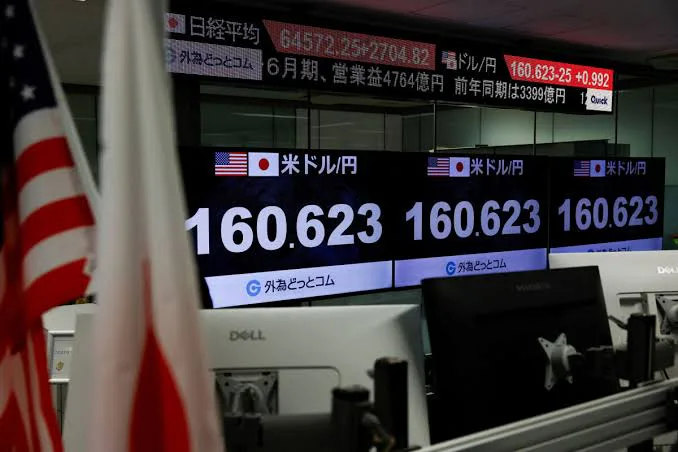
The United States and Japan have confirmed they have jointly intervened in currency markets to buy Japanese yen, a move aimed at stemming the yen's rapid decline against the US dollar. This coordinated action signals a significant shift in policy for both nations, which have historically been hesitant to directly manipulate exchange rates. The intervention is a response to the yen hitting multi-decade lows against the dollar, a trend that has accelerated in recent months, raising concerns about Japan's economic stability and the broader implications for global markets.
This is the first time since April 2024 that Japan has conducted a solo yen-buying intervention, and the first time since 2000 that it has done so in coordination with the US. The joint action underscores the severity of the yen's slide and the shared concern between Tokyo and Washington about its potential consequences. The immediate goal is to provide support for the yen and curb its depreciation, but the signals also suggest a willingness to take further steps if the trend continues.
The Background: A Weakening Yen's Ripple Effects
The Japanese yen has been on a steady downward trajectory for an extended period, driven by a widening interest rate differential between Japan and other major economies, particularly the United States. While the Bank of Japan has maintained ultra-low interest rates, including a negative policy rate, the US Federal Reserve has been raising rates to combat inflation. This divergence has made dollar-denominated assets more attractive, leading investors to sell yen and buy dollars, thereby weakening the yen.
This depreciation has had a dual effect on Japan. On one hand, a weaker yen makes Japanese exports cheaper and more competitive on the global stage, which can boost corporate profits for export-oriented companies. On the other hand, it significantly increases the cost of imports, including essential energy resources and raw materials. For an economy heavily reliant on imports, this translates into higher inflation, squeezing household budgets and potentially dampening domestic consumption. The yen's slide has exacerbated these inflationary pressures, pushing the cost of living higher for ordinary Japanese citizens.
The Japanese government and the Bank of Japan have been monitoring the situation closely. While they have previously expressed concerns about excessive currency volatility, they have been reluctant to intervene directly, preferring to let market forces dictate the yen's value. However, the accelerating pace of the yen's decline, coupled with its breach of critical psychological levels, has evidently pushed them to a point where direct intervention was deemed necessary to prevent further economic destabilization and protect the purchasing power of its citizens.
The Mechanism: How Yen-Buying Intervention Works
Currency intervention, in this case, involves the coordinated effort by the US and Japanese central banks to influence the yen's exchange rate. The primary tool used is the buying and selling of currencies in the foreign exchange market. To support the yen, Japan's Ministry of Finance, through the Bank of Japan, sells US dollars from its foreign reserves and uses those dollars to buy Japanese yen.
This action has a direct impact on supply and demand. By increasing the demand for yen, the intervention aims to drive up its price relative to other currencies, particularly the US dollar. Simultaneously, by increasing the supply of dollars in the market, it can put downward pressure on the dollar's value. The US Treasury's participation in this intervention, by also buying yen, amplifies the effect and signals a strong commitment to stabilizing the exchange rate.
The scale of intervention is crucial. For it to be effective, a substantial amount of currency must be traded. The exact figures for the recent intervention have not been disclosed, but reports suggest it was significant enough to move the market. The intervention is conducted through major financial institutions and operates within the global foreign exchange market, which is open 24 hours a day. The goal is not to set a specific exchange rate, but rather to curb excessive volatility and signal a commitment to preventing further sharp declines.
Beyond direct intervention, central banks can also use verbal intervention – making statements about their intentions or concerns regarding currency levels – to influence market sentiment. The joint confirmation and signal of potential future action serve as a form of verbal intervention, aiming to deter speculative attacks on the yen and encourage traders to reconsider their positions.
Who Is Affected and How, Concretely
Ordinary Japanese citizens are directly affected by the yen's weakness and the subsequent intervention. A weaker yen makes imported goods, from food to fuel, more expensive. This has contributed to a higher cost of living, eroding the purchasing power of households. For instance, the price of imported gasoline and electricity has risen, impacting household utility bills and transportation costs. While the intervention aims to strengthen the yen and thus lower import costs over time, the immediate effect is a stabilization rather than a sharp reversal, and the underlying economic factors driving the yen's weakness remain.
Japanese exporters, such as automakers like Toyota and electronics manufacturers like Sony, benefit from a weaker yen as their products become cheaper for foreign buyers, boosting their competitiveness and profitability. However, companies that rely heavily on imported components or raw materials may see their costs rise, offsetting some of these gains. The intervention, by potentially strengthening the yen, could temper some of these export advantages, though it is unlikely to fully negate them without a sustained shift in economic fundamentals.
Global investors and financial markets are also impacted. A volatile yen can create uncertainty and risk in global financial portfolios. For US consumers, a stronger yen could eventually make Japanese goods slightly more expensive, but the immediate impact of the intervention on US prices is likely to be minimal. However, the intervention signals a greater willingness by major economies to manage currency fluctuations, which could influence future investment decisions and currency trading strategies worldwide.
What Happens Next, and What Would Have to Be True
The effectiveness of this joint intervention hinges on several factors. Firstly, the scale and frequency of future interventions will be critical. If the market perceives the intervention as a one-off event, its impact may be short-lived. Sustained intervention, however, could prove more effective in stabilizing the yen, but it comes at the cost of depleting foreign currency reserves.
Secondly, the actions of the Bank of Japan and the US Federal Reserve regarding interest rates will play a crucial role. For the yen to see a sustained recovery, the interest rate differential needs to narrow. This would likely require the Bank of Japan to signal a move towards monetary policy normalization, potentially by ending negative interest rates and gradually increasing its policy rate. Conversely, if the Federal Reserve continues to hold rates high or even raises them further, the pressure on the yen will persist, requiring more aggressive intervention or a fundamental shift in Japanese economic policy.
Thirdly, market sentiment and speculative positioning are key. If traders believe that further intervention is likely or that the fundamental drivers of yen weakness are being addressed, they may unwind their short yen positions, leading to further appreciation. Conversely, if economic data from Japan remains weak or if global risk appetite shifts away from perceived safe-haven assets, the yen could come under renewed pressure.
Looking ahead, the joint intervention signals a potential new era of currency management between the US and Japan. The success of this action will likely determine whether such coordinated efforts become a more common tool to manage exchange rate volatility in the future. For the yen to maintain any gains, Japan would need to demonstrate a credible path towards economic growth and a more hawkish monetary policy stance, while global interest rate dynamics would need to become more favorable.
Share this article
Send the story to readers on social or messengers.
Comments
Loading comments…

Godfrey Benjamin
Godfrey Benjamin is an experienced crypto journalist whose main goal is to educate everyone around him about the prospects of Web 3.0. His love for crypto was birthed when, as a former banker, he discovered the obvious advantages of decentralized money over traditional payments. With his vast experience covering various aspects of Web3, Godfrey's articles has been featured on Blockchain.news, Cryptonews and Coingape, among others.
https://www.thecoinrepublic.com/