Why are there so many young faults on the Moon?
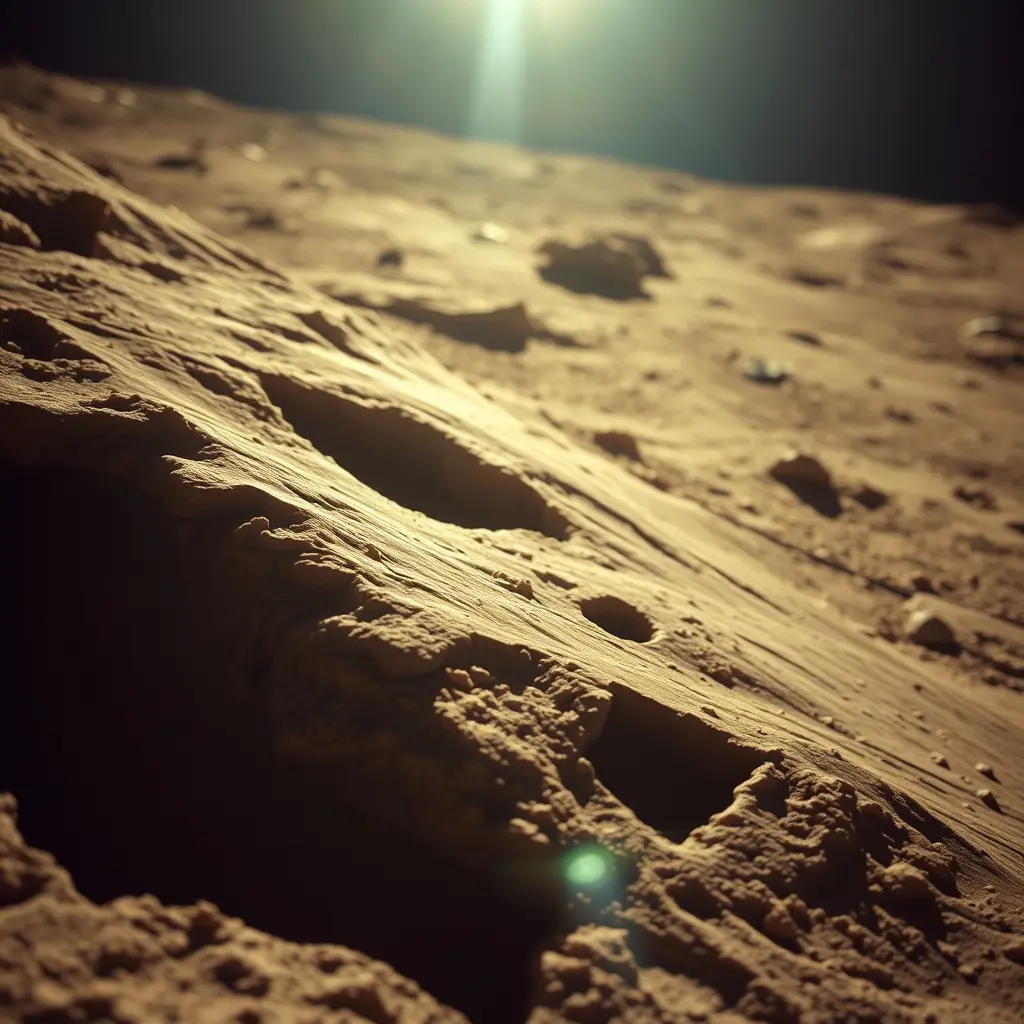
The Moon Isn't Geologically Dead
For decades, scientists believed the Moon was a geologically static body, its surface shaped primarily by ancient volcanic activity and meteorite impacts. The discovery of approximately 10,000 young fault scarps, identified through analysis of images from NASA's Lunar Reconnaissance Orbiter (LRO), challenges this long-held view. These features, some appearing to be as little as 50 million years old, suggest that the Moon is still experiencing seismic activity and tectonic shifts. This revelation implies that the Moon's interior may not have cooled as completely as previously thought, and that ongoing geological processes are shaping its surface.
The implications of this discovery are significant for our understanding of lunar evolution and for future human exploration. If the Moon is still seismically active, it raises concerns about the safety of lunar habitats and the potential for moonquakes. Understanding the frequency and magnitude of these events is crucial for planning sustainable lunar bases and ensuring the safety of astronauts.
How the Faults Were Discovered
The identification of these young lunar faults is a testament to advancements in remote sensing technology and data analysis. Scientists meticulously examined high-resolution images captured by the LRO, which has been orbiting the Moon since 2009. These images provide unprecedented detail of the lunar surface.
The faults appear as steep, cliff-like scarps, often only tens to a few hundred meters long and a few meters to tens of meters high. Their relatively fresh appearance, with sharp edges and minimal erosion from micrometeorite bombardment, indicates their recent formation. By comparing the appearance of these scarps with features on Earth whose ages are known, researchers have been able to estimate the relative youth of these lunar features. The LRO's instruments, such as the Lunar Orbiter Laser Altimeter (LOLA) and the Narrow Angle Camera (NAC), were instrumental in providing the detailed topographic and visual data needed for this analysis.
Who is Affected and How
This discovery directly impacts the scientific community studying planetary geology and the agencies planning future lunar missions. For planetary geologists, it necessitates a re-evaluation of lunar thermal evolution models and tectonic processes. It opens new avenues of research into the Moon's internal structure and the mechanisms driving its seismic activity.
For space agencies like NASA and its international partners involved in programs like Artemis, the presence of active faults and potential moonquakes is a critical consideration. Future lunar bases will need to be sited in areas that minimize seismic risk. The design of habitats and equipment must also account for the possibility of ground shaking. This could lead to increased costs and complexity in mission planning, but it also presents an opportunity to deploy advanced seismic monitoring equipment to better understand these phenomena. Astronauts venturing onto the lunar surface in the future will need to be aware of potential geological hazards.
What Happens Next
The ongoing analysis of LRO data is expected to reveal more about the distribution and characteristics of these young faults. Future research will likely focus on correlating these surface features with subsurface structures and potential heat sources within the Moon. Seismometers, if deployed on future missions, could provide direct measurements of lunar seismic activity, confirming the dynamic nature of the Moon's interior.
Scientists will also be looking for evidence of recent volcanic activity that might be linked to these fault formations. Understanding the precise age and frequency of these events is crucial for refining models of the Moon's geological history. If future missions confirm widespread and significant moonquakes, it could influence the selection of landing sites for long-term human settlements, prioritizing areas with lower seismic risk. The continued study of these faults is essential for both fundamental scientific understanding and practical considerations for lunar exploration.
Share this article
Send the story to readers on social or messengers.
Comments
Loading comments…

New Times Reporter
Editorial coverage from New Times Reporter.