Why did Trump cancel Iran strikes?
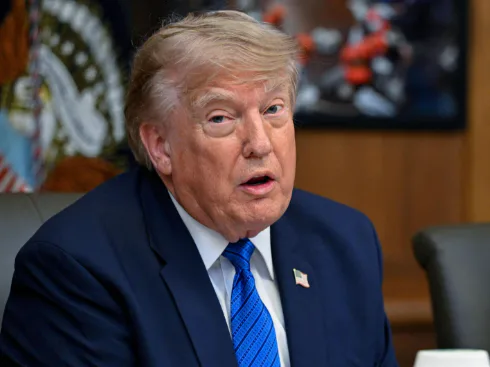
President Trump announced on June 21, 2026, that he had ordered American forces to hold off on planned strikes against Iran. This decision came after a period of escalating tensions in the Persian Gulf, following Iran's downing of a US drone. The president stated that the strikes were being halted pending an agreement over the "perimeters of a deal," suggesting a potential diplomatic pathway was being explored. The announcement surprised many, given the prior military posture and the immediate context of the drone incident.
The exact nature of the "deal" or "agreement" remained unclear at the time of the announcement. However, analysts suggested it likely involved de-escalation measures and potentially a renewed focus on diplomatic channels to address Iran's nuclear program and its regional activities. The decision to cancel strikes, even temporarily, signaled a potential shift in strategy, moving away from immediate military retaliation towards a more measured approach that allows space for negotiation.
The Background: Escalating Tensions
Relations between the United States and Iran have been strained for decades, but tensions significantly increased following the US withdrawal from the Joint Comprehensive Plan of Action (JCPOA) in May 2018. The JCPOA, an international agreement aimed at curbing Iran's nuclear ambitions, was criticized by the Trump administration for not being comprehensive enough. Following the withdrawal, the US reimposed stringent sanctions on Iran, targeting its oil exports and financial institutions, aiming to cripple its economy and force it to renegotiate a broader deal.
Iran responded by gradually increasing its uranium enrichment activities, exceeding the limits set by the JCPOA. This move was seen by the US and its allies as a direct violation of the agreement and a step towards developing nuclear weapons. The situation further deteriorated in early June 2026 when Iran shot down a US military drone over the Strait of Hormuz, an incident that brought the two countries to the brink of direct military conflict. The US claimed the drone was in international airspace, while Iran maintained it was within its territorial waters. President Trump initially indicated that military action was an option, but ultimately decided against it, citing concerns about potential casualties.
The Mechanism: Diplomatic Off-Ramps
The cancellation of planned strikes did not signify an end to the crisis but rather a pause to allow for diplomatic engagement. The "perimeters of a deal" hinted at by President Trump likely referred to a framework for future negotiations. This could involve several components:
- De-escalation Measures: Both sides might agree to refrain from provocative actions, such as military exercises in sensitive areas or aggressive rhetoric. Iran could potentially scale back its uranium enrichment, and the US might offer some sanctions relief.
- Resumption of Talks: The ultimate goal would be to bring both the US and Iran back to the negotiating table to discuss a more comprehensive agreement than the original JCPOA. This new deal could address Iran's ballistic missile program and its support for regional proxies, in addition to its nuclear activities.
- Third-Party Mediation: European or other international powers could play a role in facilitating communication and mediating potential agreements between the US and Iran. Switzerland, for example, has historically served as a diplomatic intermediary between the two nations.
The process would likely involve back-channel communications and confidence-building measures before any formal public negotiations could commence. The success of this approach hinges on the willingness of both Washington and Tehran to compromise and to prioritize diplomacy over military confrontation.
Who is Affected and How
The decision to halt strikes has immediate implications for several groups:
- Global Oil Markets: The Strait of Hormuz is a critical chokepoint for global oil supplies. Any military conflict in the region would have severely disrupted shipping, leading to soaring oil prices. By de-escalating, the administration likely aimed to stabilize energy markets and prevent economic shocks.
- Regional Powers: Countries in the Middle East, particularly Saudi Arabia, the UAE, and Israel, have been closely watching the US-Iran standoff. A military conflict could have destabilized the entire region. The pause in hostilities offers a reprieve, though underlying tensions remain.
- US Military Personnel: The immediate threat of engaging Iranian forces was averted, saving American lives. However, the long-term security situation in the region remains a concern.
- Iranian Population: The sanctions imposed on Iran have had a devastating impact on its economy and the daily lives of its citizens. While the cancellation of strikes offers a temporary reduction in immediate military threat, the continuation of sanctions means economic hardship persists.
- International Diplomacy: The move could be seen as a victory for diplomatic efforts, potentially encouraging further dialogue and de-escalation in other global hotspots. However, it also highlights the volatility of international relations and the delicate balance of power.
What Happens Next
The future trajectory of US-Iran relations remains uncertain and depends on several factors:
- Commitment to Diplomacy: If both the US and Iran engage in good-faith negotiations and adhere to de-escalation measures, a path towards a renewed agreement could emerge. This would require significant concessions from both sides.
- Domestic Politics: Political developments within both the US and Iran will play a crucial role. Elections, internal power struggles, and public opinion can influence a government's willingness to compromise or escalate.
- Regional Dynamics: The actions of other regional actors, such as Israel and Saudi Arabia, could either support or undermine diplomatic efforts. Their security concerns are a significant factor in any regional settlement.
- Iran's Nuclear Program: The pace and extent of Iran's nuclear activities will remain a key point of contention. Any perceived move towards weaponization would likely trigger a strong international response.
If diplomatic efforts fail, the risk of renewed conflict remains. The "perimeters of a deal" might prove too difficult to agree upon, leading to a return to heightened tensions. Alternatively, an unforeseen incident or miscalculation could rapidly escalate the situation, leading to military action. The current pause offers a window of opportunity, but its duration and outcome are far from guaranteed.
Share this article
Send the story to readers on social or messengers.
Comments
Loading comments…

New Times Reporter
Editorial coverage from New Times Reporter.