Why Thailand's school shootings are a recurring tragedy
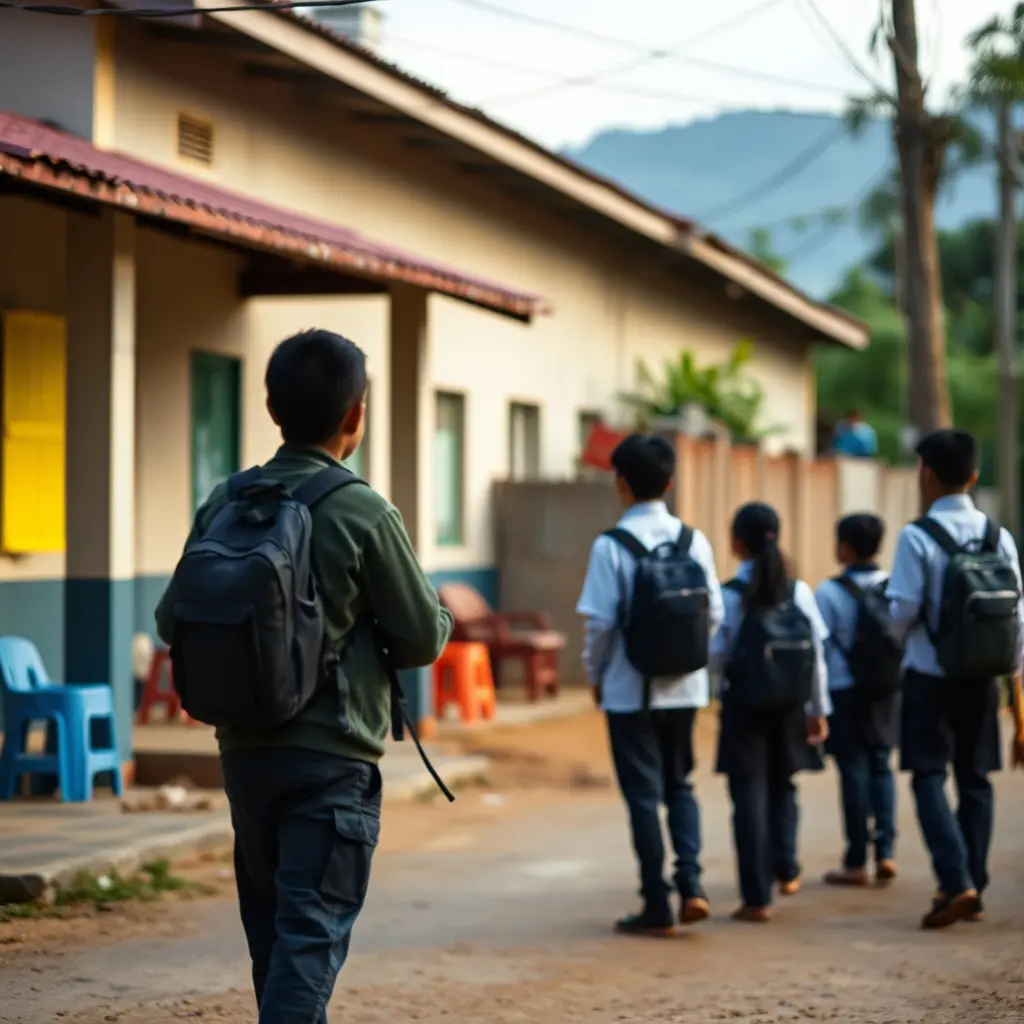
The fatal shooting of at least seven people, including teachers and the gunman's grandparents, by a 14-year-old student at a school in Nakhon Ratchasima province on October 9, 2023, marks one of the deadliest school attacks in Thailand in recent years. This event, tragically, is not an isolated incident but part of a disturbing pattern of gun violence in a country where firearms are relatively accessible.
The accessibility of firearms in Thailand, coupled with underlying societal issues, contributes to the recurring nature of such tragedies. While Thailand has laws governing gun ownership, loopholes and a significant black market mean that illegal firearms are readily available. This ease of access, particularly for young people, combined with potential mental health struggles or grievances, can have devastating consequences, as seen in this latest incident.
The Background: A History of Gun Violence
Thailand has experienced several high-profile mass shootings in recent years, highlighting a persistent problem with gun violence. In February 2020, a disgruntled soldier killed at least 29 people and wounded dozens more in a rampage that began at a military barracks and ended at a shopping mall in Nakhon Ratchasima. This incident, which lasted for hours and involved a stolen assault rifle, shocked the nation and brought renewed attention to gun control.
Prior to that, in August 2015, the bombing of the Erawan Shrine in Bangkok, which killed 20 people and injured over 120, underscored the vulnerability of public spaces to violent attacks, though that incident was attributed to different motives and perpetrators than school shootings.
The prevalence of firearms is partly due to a large legal gun-owning population, but also a significant illegal arms trade. The ease with which individuals, including minors in some cases, can acquire weapons fuels these violent episodes. Factors such as social inequality, mental health issues that go unaddressed, and personal grievances can all intersect with gun availability to create a volatile environment.
The Mechanism: How Firearms Become Available
Thailand's gun laws are relatively strict on paper, requiring permits for ownership and prohibiting certain types of weapons. However, enforcement can be inconsistent, and a substantial black market exists for both legal and illegal firearms. Many guns in circulation are believed to originate from neighboring countries or are diverted from legitimate sources.
- Legal Ownership: Thai citizens can legally own firearms, but the process involves background checks, registration, and permits. The number of legal gun owners is significant, estimated in the millions.
- Illegal Market: A thriving black market allows individuals to acquire firearms without proper licensing. This can involve purchasing from corrupt officials, stolen weapons, or smuggling from countries with less stringent regulations.
- Accessibility for Minors: While it is illegal for minors to own or possess firearms, the black market and lenient enforcement can make them accessible. In cases like the October 9, 2023, shooting, the perpetrator was a teenager, indicating a failure in preventing access.
- Types of Weapons: The weapons used in mass shootings are often semi-automatic rifles, which can be obtained through these illicit channels. The ability to acquire such weapons allows for a high casualty count in a short period.
Who is Affected and How
The immediate impact of school shootings is devastating for the victims, their families, and the wider school community. In the October 9, 2023, incident, the loss of life included not only students and teachers but also the perpetrator's grandparents, suggesting a tragic escalation of violence.
- Students and Teachers: Those present at the school face trauma, fear, and grief. Survivors may experience long-term psychological effects, including PTSD, anxiety, and depression. The sense of safety within educational institutions is shattered.
- Families of Victims: The loss of loved ones results in profound grief and financial hardship. The suddenness of these attacks leaves families without closure and facing immense emotional distress.
- The Perpetrator's Family: The family of the shooter also faces immense stigma, grief, and potential legal consequences, grappling with how their loved one became involved in such violence.
- National Morale: Such events erode public confidence in safety and security, leading to increased anxiety and calls for stronger government action.
- Educational Disruption: Schools may face closures, increased security measures, and a heightened sense of fear among students and staff, impacting the learning environment.
What Happens Next
Following incidents like the October 9, 2023, shooting, Thailand typically sees a period of intense public mourning, calls for stricter gun control, and promises of investigation and reform from the government. However, the effectiveness of these measures in preventing future tragedies remains a critical question.
- Government Response: Authorities will likely review existing gun laws, investigate the perpetrator's access to the weapon, and potentially implement enhanced security measures in schools. Past responses have included calls for stricter licensing and crackdowns on illegal arms, but significant legislative change has been slow.
- Gun Control Debate: The debate over gun control will intensify. Advocates will push for more stringent regulations, bans on certain types of firearms, and better enforcement. Opponents may argue for the rights of legal gun owners and focus on mental health issues as the primary driver.
- Mental Health Support: There will be increased focus on mental health services for young people and the general population. However, access to and the quality of mental healthcare in Thailand can be inconsistent, particularly in rural areas.
- Societal Impact: The long-term impact will be a continued sense of vulnerability and a demand for systemic change. For these events to become less frequent, a sustained effort addressing both gun accessibility and the underlying social and psychological factors will be necessary. Without significant legislative action and societal investment in mental well-being, similar incidents are likely to recur.
Share this article
Send the story to readers on social or messengers.
Comments
Loading comments…

New Times Reporter
Editorial coverage from New Times Reporter.