Why Trump's Iran talks announcement impacts oil prices
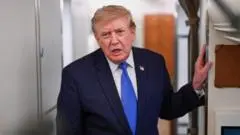
President Donald Trump announced on Sunday that new talks with Iran would commence on Monday, a development that saw global oil prices fall. The announcement followed Trump's decision to call off what he described as "massive" strikes against Iran. He stated that Iran and US allies in the Middle East had requested a pause, believing a deal was within reach. The prospect of renewed negotiations, particularly concerning the Strait of Hormuz, a vital oil shipping route, appears to have eased market anxieties about potential supply disruptions. Brent Crude oil dropped by 4.5% to $83.98 per barrel, and US-traded oil fell by 4.6% to $80.74 per barrel in early Asian trading on Monday.
Trump indicated that the discussions would focus on reaching an agreement regarding the Strait of Hormuz and Iran's nuclear program. He suggested that the "perimeters" of a deal had already been agreed upon. The US president also mentioned that Saudi Arabia's Crown Prince Mohammed Bin Salman, along with US partners in the UAE and Qatar, had urged him to hold off on military action. While Trump expressed readiness for talks, he did not set a deadline, stating, "We'll just see how it is. We're ready to go anytime we want... I'm not looking to kill people."
The Background: A Volatile Relationship
The relationship between the United States and Iran has been fraught with tension for decades, escalating significantly since the current conflict began on February 28. This period has been marked by a series of escalations, including threats of military action and retaliatory strikes. The Strait of Hormuz, through which approximately 20% of the world's crude oil and liquefied natural gas (LNG) typically flows, has been a focal point of these tensions. Disruptions to shipping in this critical waterway have consistently led to fluctuations in global energy prices. President Trump has repeatedly voiced optimism about a negotiated end to the conflict, often juxtaposing strong military rhetoric with diplomatic overtures. For instance, on April 7, he threatened to destroy civilian infrastructure if Iran refused peace talks, which subsequently led to face-to-face discussions in Pakistan. However, those negotiations did not yield a lasting agreement. The current announcement comes after Trump had described the US as "locked and loaded and ready to go against the Islamic Republic of Iran, at levels of Military Terror, Strength, and Power not seen since World War II" on Saturday, only to pivot to diplomacy the next day.
The Mechanism: Diplomacy Amidst Threats
President Trump's announcement of impending talks represents a diplomatic maneuver following a period of heightened military readiness. The process, as described by Trump, involves Iran and US allies requesting a "hold off" on potential strikes to allow for negotiations. This approach suggests a strategy of applying significant pressure, including the threat of military action, to bring the opposing party to the negotiating table. The specific mechanism for these talks remains largely undefined, with Trump not yet clarifying the venue or potential attendees. However, the stated focus is on resolving issues related to the Strait of Hormuz and Iran's nuclear program. The involvement of Middle Eastern allies like Saudi Arabia, the UAE, and Qatar in urging restraint highlights a coordinated diplomatic effort, aiming to de-escalate tensions and prevent a wider conflict that could have severe economic repercussions, particularly on global energy markets. The Iranian Foreign Minister, Abbas Araghchi, indicated that negotiations with Oman concerning the Strait of Hormuz were nearing finalization, suggesting parallel diplomatic tracks.
Who Is Affected and How, Concretely
Global energy markets are directly and immediately affected by these developments. The fall in oil prices on Monday morning reflects a market reaction to the perceived reduction in the risk of conflict and supply disruption. Consumers worldwide could see a stabilization or slight decrease in fuel prices, though this is contingent on the success and duration of any diplomatic breakthroughs. Citizens in the Middle East, particularly those in countries bordering or allied with the US and Iran, face a reduced immediate threat of regional escalation. However, the ongoing volatility means that populations in countries heavily reliant on oil imports may still experience price fluctuations. For the United States, the decision to pursue talks rather than strikes could alleviate domestic political pressure, especially with upcoming midterm elections in November. Polls indicating widespread dissatisfaction with the handling of the war have been a concern for the Trump administration. The Iranian population faces the prospect of continued uncertainty, with the potential for both diplomatic progress and renewed confrontation. The Iranian military, as stated by acting Defence Minister Majid Ibn al-Reza, remains on alert, viewing any threat as credible.
What Happens Next, and What Would Have to Be True
The immediate next step is the commencement of the talks, which Trump suggested would begin on Monday afternoon. For these talks to be successful, both sides would need to demonstrate a willingness to compromise on core issues, particularly concerning Iran's nuclear activities and its role in regional security, including its actions in the Strait of Hormuz. If a diplomatic resolution is achieved, oil prices could stabilize at lower levels, and regional tensions might ease. Conversely, if the negotiations falter, or if Iran denies initiating the request for a pause, as Mehr news agency suggested, the risk of renewed military action would increase. This could lead to a resurgence in oil price volatility and a heightened risk of a broader conflict. The precedent set by previous failed diplomatic efforts suggests that achieving a lasting agreement will be challenging. For a deal to be struck, significant concessions would likely be required from both Washington and Tehran, and sustained engagement from key regional allies would be crucial to build trust and ensure compliance.
Share this article
Send the story to readers on social or messengers.
Comments
Loading comments…

New Times Reporter
Editorial coverage from New Times Reporter.