How does Canada contribute to the ISS?
Canada's participation in the International Space Station (ISS) is multifaceted, extending beyond simply sending astronauts into orbit. For decades, Canada has been a key partner in the multinational project, contributing advanced robotics, scientific expertise, and skilled personnel. This involvement ensures Canada maintains a presence in space, fosters technological innovation, and benefits from the scientific discoveries made aboard the station.
Canadian astronauts, like Jennifer Sidey-Gibbons who is preparing for a mission to the ISS in September 2026, represent the human face of this contribution. Their missions involve conducting research, performing spacewalks, and contributing to the station's operations. These missions are not just symbolic; they are crucial for maintaining the station's functionality and advancing scientific understanding across various fields.
The Background: Canada's Space Partnership
Canada's involvement with the ISS began long before its assembly in orbit. As one of the five primary international partners, alongside the United States (NASA), Russia (Roscosmos), Europe (ESA), and Japan (JAXA), Canada signed the Intergovernmental Agreement for Cooperation on the Civil International Space Station in 1998. This agreement outlines the rights and responsibilities of each partner in the development, operation, and utilization of the station.
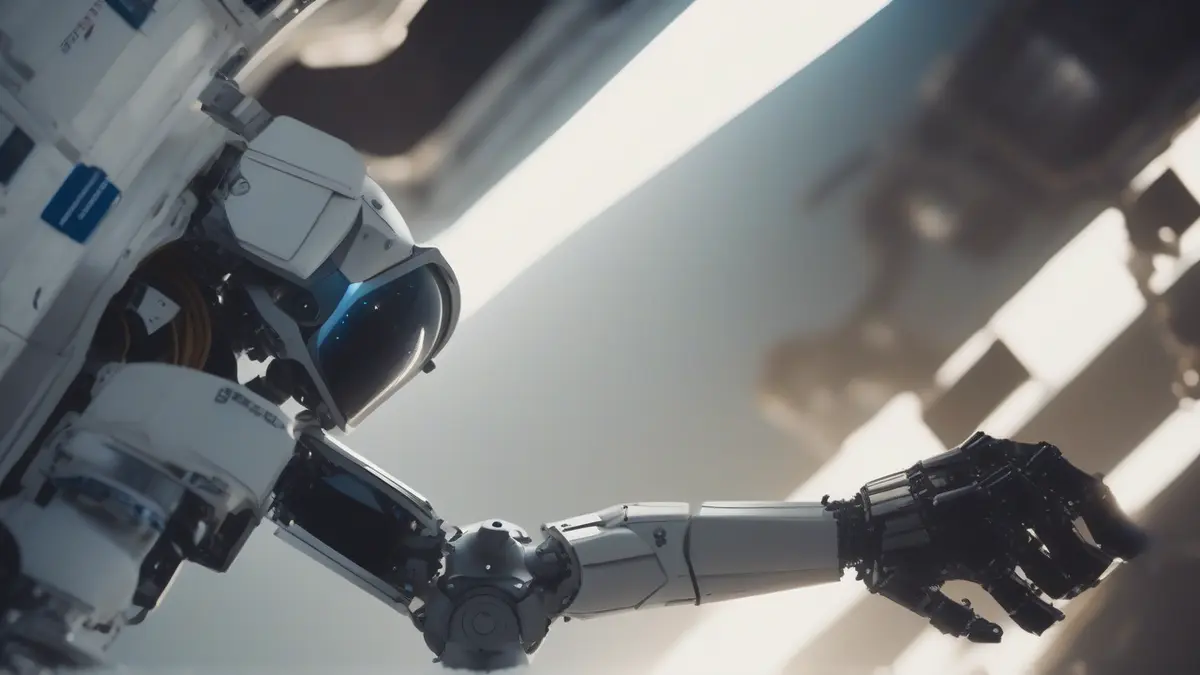
Canada's primary contribution has been through the Canadarm family of robotic systems. The original Canadarm on the Space Shuttle was instrumental in assembling the ISS. Following this, Canada developed and provided the Canadarm2, a more advanced robotic arm that serves as the station's primary external manipulator, essential for moving equipment, modules, and astronauts during spacewalks. Canada also provided Dextre, a specialized robotic tool designed to assist Canadarm2 with intricate tasks outside the station.
These robotic systems are not merely tools; they represent Canada's significant technological prowess in space robotics. The development and maintenance of these complex systems have fostered a highly skilled workforce and advanced Canadian industries in aerospace and related fields.
The Mechanism: How Canada Benefits and Contributes
Canada's contribution to the ISS is based on a principle of reciprocal access and utilization. In exchange for providing advanced robotic systems and other contributions, Canada receives guaranteed access to the ISS for its astronauts and for conducting scientific experiments. This access is typically measured in terms of crew time and research opportunities.
The Canadian Space Agency (CSA) manages Canada's participation. Astronauts selected by the CSA undergo rigorous training, often at NASA facilities in Houston, Texas, and at the European Astronaut Centre in Cologne, Germany. Their missions are planned in coordination with the other space agencies, ensuring they contribute to the overall goals of the ISS program.
During a mission, Canadian astronauts perform a variety of tasks. These include operating the Canadarm2 for station maintenance or the deployment of external payloads, conducting scientific experiments in microgravity, participating in spacewalks (Extravehicular Activities or EVAs) for repairs or upgrades, and contributing to the daily operations and upkeep of the station. The research conducted often focuses on areas relevant to Canadian interests, such as health, earth observation, and advanced materials.
For example, Jennifer Sidey-Gibbons' upcoming mission will likely involve research in areas such as human health in space, which has direct implications for long-duration spaceflight and potential future missions to the Moon and Mars. The data gathered from these experiments contributes to a global scientific database.
Who is Affected and How, Concretely
Canadian astronauts are directly affected, as their careers culminate in missions that require immense dedication, training, and personal sacrifice. Their families also experience the impact of long periods of separation.
Canadian scientists and researchers benefit from access to the unique microgravity environment of the ISS. They can design and conduct experiments that are impossible to perform on Earth, leading to breakthroughs in medicine, materials science, and environmental monitoring. For instance, research into osteoporosis in space can inform treatments for bone density loss on Earth.
Canadian taxpayers, who fund the CSA's contributions through government budgets, indirectly benefit from the technological advancements and scientific knowledge generated. The development of space technologies often has spin-off applications in other sectors, such as medical imaging, robotics in industry, and advanced materials, creating economic opportunities and improving quality of life.
Furthermore, the ISS serves as a platform for international cooperation and diplomacy. Canada's role as a reliable partner strengthens its relationships with other space-faring nations and enhances its standing on the global stage. The inspiration provided by Canadian astronauts reaching space also influences young Canadians to pursue careers in science, technology, engineering, and mathematics (STEM).
What Happens Next, and What Would Have to Be True
Canada's long-term commitment to space exploration, including its role on the ISS, is contingent on continued government funding and international collaboration. The ISS is currently funded through 2030, but its future beyond that date depends on the political will of the partner nations and the development of commercial space stations.
If international partners decide to extend the ISS's operational life beyond 2030, Canada would likely continue its contributions, provided funding remains available. This would require ongoing political support and budgetary allocations for the CSA.
Alternatively, if the ISS is decommissioned as planned around 2030, Canada's focus in human spaceflight would likely shift to supporting commercial space stations or participating in future lunar or Martian exploration missions, such as NASA's Artemis program. This transition would depend on the CSA's strategic planning and its ability to secure new international agreements and funding.
The development of new Canadian space technologies, particularly in robotics and artificial intelligence, will be crucial for maintaining Canada's relevance in future space endeavors. Continued investment in research and development, along with fostering partnerships between government, academia, and industry, would be necessary for Canada to remain a significant player in space exploration.
Share this article
Send the story to readers on social or messengers.
Comments
Loading comments…

New Times Reporter
Editorial coverage from New Times Reporter.