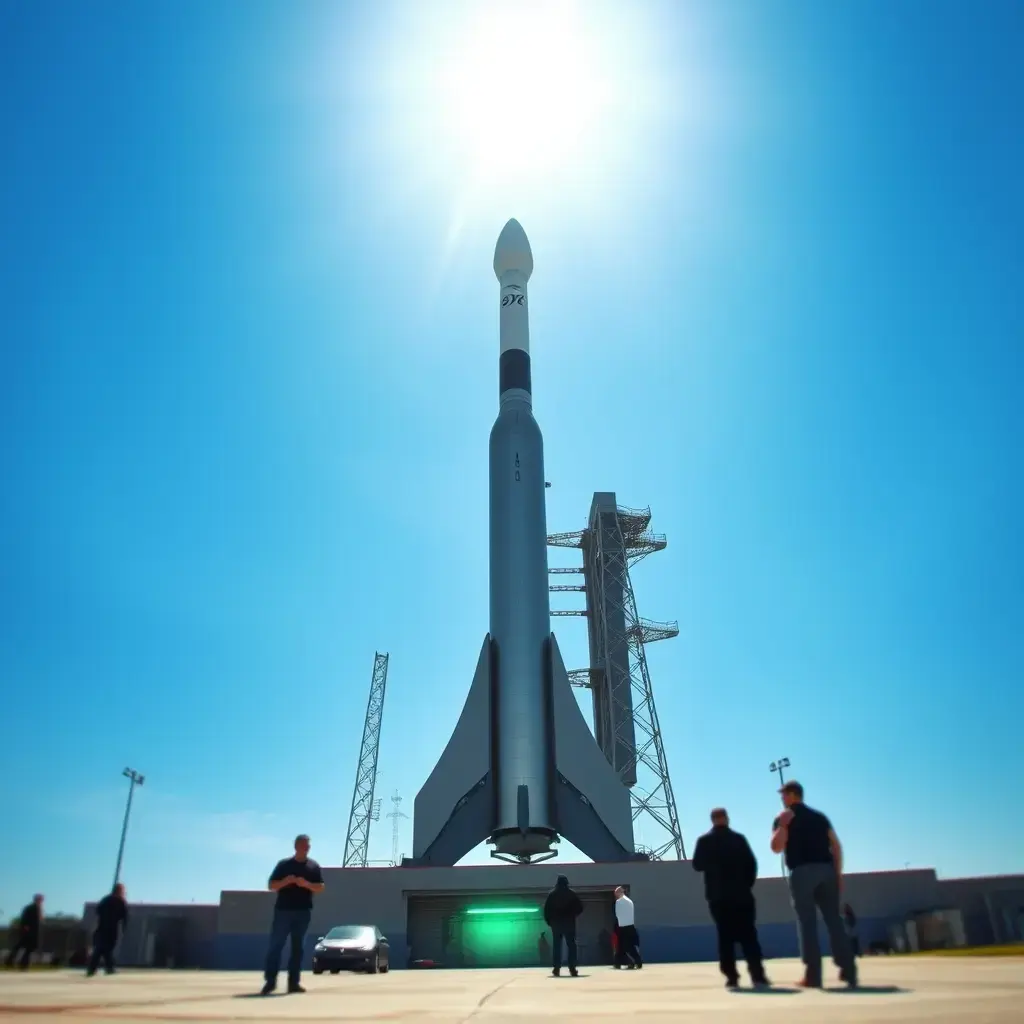
'It’s a new crater': SpaceX rocket leaves its mark on the Moon

The Background: Space Debris Meets the Moon
In March 2022, an object hurtled towards the Moon, not as a planned mission, but as a piece of space junk. This object was the third stage of a SpaceX Falcon 9 rocket, which had been launched in February 2015 for a mission to deploy NASA's Deep Space Climate Observatory. After completing its primary task, the booster stage was left in an "unstable orbit" around the Earth, eventually drifting into a "chaotic orbit" that intersected with the Moon's path. This event marked the first time a large piece of human-made space debris was known to have intentionally or unintentionally impacted the Moon. The crash occurred on March 4, 2022, at a speed of approximately 5,580 miles per hour (8,980 kilometers per hour). The impact site was in a relatively unstudied region near the Moon's equator, specifically in the vicinity of the crater Aitken Basin.
The Mechanism: A Cosmic Collision and Its Aftermath
When the spent Falcon 9 rocket stage, weighing around 4 tons, collided with the lunar surface, it created a significant impact. NASA's Lunar Reconnaissance Orbiter (LRO), equipped with high-resolution cameras, was tasked with observing the aftermath. By comparing pre-impact images of the lunar surface with post-impact images captured by the LRO, scientists were able to pinpoint the exact location of the crash and analyze the resulting crater. The impact generated a double crater, a characteristic often seen when an object hits the Moon at a shallow angle. One crater measured approximately 18 meters (59 feet) in diameter, and the second, overlapping crater, was about 16 meters (52 feet) across. The depth of these craters is estimated to be around 2 meters (6.6 feet). The impact also ejected lunar soil, known as regolith, creating a plume that extended for a considerable distance.
Who is Affected and How, Concretely
The primary entities affected are space agencies and the scientific community. For NASA, the event provides valuable data for understanding the dynamics of lunar impacts and the long-term effects of space debris. The LRO's observations help refine models of crater formation and the distribution of materials on the lunar surface. For the broader scientific community, the impact offers a unique opportunity to study the composition of the lunar subsurface, as the ejected regolith may contain materials that have not been exposed to space for millions of years. Astronomers and planetary scientists can use this event to test theories about impact physics and the Moon's geological history. For the public, this event serves as a stark reminder of the growing problem of space debris and the potential consequences of human activity in space, even on celestial bodies like the Moon.
What Happens Next, and What Would Have to Be True
The analysis of the impact site by the LRO is ongoing. Future observations will aim to monitor any changes in the crater over time, such as the settling of ejected material or erosion due to micrometeoroid impacts. Scientists will continue to study the spectral data from the impact site to determine the composition of the lunar material brought to the surface. For this to yield significant new insights, the spectral data must be detailed enough to identify specific mineral compositions. Furthermore, the long-term trajectory of other space debris will be monitored more closely, potentially leading to updated guidelines or regulations for de-orbiting spent rocket stages. If international cooperation on space debris mitigation strengthens, future impacts of this nature could be reduced. Conversely, if space traffic management remains uncoordinated, similar events involving other defunct spacecraft are likely to occur, necessitating further lunar observation missions.
Share this article
Send the story to readers on social or messengers.
Comments
Loading comments…

New Times Reporter
Editorial coverage from New Times Reporter.