Why is SpaceX's Starship orbital test flight so important?
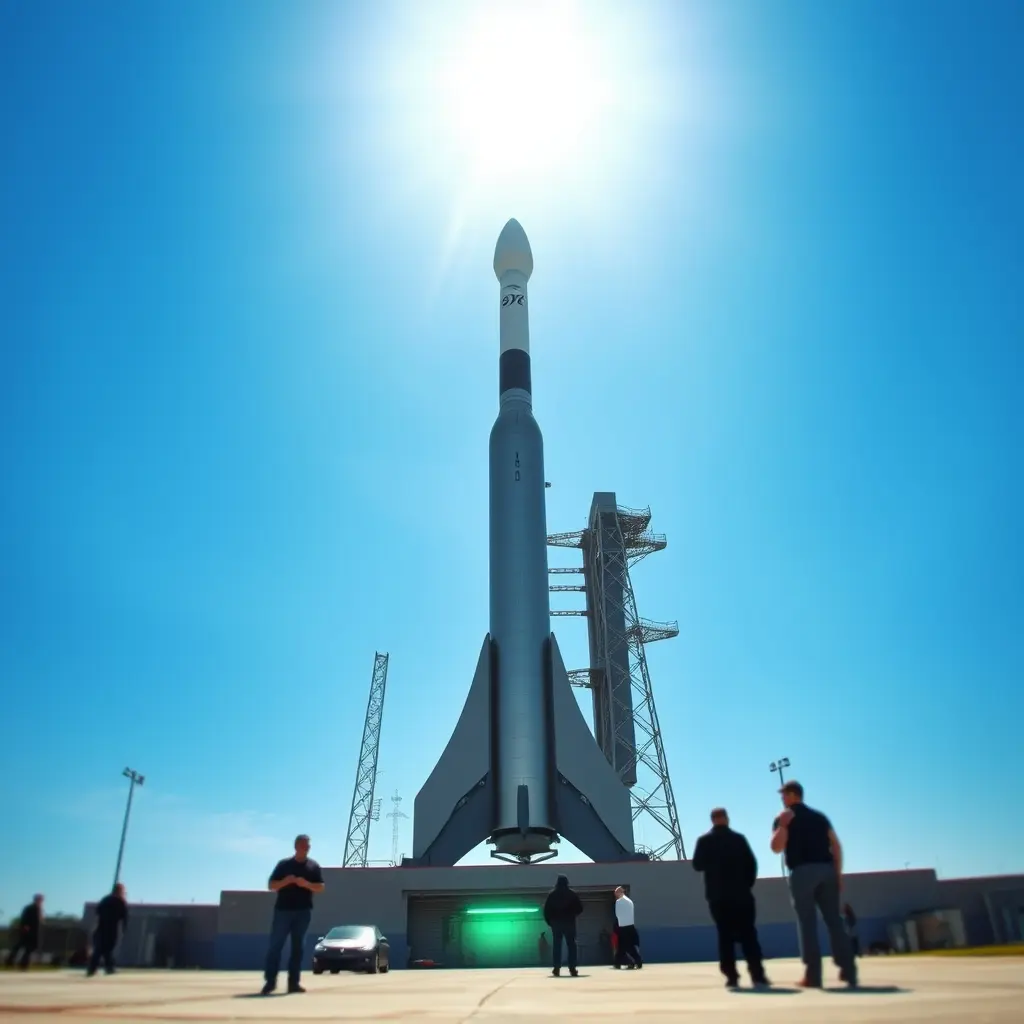
SpaceX's Starship is poised for its first orbital test flight, a critical milestone in the development of what could be a revolutionary space transportation system. This ambitious project aims to create a fully reusable rocket capable of carrying large payloads, including humans, to the Moon, Mars, and beyond. The success of this orbital test is not just about reaching space; it represents a significant step towards a new era of space exploration and commercialization.
The Starship program, led by Elon Musk's SpaceX, has been progressing through a series of increasingly complex test flights from its Starbase facility in Boca Chica, Texas. Previous flights, while demonstrating advancements in engine performance and stage separation, have not yet achieved sustained orbital velocity or demonstrated full reusability. This upcoming flight, designated Flight 14, is designed to push the boundaries further, aiming for a full trajectory around the Earth, a feat that would validate the rocket's design and operational capabilities for deep space missions.
The Background: A Reusable Future for Space Travel
SpaceX's ultimate goal with Starship is to drastically reduce the cost of space access through complete reusability. Unlike traditional rockets that are discarded after a single use, Starship is designed to be launched, reach orbit, and then land back on Earth, ready for refurbishment and another flight. This concept, if realized, could fundamentally change the economics of space exploration, making ambitious projects like lunar bases and Mars colonization more feasible. The development has been rapid, with SpaceX iterating quickly on designs and testing prototypes at an unprecedented pace since the program's inception.
This orbital test flight is the culmination of years of development and numerous smaller-scale tests. Previous iterations of Starship, such as the SN series (Serial Number), conducted suborbital hops and high-altitude tests. The current Starship vehicle is a two-stage system: the Super Heavy booster, which provides the immense thrust for liftoff, and the Starship upper stage, which is designed for in-space operations and reentry. The success of Flight 14 hinges on the performance of both these stages working in concert.
The Mechanism: How Starship Aims to Reach Orbit
The Starship system comprises two main components: the Super Heavy booster and the Starship spacecraft. The Super Heavy is powered by dozens of Raptor engines, designed to lift the massive vehicle off the launchpad. Once the booster has expended its fuel and reached a certain altitude, it will perform a "boostback burn" to return to Earth for a propulsive landing. Simultaneously, the Starship spacecraft will ignite its own Raptor engines to continue its journey towards orbit.
For this orbital test flight, the Starship spacecraft will aim to reach orbital velocity, meaning it will travel fast enough to continuously fall around the Earth without descending. The mission profile typically involves a coast phase in orbit, followed by a deorbit burn to begin reentry. The spacecraft is designed to withstand the extreme heat and forces of atmospheric reentry, using a heat shield and aerodynamic control surfaces. The ultimate goal is for Starship to perform a propulsive landing, similar to SpaceX's Falcon 9 rockets, but on a much larger scale. This test flight will focus on achieving orbit and demonstrating controlled reentry, with a splashdown in the ocean planned as the recovery method for this early stage of testing.
Who is Affected and How, Concretely?
This orbital test flight has significant implications for multiple stakeholders. For SpaceX and its employees, it represents a critical validation of their engineering and a major step towards achieving their ambitious goals. A successful flight could boost investor confidence and accelerate future development, potentially leading to more rapid deployment of Starship for commercial and scientific missions. For the broader aerospace industry, Starship's success could usher in an era of super heavy-lift launch capabilities, enabling larger satellite constellations, more complex space infrastructure, and potentially new markets for space tourism.
For aspiring astronauts and future space tourists, this flight is a tangible sign that interplanetary travel may become a reality sooner than expected. If Starship proves successful and reusable, it could dramatically lower the cost of sending humans to the Moon and Mars, making these destinations more accessible. However, there are also concerns about space debris; a fully operational Starship capable of frequent launches could contribute to orbital congestion if not managed carefully. Furthermore, the success of this flight could set a new benchmark for rocket development, potentially spurring increased competition and innovation from other space agencies and private companies.
What Happens Next, and What Would Have to Be True?
A successful orbital test flight would pave the way for further development and more complex missions. SpaceX would likely proceed with tests focused on demonstrating payload deployment, in-orbit refueling (a crucial capability for deep space missions), and eventually, the return and landing of the Starship spacecraft. Achieving orbital capability is a prerequisite for lunar and Martian missions.
For the test to be considered successful, Starship would need to achieve orbital velocity, maintain stability throughout its trajectory, and demonstrate controlled reentry. If the flight experiences partial success, such as reaching a suborbital trajectory or demonstrating key components like stage separation, SpaceX will analyze the data and iterate for the next flight. A failure, while providing valuable data, would necessitate a thorough investigation into the cause and potentially significant redesigns. The timeline for subsequent flights and the eventual operational deployment of Starship depends heavily on the outcomes of these tests, with Musk often setting aggressive targets that are subject to the realities of engineering and regulatory approvals.
Share this article
Send the story to readers on social or messengers.
Comments
Loading comments…

New Times Reporter
Editorial coverage from New Times Reporter.