What happens when a rocket stage hits the Moon?
The Background
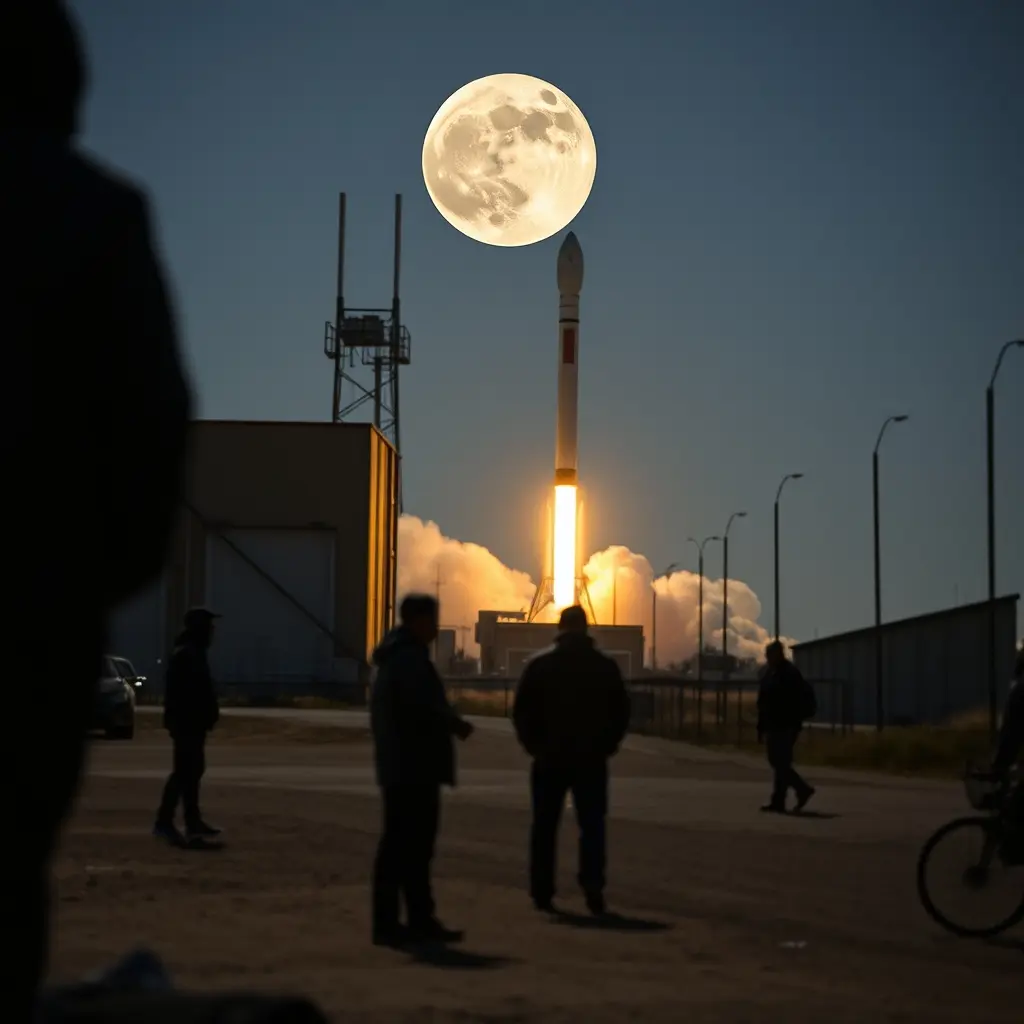
On March 4, 2022, a four-ton chunk of a SpaceX Falcon 9 rocket booster, designated object 2015-007B, made an unplanned, high-speed impact with the lunar surface. This object was the second stage of the Falcon 9 rocket that launched NASA's Deep Space Climate Observatory (DSCOVR) in February 2015. After completing its primary mission of propelling DSCOVR into its orbit, the booster was left in a complex gravitational trajectory around the Earth and Moon. Instead of safely burning up in Earth's atmosphere or being guided into a controlled deorbit, the booster entered a chaotic orbit that kept it in space for seven years. This prolonged celestial dance eventually directed it towards a collision course with the Moon.
The Mechanism
The rocket stage's journey to the Moon was a consequence of orbital mechanics and a lack of active deorbiting. After the Falcon 9 booster performed its burn to send the DSCOVR satellite on its way, it did not have enough remaining fuel or a planned trajectory to return to Earth or be disposed of in a controlled manner. Instead, it entered a highly elliptical orbit that periodically brought it close to the Moon. Over the years, gravitational interactions with both the Earth and the Moon perturbed its orbit, eventually setting it on a collision course. The impact itself was not observed directly by humans but was inferred from data collected by telescopes. The Lunar Reconnaissance Orbiter (LRO) was tasked with observing the impact site, and it later captured images showing a plume of debris and a new crater, confirming the event.
Who is Affected and How
The primary entities affected are the scientific community and those concerned with the long-term sustainability of space exploration. For scientists, the impact provided an unexpected opportunity to study the effects of space debris on celestial bodies. The debris plume, estimated to be at least 16 feet deep and 100 feet wide, offered a chance to analyze the composition of lunar soil disturbed by the impact. However, the event also raised concerns about the growing problem of space junk. As more missions are launched, the risk of uncontrolled collisions with celestial bodies increases. This incident highlights the need for better tracking and disposal strategies for defunct spacecraft and rocket stages to prevent contamination and potential hazards in space. For the general public, the immediate impact is negligible, but it serves as a tangible reminder of the increasing human footprint in space and the potential consequences of neglecting orbital debris management.
What Happens Next
Future lunar missions, particularly those involving sample return or human exploration, will need to consider the potential presence of this new impact crater and its associated debris field. Scientists will continue to analyze data from the LRO and other observatories to understand the full extent of the debris ejected and its composition. The incident is likely to spur further discussion and potentially new regulations or guidelines for the responsible disposal of rocket stages and spacecraft. Companies like SpaceX may face increased pressure to implement more robust deorbiting procedures for their spent hardware. If international bodies or space agencies decide to implement stricter protocols for space debris mitigation, it could lead to increased costs or complexities for future launches. The long-term consequence could be a more cautious and regulated approach to space exploration, ensuring the preservation of celestial environments for future scientific study and potential resource utilization.
Share this article
Send the story to readers on social or messengers.
Comments
Loading comments…

New Times Reporter
Editorial coverage from New Times Reporter.