What is SpaceX's Starshield, and why is it launching classified missions?
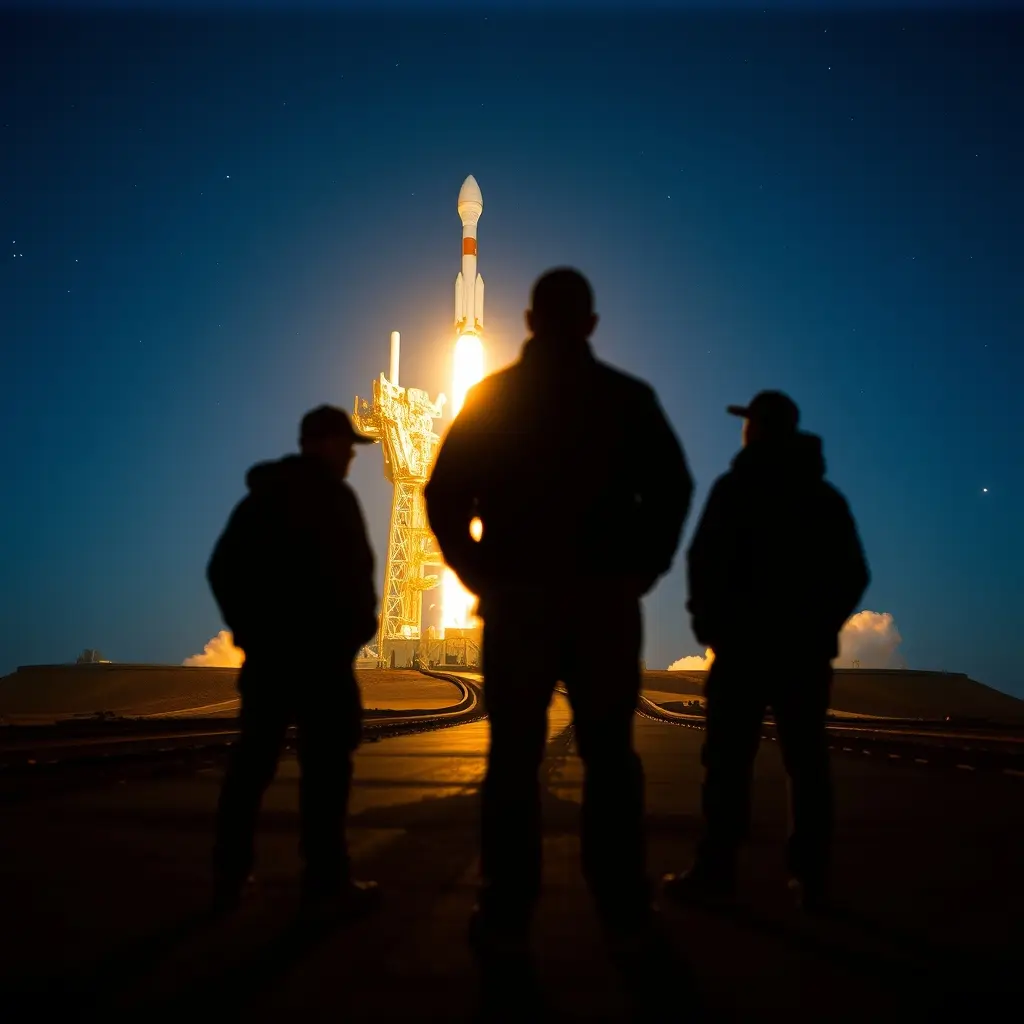
SpaceX's Falcon 9 rocket has once again launched a classified mission for the U.S. Space Force, this time from Vandenberg Space Force Base in California. This marks another instance of SpaceX's involvement in sensitive national security space operations, utilizing its reliable Falcon 9 launch vehicle. These missions often involve deploying satellites or other payloads critical to defense and intelligence.
The U.S. Space Force, established in December 2019 as the newest branch of the U.S. Armed Forces, is responsible for organizing, training, and equipping space forces to protect U.S. interests in space and provide space capabilities to the joint force. Classified missions, by their nature, are not publicly disclosed, but they typically involve advanced surveillance, communication, or early warning systems designed to maintain a strategic advantage.
The Background: National Security and Commercial Space
For decades, the U.S. military and intelligence agencies have relied on dedicated national security space programs, often launched on government-owned rockets. However, the rise of private space companies like SpaceX has introduced a new dynamic. SpaceX's Falcon 9 rocket has become a workhorse for both commercial and government launches due to its reusability, reliability, and cost-effectiveness. This has led to an increasing number of national security payloads being entrusted to commercial launch providers.
The U.S. Space Force, in particular, has a mandate to leverage commercial space capabilities. This strategy aims to foster innovation, reduce costs, and accelerate the deployment of new space-based technologies. By contracting with companies like SpaceX, the Space Force can access cutting-edge technology and launch services more rapidly than through traditional government procurement processes. These classified missions are a key part of ensuring U.S. dominance and security in the increasingly contested domain of space.
The Mechanism: Starshield and Secure Launches
While the specific payload of the recent launch remains classified, it is highly likely to be related to SpaceX's Starshield program. Starshield is a commercial satellite constellation designed to provide secure, global communications and Earth observation services for government and defense customers. Unlike SpaceX's Starlink constellation, which serves the broader consumer and business market, Starshield is tailored for high-security applications.
Starshield satellites are designed with enhanced security features, including encrypted communications and potentially more robust radiation hardening for operation in harsh space environments. They can be used for a variety of purposes, such as secure tactical communications for deployed forces, real-time intelligence, surveillance, and reconnaissance (ISR) data relay, and command and control for unmanned systems. The Falcon 9 rocket provides the reliable lift capability needed to place these sophisticated satellites into their intended orbits, often requiring precise insertion.
Who is Affected and How?
These classified launches directly impact the U.S. national security apparatus. For the U.S. Space Force, successful deployment of Starshield or similar payloads enhances its ability to monitor potential adversaries, communicate securely with assets in remote locations, and maintain situational awareness in space. This can translate to improved battlefield intelligence for troops on the ground and a more robust defense posture against space-based threats.
For defense contractors and technology providers, these missions represent significant business opportunities and a validation of their capabilities. For SpaceX, each successful national security launch solidifies its position as a trusted partner for the U.S. government, potentially leading to further lucrative contracts. For the general public, the effects are indirect but significant: enhanced national security contributes to global stability and the protection of U.S. interests, which can have economic and social repercussions.
What Happens Next?
Future launches of this nature are highly probable, given the U.S. government's stated commitment to leveraging commercial space capabilities. SpaceX's Falcon 9 rocket is scheduled for numerous missions throughout the coming years, including many for government and national security clients. The success of Starshield will likely lead to further expansion of the constellation and more specialized missions.
Potential outcomes depend on several factors. If Starshield proves highly effective and adaptable, the U.S. military may increase its reliance on it, potentially leading to the phasing out of older, less capable systems. Conversely, if technical challenges arise or if competing commercial or national programs offer superior capabilities, the adoption rate might slow. Geopolitical developments could also accelerate or decelerate the need for such secure space assets. The ongoing evolution of space technology and the increasing importance of space as a domain for both commerce and conflict suggest that these types of launches will remain a critical component of national security strategy.
Share this article
Send the story to readers on social or messengers.
Comments
Loading comments…

New Times Reporter Staff
Compiled and edited by the New Times Reporter newsroom from wire and publisher reporting, with the original source credited on every story.