What to see during the August 2026 celestial events?
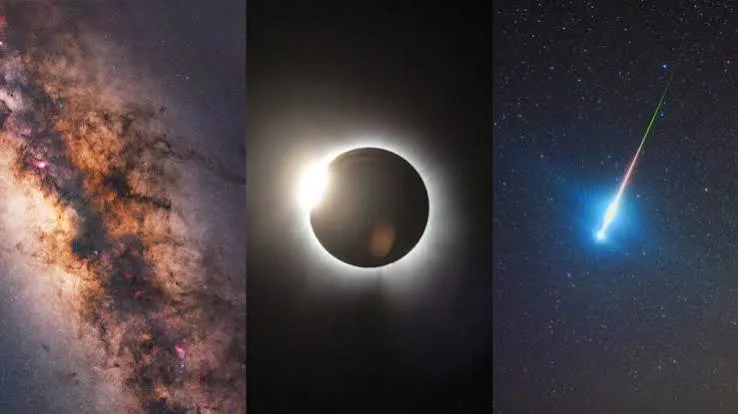
August 2026 promises a spectacular display for skywatchers, featuring both a partial solar eclipse and the peak of the annual Perseid meteor shower. These events offer a unique opportunity to observe celestial phenomena, with the solar eclipse visible across parts of North America and the meteor shower providing a chance to see shooting stars throughout the night.
The Background: Celestial Calendar Highlights
The August 2026 skywatching opportunities are significant because they combine two distinct and popular astronomical events. The Perseid meteor shower, which occurs annually between mid-July and late August, is known for its bright meteors and high rate of activity, often peaking with dozens of shooting stars per hour. This year's peak is anticipated to be particularly good, with favorable moon conditions expected to minimize light pollution and allow fainter meteors to be seen.
Alongside the meteor shower, a partial solar eclipse will occur. While not a total eclipse, which offers a more dramatic view, a partial eclipse still presents a chance to witness the Moon obscuring a portion of the Sun. The visibility of this eclipse will depend on geographic location, with specific regions experiencing different degrees of coverage. These combined events make August 2026 a focal point for amateur astronomy and public interest in space.
The Mechanism: How Eclipses and Meteor Showers Work
A solar eclipse happens when the Moon passes directly between the Sun and Earth, casting a shadow on Earth. In a partial solar eclipse, the alignment is not perfect, so the Moon only covers a part of the Sun. The Sun, Moon, and Earth do not form a perfectly straight line. The Moon's shadow has two parts: the umbra, a darker, central shadow, and the penumbra, a lighter, outer shadow. For a partial eclipse, observers are in the penumbra.
The Perseid meteor shower occurs as Earth passes through the debris trail left behind by Comet Swift-Tuttle. As these small particles, mostly dust and ice, enter Earth's atmosphere at high speeds, they burn up due to friction, creating streaks of light we call meteors or shooting stars. The shower is named the Perseids because the meteors appear to originate from the constellation Perseus, which is in the northeastern sky during August.
Who is Affected and How, Concretely
Anyone with clear skies and an unobstructed view of the sky can potentially witness the Perseid meteor shower. For optimal viewing, it is recommended to find a location away from city lights, as light pollution significantly reduces the visibility of fainter meteors. The peak viewing times for the Perseids are typically in the pre-dawn hours, though meteors can be seen throughout the night.
The partial solar eclipse will affect viewers in specific geographical areas. For instance, the eclipse on August 12, 2026, will be visible across much of North America. The degree of the eclipse – how much of the Sun is covered by the Moon – will vary by location. It is crucial to use proper eye protection, such as certified solar eclipse glasses, when observing any phase of a solar eclipse to prevent serious eye damage. Regular sunglasses are not sufficient. The event provides a shared experience for communities within the eclipse's path, fostering local interest in astronomy.
What Happens Next, and What Would Have to Be True
Following the August 2026 celestial events, skywatchers can look forward to other astronomical highlights later in the year, such as the Geminid meteor shower in December, which is another prolific shower. The next significant solar eclipse visible from North America will be a total solar eclipse on April 8, 2024, which will be a major event for many.
For the August 2026 events to be maximally enjoyed, several conditions must align. For the Perseids, clear skies during the peak hours are essential. If cloud cover is extensive, the number of visible meteors will be greatly reduced. For the solar eclipse, clear skies in the viewing path are also paramount. Furthermore, public awareness and access to safe viewing equipment are necessary for widespread participation and enjoyment of the solar eclipse. If these conditions are met, August 2026 will be remembered as a prime skywatching period.
Share this article
Send the story to readers on social or messengers.
Comments
Loading comments…

New Times Reporter
Editorial coverage from New Times Reporter.