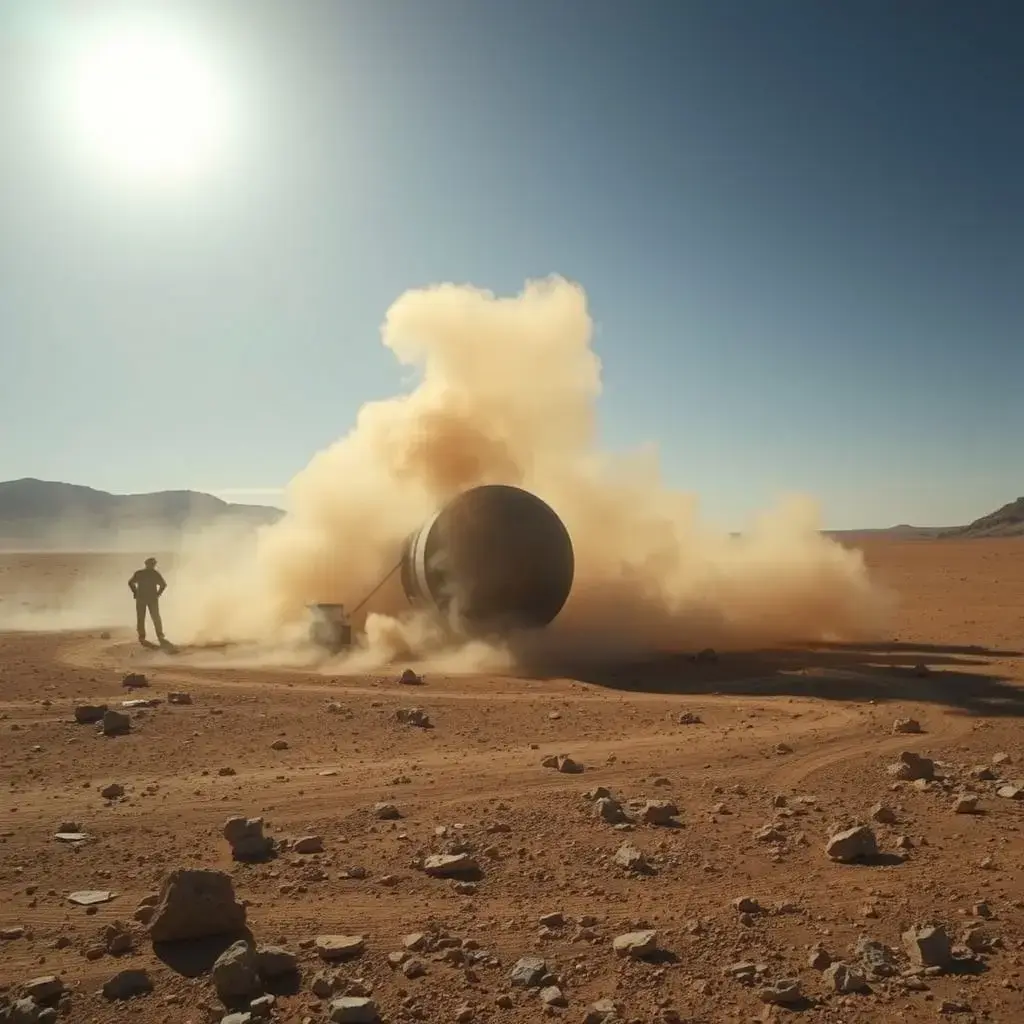
Why did China postpone its ambitious lunar water mission?

The Mystery of the Delayed Lunar Mission
China's much-anticipated Chang'e-7 lunar mission, designed to search for water ice at the Moon's south pole, has been abruptly postponed. Originally slated for a Sunday launch in 2026, the mission's timeline has been pushed back to 2027, with officials citing the need for 'absolute success.' This delay, announced with little prior warning, has sparked speculation about the underlying reasons, particularly given the escalating space race with the United States and the mission's critical role in China's long-term lunar ambitions.
The Chang'e-7 mission is not just another lunar exploration. It represents a significant step in China's ambitious space program, aiming to establish a presence at the Moon's south pole, a region believed to hold substantial reserves of water ice. This ice is crucial for future human settlements, as it can be converted into breathable air and rocket fuel. The postponement raises questions about the technical readiness of the mission's complex components, potential geopolitical pressures, or unforeseen challenges in the development of its advanced scientific instruments, all of which could impact the broader context of international lunar exploration.
How Chang'e-7 Aims to Find Lunar Water
The Chang'e-7 mission is a sophisticated, multi-component endeavor designed to conduct a comprehensive survey of the lunar south pole, focusing on identifying and characterizing water ice deposits. The core of the mission involves a main orbiter and a lander, which will deploy a rover. A key innovation is a relay satellite that will orbit the Moon's south pole, ensuring continuous communication between the surface assets and Earth, a necessity for operating in the challenging polar terrain where direct line-of-sight communication can be difficult.
The lander will carry a suite of scientific instruments, including ground-penetrating radar and a spectrometer, to analyze the composition of the lunar regolith and detect the presence of water. The rover will then be dispatched to investigate promising sites identified by the lander, further analyzing the ice and its distribution. A unique aspect of Chang'e-7 is its plan to deploy a small 'mini-satellite' to the lunar south pole's permanently shadowed craters, regions that are extremely cold and have never seen sunlight, offering a prime location for pristine water ice.
Who is Affected by the Delay?
The primary stakeholders affected by the postponement are China's national space program and its scientific community. The delay means a setback in their strategic goal of understanding and potentially utilizing lunar resources, which is a cornerstone of their long-term lunar exploration strategy, including the eventual establishment of an International Lunar Research Station (ILRS) in collaboration with Russia and other partners. This could also impact the broader international scientific community, as access to lunar data and potential future collaborations might be affected.
Furthermore, the delay has implications for the global space race, particularly the competition with the United States and its Artemis program. With both nations vying for dominance in lunar exploration and resource utilization, any significant shift in timelines can alter the perceived balance of power and influence future investments and partnerships. Companies and research institutions involved in supplying technology or conducting research related to the Chang'e program will also experience direct impacts on their development schedules and funding.
What Happens Next?
The immediate next step for the Chang'e-7 mission is a thorough review and rectification of any issues that led to the postponement, with a revised launch target of 2027. This will likely involve rigorous testing of all mission components, including the lander, rover, orbiter, and relay satellite, as well as the scientific instruments designed to detect water ice. China's National Space Administration (CNSA) will need to ensure that all systems are functioning optimally to achieve the mission's objectives.
Looking further ahead, the success of Chang'e-7 is critical for the subsequent missions in China's lunar exploration program, such as Chang'e-8, which is intended to conduct in-situ resource utilization experiments. If Chang'e-7 is successfully launched and achieves its scientific goals, it will pave the way for more ambitious endeavors, including the construction of the ILRS. However, if further delays or technical failures occur, it could significantly hinder China's progress in lunar exploration and its ability to compete effectively in the burgeoning space economy.
Share this article
Send the story to readers on social or messengers.
Comments
Loading comments…

New Times Reporter
Editorial coverage from New Times Reporter.