Why did NASA's Roman telescope fail to launch and what happens next?
NASA's Nancy Grace Roman Space Telescope, a highly anticipated observatory, has encountered significant issues that threaten its mission, even as a potential rescue satellite approaches. The telescope experienced a critical failure during its launch sequence on August 1, 2026, which prevented its full deployment and operational capabilities. This setback means the Roman telescope, designed to observe the universe in unprecedented detail, may never fulfill its scientific potential.
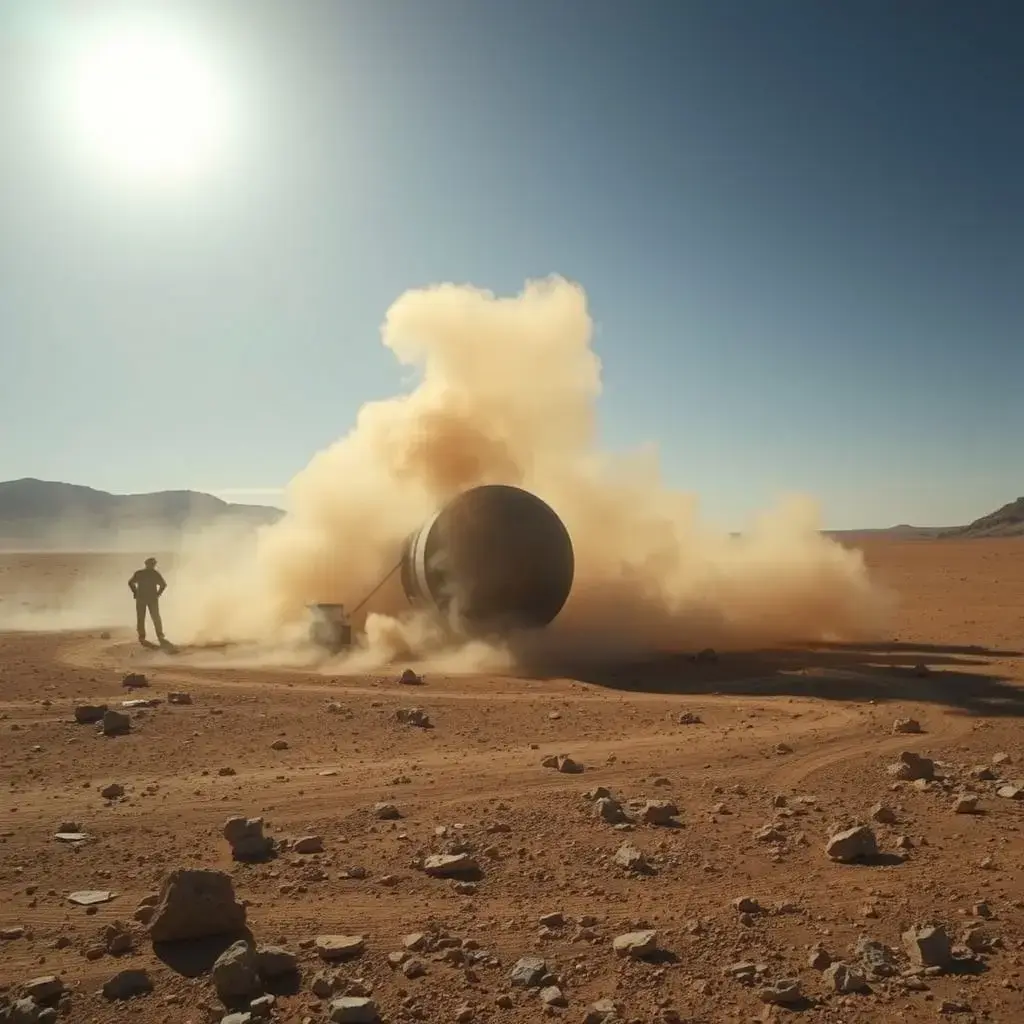
The failure occurred due to a malfunction in the solar array deployment mechanism. Unlike typical satellite deployments where solar panels unfurl smoothly, the Roman's panels became snagged, leaving them only partially extended. This insufficient power generation is critical, as the telescope requires a stable and substantial energy supply to operate its sensitive instruments and transmit data back to Earth. The situation is compounded by the fact that while a robotic service mission, the 'Stardust' satellite, was designed for potential in-orbit servicing of other spacecraft, it was not equipped to handle this specific type of solar array entanglement. Its proximity to the Roman telescope, achieved on August 28, 2026, offers visual confirmation of the problem but no direct solution.
The Background: A Mission of Cosmic Significance
The Nancy Grace Roman Space Telescope, named after the pioneering astronomer, was conceived as a successor to the Hubble Space Telescope, offering a much wider field of view and advanced infrared capabilities. Its primary scientific goals include studying dark energy and dark matter, exoplanet detection through microlensing, and investigating the formation of galaxies. The mission has been in development for over a decade, with a projected launch date in the mid-2020s and an estimated cost exceeding $3 billion. The telescope's large primary mirror and sophisticated instruments were intended to provide data that could revolutionize our understanding of the universe's expansion and composition.
Funding for the Roman telescope has been a subject of debate and adjustments over its development lifecycle. While NASA and its partners have invested heavily, the project has faced budget constraints and shifting priorities within the agency. The scientific community has consistently advocated for its completion, recognizing its potential to unlock fundamental cosmological mysteries. The current predicament raises questions about the long-term viability of such ambitious, high-cost space missions and the robust testing required to prevent catastrophic failures.
The Mechanism: A Cascade of Failures
The critical failure began during the initial deployment phase after the telescope reached its operational orbit. The solar array, composed of multiple panels designed to capture sunlight and convert it into electricity, failed to unfurl completely. This malfunction is attributed to a specific issue with the deployment actuators and locking mechanisms, which are intended to ensure a secure and full extension of the arrays.
When the solar panels did not deploy as expected, the telescope's power output dropped significantly. This reduced power supply immediately impacted the telescope's ability to perform essential functions, including powering its scientific instruments, maintaining stable thermal conditions, and communicating effectively with ground control. The Stardust satellite, launched in 2025 with the intention of providing on-orbit servicing capabilities for future missions, was able to get within visual range of the Roman telescope by late August 2026. Its cameras captured high-resolution images of the partially deployed solar arrays, confirming the extent of the problem. However, Stardust's robotic arms and tools are not designed for the delicate and complex task of untangling or repairing a snagged solar array of this magnitude.
Who is Affected and How, Concretely
The most immediate impact is on the scientific community that has been anticipating the Roman telescope's data. Astronomers worldwide were planning research proposals that relied on the telescope's unique capabilities for studying dark energy, exoplanets, and galaxy evolution. Researchers who have spent years developing theoretical models and observational strategies now face the prospect of their planned research being significantly delayed or canceled altogether. This could mean a halt in progress for specific fields of astrophysics.
Taxpayers who funded the $3 billion-plus project are also affected. The failure represents a significant loss of investment, with the possibility of the telescope never becoming fully operational. This could lead to increased scrutiny of NASA's project management and oversight practices, potentially influencing future funding decisions for large-scale scientific endeavors. Furthermore, the delay or cancellation of the Roman telescope's mission could impact technological advancements that often emerge from such complex engineering projects, affecting industries that benefit from spin-off technologies.
What Happens Next, and What Would Have to Be True
NASA is currently evaluating all available options, which are limited. One possibility is to attempt a remote software fix, though the chances of this resolving a mechanical entanglement are extremely low. Another, more drastic, option would be to attempt a complex, high-risk robotic maneuver using the Stardust satellite to dislodge the solar arrays. This would require significant redesign of Stardust's tools and extensive simulations, with a very low probability of success and a high risk of further damaging the telescope. The most likely scenario, if no viable repair can be found, is that the Roman telescope will be declared a total loss, its mission terminated before it truly began.
For a successful repair, several conditions would need to be met: First, a novel, yet-to-be-developed robotic tool on Stardust would need to be capable of precisely manipulating the entangled solar arrays without causing further damage. Second, the orbital mechanics would have to align perfectly for multiple, extended servicing attempts. Third, the power generated by the partially deployed arrays would need to be sufficient to support the complex robotic operations, which is currently not the case. Without these unlikely developments, the mission will likely be written off, prompting a thorough review of NASA's launch and deployment protocols for future missions.
Share this article
Send the story to readers on social or messengers.
Comments
Loading comments…

New Times Reporter
Editorial coverage from New Times Reporter.