Why did SpaceX's Falcon Heavy launch a US spy satellite?
The Need for Speed and Secrecy
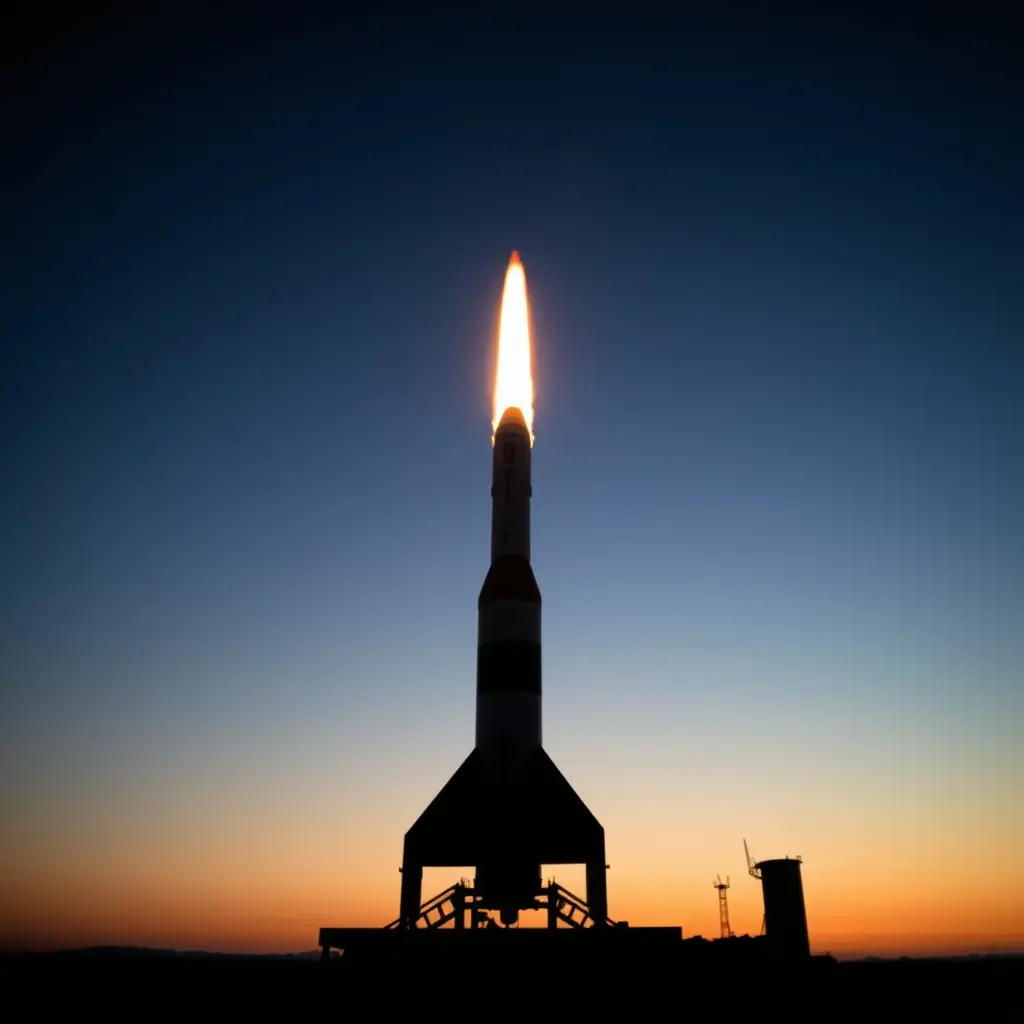
SpaceX's Falcon Heavy rocket successfully launched a classified U.S. national security payload on its first mission for the National Reconnaissance Office (NRO) in September 2023. This marked a significant milestone for both SpaceX, demonstrating the heavy-lift rocket's capability for sensitive government missions, and the NRO, which aims to leverage commercial launch providers for greater flexibility and potentially lower costs. The mission, designated NROL-85, underscores a broader trend of U.S. intelligence agencies increasingly relying on private companies for access to space, a shift driven by the need for rapid deployment, diverse launch capabilities, and cost-efficiency.
The NRO, responsible for designing, building, launching, and operating U.S. spy satellites, has historically relied on government-owned launch vehicles. However, budget constraints and the desire for more frequent launch opportunities have led the agency to diversify its launch partners. SpaceX, with its proven Falcon 9 and now the powerful Falcon Heavy, has become a key player in this evolving landscape. The Falcon Heavy's substantial payload capacity is particularly attractive for deploying large, complex intelligence-gathering satellites that require significant thrust to reach their intended orbits.
How the Falcon Heavy Works
The Falcon Heavy is essentially three Falcon 9 rocket cores strapped together. Its core mechanism relies on the controlled combustion of liquid oxygen and refined kerosene (RP-1) as propellants, ignited by a hypergolic starter fluid. Each of the 27 Merlin engines in the rocket's first stage generates approximately 500,000 pounds of thrust at sea level, totaling over 13 million pounds of thrust at liftoff. This immense power allows the Falcon Heavy to lift payloads of up to 139,000 pounds (63,000 kg) into low Earth orbit, significantly more than any other operational rocket.
During launch, the three cores ignite simultaneously. The two side boosters, which are modified Falcon 9 first stages, separate from the central core about two and a half minutes after liftoff, after expending their fuel. These boosters are designed to be recovered and reused, a key element of SpaceX's cost-reduction strategy. The central core continues to burn, propelling the payload towards orbit. Once the payload reaches its target altitude and velocity, it is deployed from the rocket's upper stage. The Falcon Heavy's upper stage is also powered by a single Merlin engine, optimized for vacuum conditions, to perform the final orbital insertion maneuvers.
Who is Affected and How
This launch directly impacts the U.S. national security apparatus by enhancing the NRO's ability to deploy advanced surveillance and intelligence-gathering assets. For the NRO, it means access to a more robust and flexible launch capability, potentially shortening the timeline for replacing or augmenting its satellite constellations. This increased agility is crucial in a rapidly changing geopolitical environment where timely intelligence is paramount.
For SpaceX, this mission solidifies its position as a premier provider of heavy-lift launch services for government and defense clients. It validates the Falcon Heavy's reliability and capacity for high-stakes, classified payloads, paving the way for future contracts with agencies like the Department of Defense and NASA. The success also bolsters SpaceX's reputation and its ongoing efforts to make space access more affordable and frequent through reusability.
Ordinary citizens are indirectly affected. The successful deployment of new spy satellites contributes to national security, potentially deterring adversaries and providing U.S. policymakers with critical information. While the specifics of the satellites and their capabilities remain classified, their presence in orbit supports a range of functions, from monitoring global military activities to assessing treaty compliance.
What Happens Next
Following the successful NROL-85 mission, the NRO is expected to continue its strategy of diversifying launch providers and leveraging commercial capabilities. Future missions will likely see continued use of SpaceX's Falcon 9 and Falcon Heavy rockets, alongside potential launches from other providers like United Launch Alliance (ULA) and potentially emerging companies. The NRO's long-term strategy involves ensuring a consistent and cost-effective flow of intelligence data from space, which necessitates a reliable and varied launch manifest.
SpaceX, meanwhile, will focus on increasing the flight rate of its rockets, including the Falcon Heavy, and continuing to refine its reusability technologies. The company is also developing its Starship system, a fully reusable super heavy-lift launch vehicle that promises even greater payload capacity and lower launch costs, which could further revolutionize government and commercial access to space in the coming years. The success of this NRO mission serves as a stepping stone, demonstrating the maturity of SpaceX's current launch systems and building confidence for future, more ambitious endeavors.
What happens next depends on several factors. For the NRO, continued budget allocations for national security space programs and the successful development and integration of new satellite technology will be key. For SpaceX, the ongoing success of its existing launch vehicles and the timely development of Starship will determine its future market dominance. The broader geopolitical landscape will also play a role, influencing the demand for intelligence-gathering capabilities and thus the need for robust launch services.
Share this article
Send the story to readers on social or messengers.
Comments
Loading comments…

New Times Reporter Staff
Compiled and edited by the New Times Reporter newsroom from wire and publisher reporting, with the original source credited on every story.