Why does the Moon turn orange during a lunar eclipse?
The Science of a Blood Moon
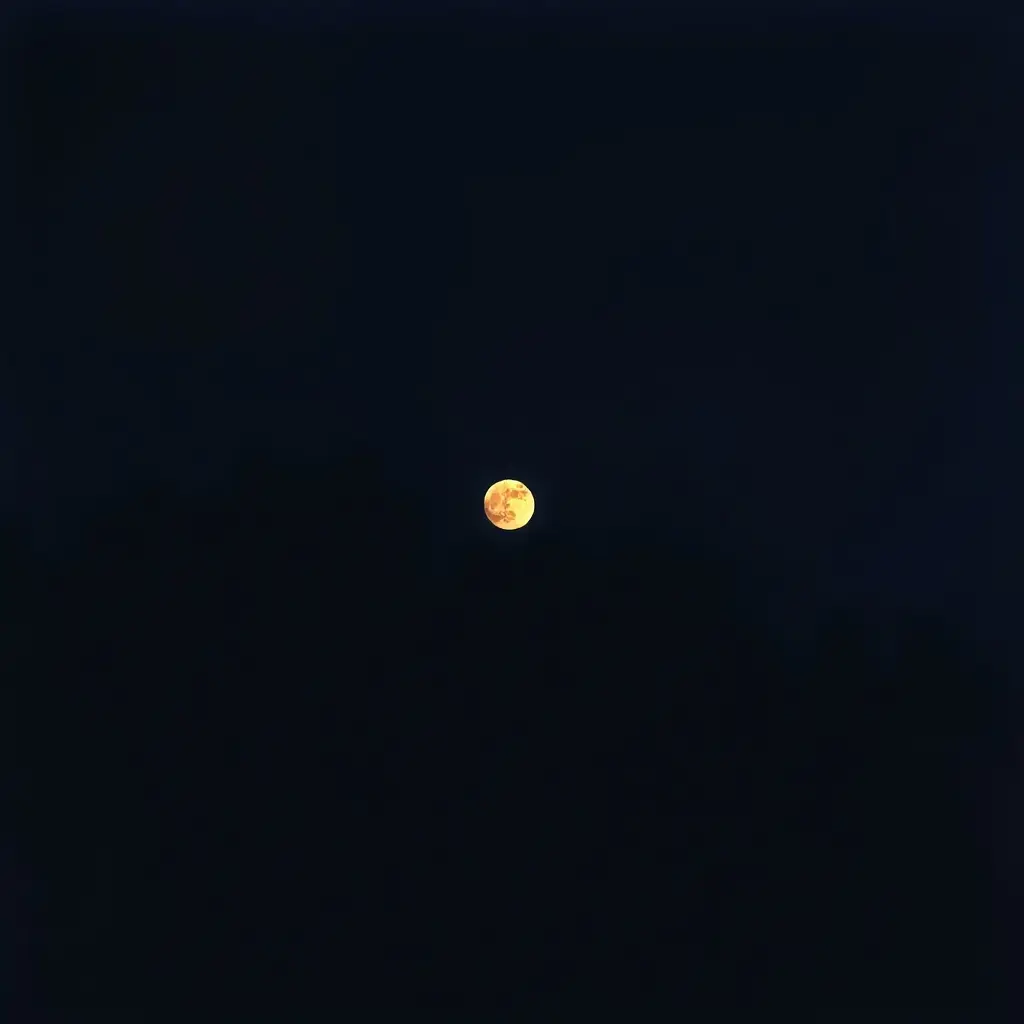
A lunar eclipse occurs when the Earth passes directly between the Sun and the Moon, casting a shadow on the lunar surface. While the Earth blocks direct sunlight, some of that light still filters through its atmosphere and reaches the Moon. This phenomenon, often called a 'Blood Moon' due to its reddish hue, is a result of Rayleigh scattering, the same process that makes Earth's skies appear blue during the day and sunsets red.
When sunlight enters Earth's atmosphere, shorter wavelengths of light (like blue and violet) are scattered away by air molecules. Longer wavelengths (like red and orange) are less affected and pass through. The amount of scattering depends on the conditions in Earth's atmosphere at the time of the eclipse. Dust, clouds, and volcanic ash can all influence how much light is filtered and scattered, leading to variations in the Moon's color, from a pale orange to a deep, rusty red.
How a Lunar Eclipse Works
A lunar eclipse can only happen during a full moon, when the Moon is on the opposite side of the Earth from the Sun. There are three main types: a total lunar eclipse, where the Earth's shadow completely covers the Moon; a partial lunar eclipse, where only a portion of the Moon is in shadow; and a penumbral lunar eclipse, where the Moon passes through the Earth's fainter outer shadow, the penumbra, resulting in a subtle dimming.
During a total lunar eclipse, the Moon doesn't disappear entirely because sunlight refracts through Earth's atmosphere. This refracted light, predominantly in the red spectrum, illuminates the Moon. The precise color observed depends on the clarity of Earth's atmosphere. If the atmosphere is clear, the Moon might appear brighter and more orange. If it's filled with dust or volcanic ash, the Moon can become a much deeper, darker red.
Who is Affected and How
Lunar eclipses are visible to anyone on the night side of Earth where the Moon is above the horizon. Unlike solar eclipses, lunar eclipses are safe to view with the naked eye and do not require any special equipment. The visual spectacle of a darkened, often colored, Moon is the primary effect for observers.
For astronomers and scientists, lunar eclipses offer opportunities to study Earth's atmosphere. By analyzing the light that passes through the atmosphere and illuminates the Moon, they can gather data on atmospheric composition, temperature, and the presence of aerosols like volcanic ash. This provides a unique, indirect way to monitor atmospheric conditions on a global scale.
What Happens Next
While the specific event of the August 28, 2026, partial lunar eclipse has passed, the celestial dance continues. The next notable lunar eclipse will be a total lunar eclipse visible across parts of Europe, Asia, Africa, and Australia on March 3, 2027. The frequency and visibility of these events depend on the orbital mechanics of the Earth, Moon, and Sun.
Future lunar eclipses will continue to be observed and studied. The scientific community will leverage these events to refine atmospheric models and potentially detect subtle changes in Earth's environment. For the public, each eclipse offers a chance to witness a captivating astronomical display, with the Moon's color serving as a dynamic indicator of the conditions in our planet's atmosphere.
Share this article
Send the story to readers on social or messengers.
Comments
Loading comments…

New Times Reporter
Editorial coverage from New Times Reporter.