Why is the Moon turning red during a partial lunar eclipse?
The Blood Moon Phenomenon Explained
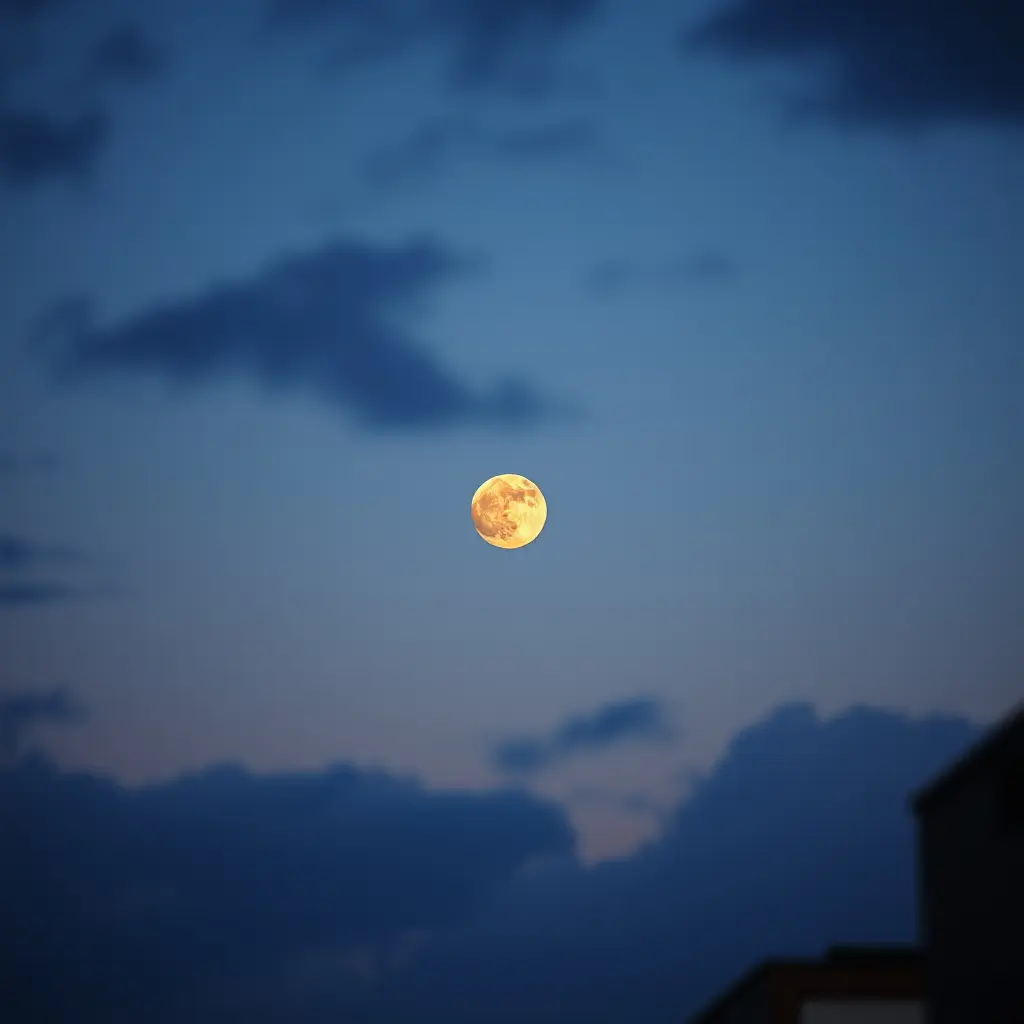
A partial lunar eclipse, often colloquially referred to as a "Blood Moon" when it takes on a reddish hue, occurs when the Earth passes directly between the Sun and the Moon, casting a shadow upon the lunar surface. While a total lunar eclipse sees the Earth's shadow completely obscure the Moon, a partial eclipse means only a portion of the Moon enters the darkest part of the shadow, known as the umbra. The characteristic reddish color, however, is not caused by the Earth's shadow itself, but by how sunlight is filtered and refracted through Earth's atmosphere. This atmospheric filtering scatters away most of the blue light, allowing the longer, redder wavelengths to pass through and illuminate the Moon.
This phenomenon is not unique to eclipses; it's the same reason why sunsets and sunrises often appear red. During these times, sunlight has to travel through more of Earth's atmosphere to reach our eyes. The atmosphere scatters the shorter blue wavelengths, leaving the longer red and orange wavelengths to dominate. The intensity and exact shade of red during a lunar eclipse can vary depending on the conditions in Earth's atmosphere at the time, such as the amount of dust, clouds, or volcanic ash present.
How a Partial Lunar Eclipse Works
A lunar eclipse is a celestial event that happens when the Moon moves into the Earth's shadow. This can occur only when the Sun, Earth, and Moon are aligned, or in close alignment, with Earth between the Sun and Moon. There are three types of lunar eclipses: total, partial, and penumbral. A partial lunar eclipse occurs when only a part of the Moon passes through the Earth's umbra, the darkest, central part of its shadow. The portion of the Moon that does not enter the umbra passes through the penumbra, the lighter, outer part of the shadow.
During a partial lunar eclipse, observers will see a dark, curved shadow encroaching on the Moon's surface. As more of the Moon enters the umbra, the obscured portion will appear to darken significantly. If the eclipse is deep enough, the Moon may take on a coppery or reddish hue. The eclipse progresses over a period of hours, with the maximum eclipse occurring when the Moon is deepest within the Earth's umbra. The entire event, from the moment the Moon enters the penumbra to when it exits, can last for several hours.
Who is Affected and How
Anyone on the night side of Earth with clear skies can witness a partial lunar eclipse. Unlike solar eclipses, lunar eclipses are safe to view with the naked eye, binoculars, or a telescope; no special eye protection is required. The visibility of a partial lunar eclipse depends on the observer's geographical location. For the August 27-28, 2026, event, regions such as North and South America, Europe, and Africa will have prime viewing opportunities. The specific timing and duration of visibility will vary by time zone.
For amateur astronomers and skywatchers, a partial lunar eclipse offers a chance to observe a significant celestial event without complex equipment. It provides an opportunity to study the Earth's shadow on the Moon and to note any color variations. The event can also serve as an educational tool, illustrating basic astronomical principles of orbits and shadows. For those in areas with significant light pollution, the Moon's dimming during the eclipse can make fainter stars more visible, offering a secondary stargazing experience.
What Happens Next
Following the partial lunar eclipse on August 27-28, 2026, the next significant lunar eclipse will be a total lunar eclipse visible across parts of Asia, Australia, the Pacific, and North America on March 3-4, 2027. The frequency of lunar eclipses is relatively high, with at least two and as many as four lunar eclipses occurring each year. These events are predictable and can be calculated centuries in advance.
The continuation of visible lunar eclipses depends on the stable orbital mechanics of the Earth, Moon, and Sun. Minor perturbations in these orbits exist but are not significant enough to disrupt the predictable patterns of eclipses for millennia. Future eclipses will continue to occur as dictated by these celestial mechanics. The visual appearance of these eclipses, particularly their color, will continue to be influenced by atmospheric conditions on Earth, making each event a unique spectacle.
Share this article
Send the story to readers on social or messengers.
Comments
Loading comments…

New Times Reporter
Editorial coverage from New Times Reporter.