August Sky Gazers Delight with Eclipses and Meteor Showers
August promises a celestial spectacle for skywatchers across the globe, featuring a partial solar eclipse, a significant lunar event, and the peak of the annual Perseid meteor shower. These astronomical occurrences offer rare opportunities for public engagement with the cosmos, providing insights into planetary mechanics and the sheer grandeur of space.
The month kicks off with a partial solar eclipse, visible to varying degrees across different regions. While not a total solar eclipse, this event still presents a dramatic visual of the Moon passing between the Sun and Earth, obscuring a portion of the Sun. The exact visibility will depend on geographic location, with specific viewing windows announced by astronomical societies and observatories.
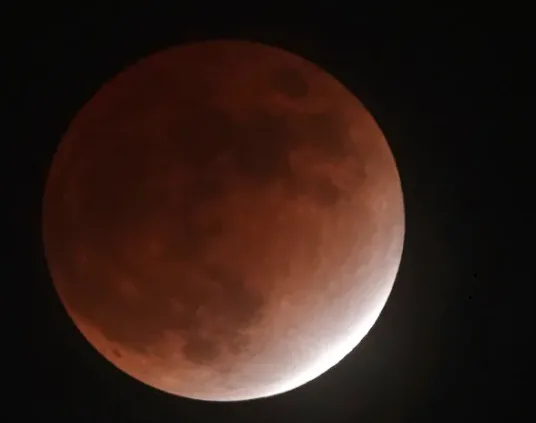
Following the solar event, attention turns to the Moon for a spectacular 96% lunar eclipse, often referred to as a 'Blood Moon' due to the reddish hue the Moon can take on during such events. This phenomenon occurs when the Earth passes directly between the Sun and Moon, casting a shadow. The deep red color is caused by sunlight scattering through Earth's atmosphere and illuminating the Moon's surface.
Adding to the excitement, the Perseid meteor shower reaches its peak in August. Renowned for its bright, fast meteors, the Perseids are debris left behind by the comet Swift-Tuttle. The shower typically produces up to 60 meteors per hour at its peak, offering a dazzling display of shooting stars against the night sky. Clear, dark skies away from light pollution are essential for the best viewing experience.
Astronomers emphasize the importance of safe viewing practices, especially for the solar eclipse. Direct observation of the Sun without proper eye protection can cause permanent eye damage. Certified solar eclipse glasses or viewers are mandatory for anyone looking directly at the Sun during the partial solar eclipse. For the lunar eclipse and meteor shower, no special equipment is needed beyond what is required for comfortable outdoor viewing.
These August celestial events serve as powerful reminders of Earth's place within the solar system and the predictable yet awe-inspiring cycles of the cosmos. They encourage scientific curiosity and provide accessible, natural wonders for people of all ages to experience and learn from, fostering a connection with the universe beyond our planet.
Beyond the major eclipses and meteor shower, August's night sky will also host a 'planet parade,' with several planets aligning in a way that makes them visible together. While the specific timing and visibility of this parade depend on atmospheric conditions and local horizons, it adds another layer of astronomical interest to the month's offerings. The alignment is a natural consequence of planetary orbits around the Sun, offering a snapshot of our solar system's configuration.
Observatories and science centers worldwide are organizing special viewing events and educational programs to coincide with these celestial highlights. These often include guided telescope viewings, lectures by astronomers, and family-friendly activities designed to explain the science behind eclipses, meteor showers, and planetary movements. Such events aim to demystify astronomy and make complex concepts understandable and engaging for the public.
The partial solar eclipse is scheduled for August 12, with the peak of the Perseid meteor shower occurring around August 12-13. The 96% lunar eclipse, or 'Blood Moon,' is anticipated on August 22. Specific timings for peak visibility will vary by time zone and location, and interested individuals are advised to consult local astronomical resources for precise details relevant to their area.
These recurring astronomical events, while predictable in their cycles, never fail to inspire awe and wonder. They offer a shared human experience, connecting people across different cultures and backgrounds through a common appreciation for the natural world and the vastness of space. The continued observation and study of such phenomena are crucial for advancing our understanding of celestial mechanics and the history of our solar system.
Share this article
Send the story to readers on social or messengers.
Comments
Loading comments…

Eleanor Thorne
Eleanor Thorne reports on culture and society, highlighting the human stories behind major headlines.