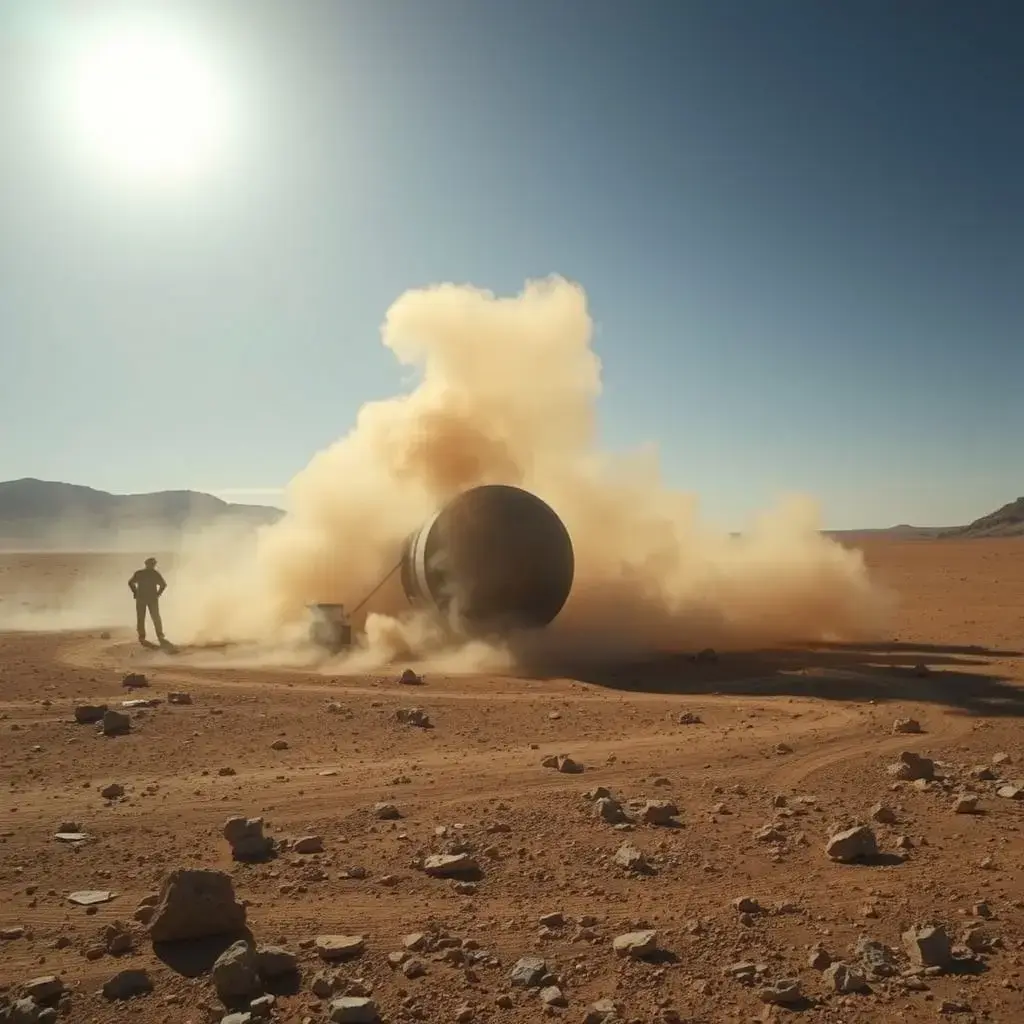
How did a SpaceX rocket end up crashing into the Moon?

The Background: Space Junk and Lunar Missions
The impending collision of a SpaceX Falcon 9 upper stage with the Moon, expected around March 4, 2022, is an unintended consequence of the growing amount of space debris orbiting Earth and beyond. This particular piece of hardware, designated as object 2015-007B, was part of the Falcon 9 rocket launched in February 2015 for a mission to deploy a NASA climate-observing satellite, DSCOVR. After completing its primary task, the rocket's upper stage was left in a highly elliptical orbit, gradually perturbed by gravitational forces from the Earth and Moon. Over the past seven years, its trajectory has been slowly decaying and shifting, eventually setting it on a collision course with the lunar surface.
This event highlights a long-standing concern within the space community: the management of space junk. While most debris remains in Earth orbit, objects that escape Earth's gravitational pull can pose their own unique challenges. The Moon, unlike Earth, has no atmosphere to cause orbital decay, meaning objects can remain in orbit or on a collision course for extended periods. The lack of a robust international framework for tracking and de-orbiting deep-space debris makes such accidental impacts a possibility, albeit a rare one.
The Mechanism: A Seven-Year Journey to Impact
The SpaceX rocket stage in question is not actively controlled. It is a dead piece of hardware that has been drifting in space since its mission concluded in 2015. Its trajectory has been influenced by several factors, primarily the gravitational pull of the Earth and, to a lesser extent, the Moon. Over time, these forces have altered its orbit, pushing it out of a stable path around Earth and towards the Moon. Scientists who track near-Earth objects and space debris have been monitoring this particular piece of hardware for some time, predicting its eventual lunar impact.
The collision is expected to occur at a speed of approximately 5,500 miles per hour (8,850 kilometers per hour). Upon impact, the 9,000-pound (4,000-kilogram) rocket stage is anticipated to create a new crater on the lunar surface, estimated to be about 60 feet (18 meters) wide. NASA's Lunar Reconnaissance Orbiter (LRO) is positioned to attempt to observe the impact site, hoping to capture images that might reveal the newly formed crater. However, the lighting conditions at the time of impact and the size of the crater may make direct observation challenging.
Who is Affected and How, Concretely?
For the general public, the direct impact is minimal. The collision will not pose any immediate danger to Earth or any ongoing lunar missions. The Moon's surface is already heavily cratered from billions of years of asteroid and comet impacts, and this new, relatively small crater will be an insignificant addition to that landscape. However, the event serves as a stark reminder of the growing problem of space debris, even beyond Earth's orbit.
For space agencies and private companies like SpaceX, this incident underscores the need for better tracking and mitigation strategies for space objects. While this particular rocket stage was not intentionally left in a trajectory to hit the Moon, it represents a failure in end-of-life planning for space hardware. It prompts discussions about the long-term sustainability of space exploration and the potential for accidental collisions in cislunar space and beyond. Future missions will likely face increased scrutiny regarding their disposal plans for spent rocket stages and satellites.
What Happens Next, and What Would Have to Be True?
Following the impact, the primary next step for scientists is to analyze any data gathered by NASA's LRO. If the crater is observable, it will provide valuable information about the mechanics of impact on the lunar surface and the composition of the rocket stage. This could inform future impact studies and our understanding of lunar geology. The event will also likely spur further discussions and potentially new international guidelines or agreements regarding the tracking and disposal of deep-space debris.
For such guidelines to be effectively implemented, there would need to be a consensus among space-faring nations and private entities on responsibility and cost-sharing for debris management. Currently, international law regarding space debris is largely based on voluntary guidelines. For this specific type of incident to be prevented in the future, rocket manufacturers would need to incorporate de-orbiting mechanisms or fuel reserves into their designs for upper stages intended for deep-space trajectories. Alternatively, a dedicated space debris removal service would need to become technically feasible and economically viable for objects beyond Earth orbit.
Share this article
Send the story to readers on social or messengers.
Comments
Loading comments…

New Times Reporter
Editorial coverage from New Times Reporter.