How did physicists prove gravity affects quantum objects?
Physicists have successfully demonstrated that gravity influences quantum objects, confirming a long-held prediction and a cornerstone of Einstein's theory of general relativity. The experiment, conducted on the International Space Station (ISS), involved sending 20,000 ultracold atoms into free fall to observe their behavior under gravitational influence. This marks the first time gravity's effect has been directly observed on a quantum object, bridging the gap between the macroscopic world described by Einstein and the microscopic realm of quantum mechanics.
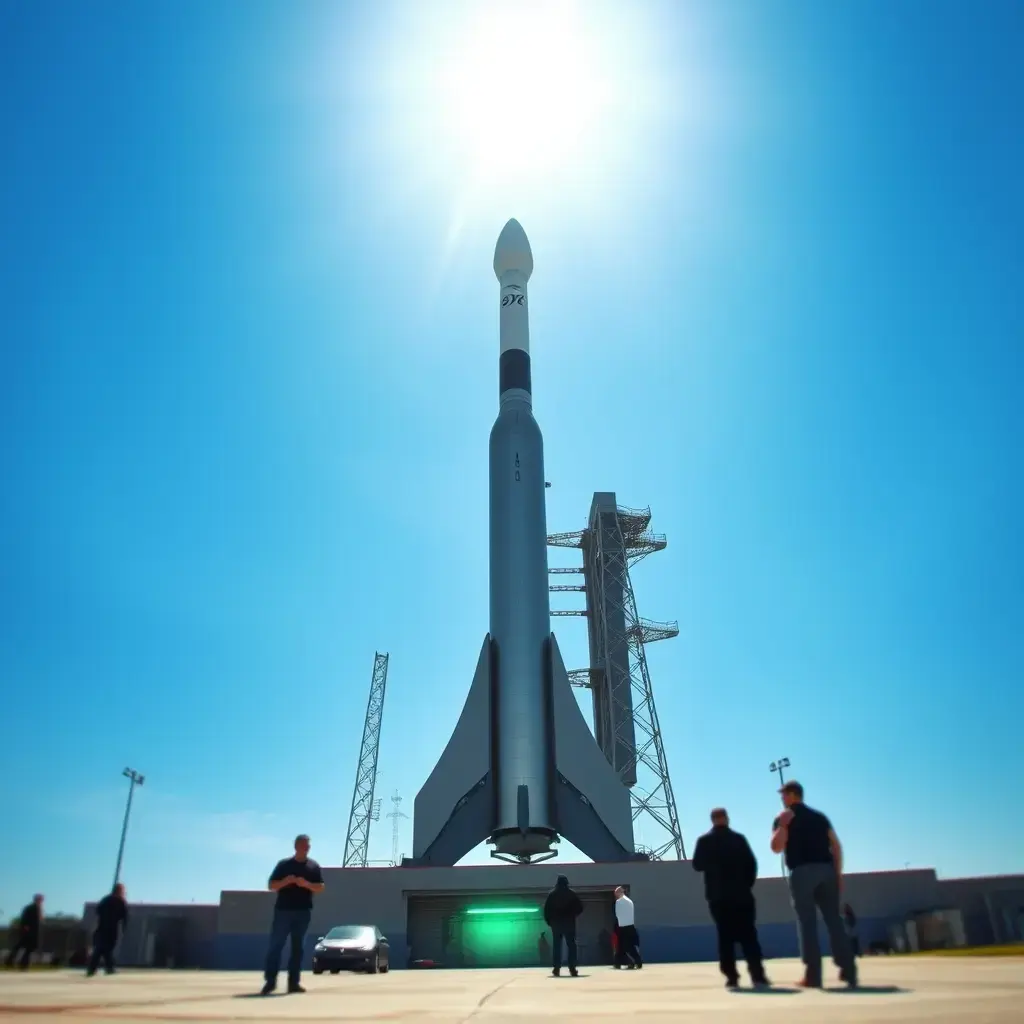
The experiment, known as the MAQRO (Macroscopic Quantum Resonators) project, aimed to test the weak equivalence principle. This principle, a fundamental tenet of Einstein's general relativity, states that all objects fall at the same rate regardless of their mass or composition when in a vacuum. By using quantum objects, the researchers sought to determine if this principle holds true at the quantum level, a question that has puzzled physicists for decades. The successful observation provides compelling evidence that gravity affects quantum states, a finding that could have profound implications for our understanding of the universe and the development of future technologies.
The Background: Unifying Two Worlds
For nearly a century, two pillars of modern physics have stood in apparent contradiction: Einstein's theory of general relativity, which describes gravity as the curvature of spacetime caused by mass and energy, and quantum mechanics, which governs the behavior of matter and energy at the atomic and subatomic levels. While both theories have been extraordinarily successful in their respective domains, they have resisted unification. General relativity describes a smooth, continuous spacetime, while quantum mechanics deals with discrete packets of energy and probabilistic outcomes.
The conflict arises when trying to describe phenomena where both gravity and quantum effects are significant, such as the interior of black holes or the very early universe. Physicists have long theorized that gravity must also interact with quantum particles, but experimentally verifying this has been exceptionally challenging. Previous experiments have focused on macroscopic objects, but the MAQRO experiment specifically targeted quantum phenomena to see if they, too, are subject to gravity's pull in the same way as everyday objects. This pursuit is driven by the quest for a unified theory of everything, a single framework that can explain all fundamental forces and particles in the universe.
The Mechanism: Atoms in Free Fall
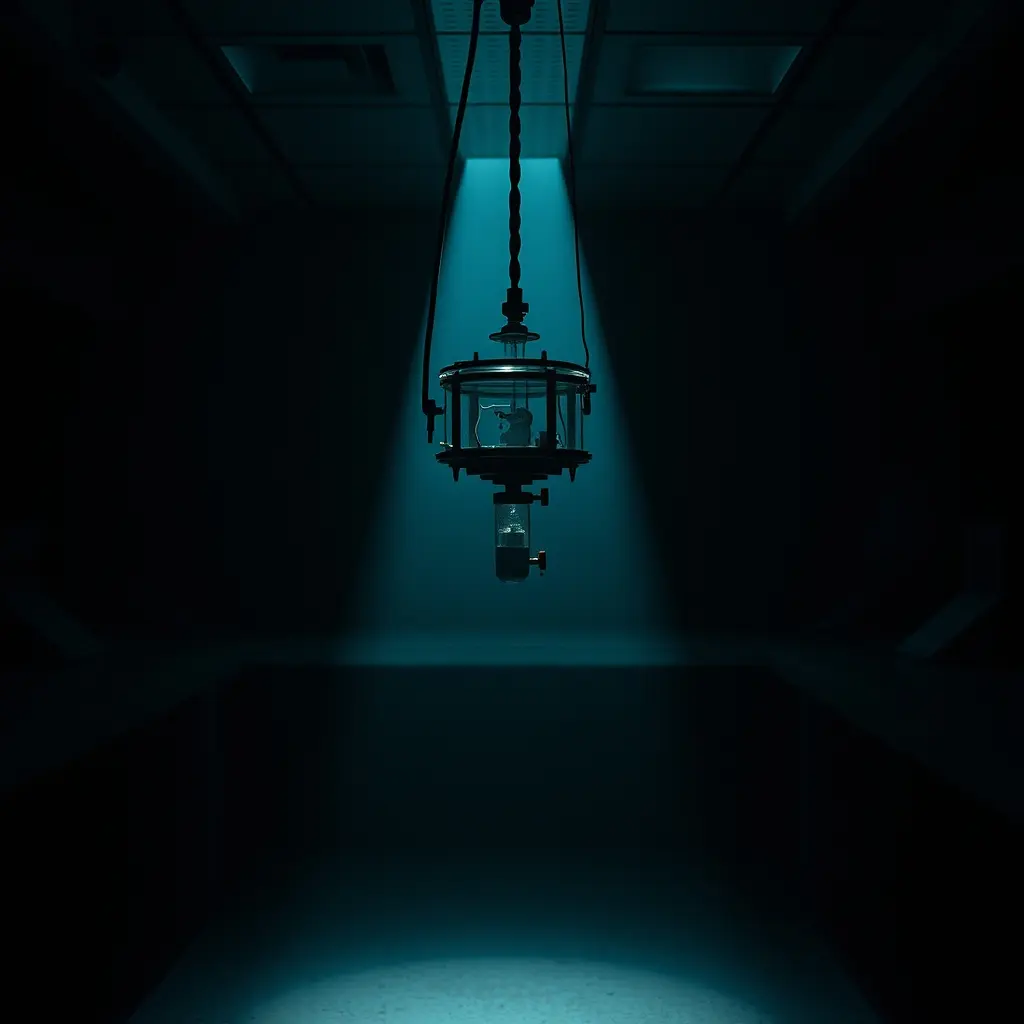
The experiment utilized a sophisticated setup aboard the ISS to isolate and observe the behavior of quantum particles under the influence of Earth's gravity. Researchers cooled approximately 20,000 rubidium atoms to near absolute zero, creating a Bose-Einstein condensate (BEC). A BEC is a state of matter where atoms cooled to near absolute zero exhibit quantum mechanical properties, behaving as a single, unified wave. This quantum state makes them highly sensitive to external influences.
These ultracold atoms were then launched into free fall within a vacuum chamber on the ISS. During their descent, their quantum states were meticulously measured using lasers and interferometry. The key was to observe whether the gravitational field affected the wave-like nature of the BEC in a predictable way, consistent with general relativity. By precisely measuring the atoms' trajectories and quantum interference patterns, scientists could detect even minute deviations that might indicate a departure from Einstein's predictions or confirm their validity at this unprecedented scale. The experiment's success hinges on the extreme precision required to detect these quantum gravitational effects.
Who is Affected and How
This breakthrough has immediate implications for theoretical physicists, offering crucial data for refining models of quantum gravity and potentially guiding the development of a unified theory. For experimental physicists, it validates complex experimental techniques and opens new avenues for probing fundamental physics in space-based laboratories.
In the longer term, a deeper understanding of quantum gravity could lead to unforeseen technological advancements. While direct impacts on daily life are not immediate, fields like quantum computing and quantum communication, which rely on precise control of quantum states, could eventually benefit from insights gained from such fundamental research. Imagine more stable and powerful quantum computers or secure communication networks that leverage the principles of quantum gravity. For the general public, it represents a significant step forward in humanity's quest to comprehend the universe's most fundamental workings, answering a question about the nature of reality that has intrigued scientists and philosophers alike.
What Happens Next
The MAQRO experiment's findings are expected to stimulate further research and more precise experiments. Scientists will likely seek to replicate the results with different types of quantum objects and under varying gravitational conditions to build a more robust understanding. Future experiments might aim to observe quantum entanglement under gravity or explore the gravitational effects on more complex quantum systems.
For a unified theory of quantum gravity to emerge, these experimental results will need to be integrated with theoretical frameworks. If further experiments continue to show perfect agreement with general relativity, it strengthens the case for theories that incorporate gravity within a quantum framework, such as string theory or loop quantum gravity, but perhaps in ways not yet fully conceived. Conversely, any deviation, however small, would necessitate a radical revision of our current understanding of physics, potentially leading to entirely new theoretical paradigms. The path forward involves a continuous interplay between increasingly sophisticated experiments and bold theoretical predictions, pushing the boundaries of human knowledge.
Share this article
Send the story to readers on social or messengers.
Comments
Loading comments…

New Times Reporter
Editorial coverage from New Times Reporter.