How do whales mourn? Evidence of humpback grief emerging
The Background: Understanding Cetacean Social Bonds
The question of whether whales, particularly large and complex social mammals like humpbacks, experience grief is a profound one, touching on our understanding of animal consciousness and emotion. While direct evidence has been elusive, observations of complex social behaviours in cetaceans have long hinted at deep emotional lives. Humpback whales (Megaptera novaeangliae) are known for their intricate social structures, long migrations, and sophisticated communication, including complex songs. They live in pods, form strong mother-calf bonds, and engage in cooperative behaviours. These characteristics lay the groundwork for behaviours that could be interpreted as mourning.
Previous anecdotal reports and scientific observations have documented instances of whales exhibiting unusual behaviour around deceased or injured pod members. These have included carrying dead calves for days, nudging unresponsive individuals, or forming protective circles around a dying whale. While these actions could be explained by instinct or confusion, the consistency and duration of such behaviours across different species and contexts have led many researchers to consider the possibility of genuine emotional responses, akin to grief.
The Mechanism: Observing Humpback Maternal Behaviour
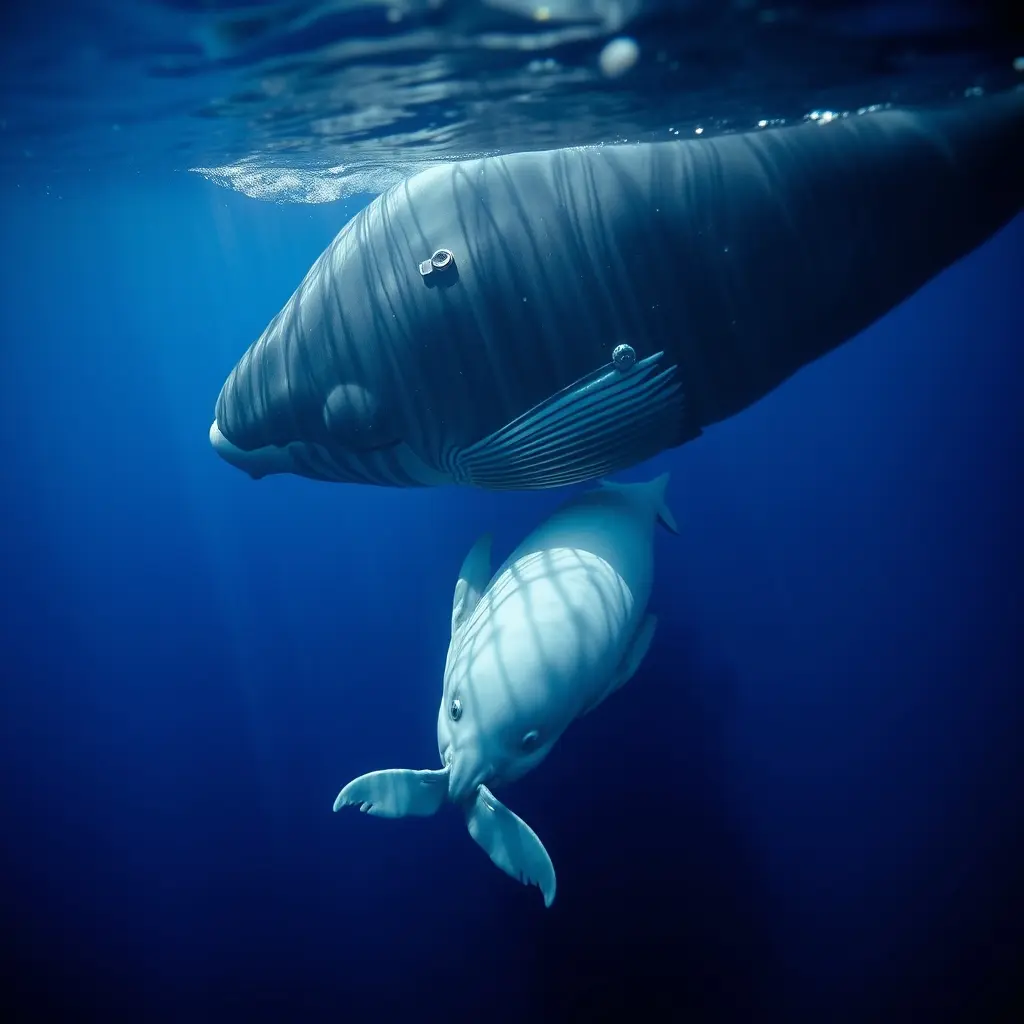
The recent footage captures a striking example of a humpback whale mother staying with the body of her stillborn calf for an extended period. This behaviour, observed in waters off the coast of Hawaii in February 2026, involves the mother nudging the calf, keeping it afloat, and actively deterring other marine life, including sharks, from approaching the body. This sustained attention and protective stance goes beyond simple instinctual responses to a dead offspring. The mother's actions suggest a recognition of the calf's state and a prolonged engagement with its presence, even in death.
This behaviour aligns with other documented instances of prolonged maternal care in cetaceans, often referred to as 'carrying the dead'. Researchers are analysing the footage to understand the duration and intensity of the mother's interaction with the calf. The specific actions—gentle nudging, maintaining buoyancy, and aggressive defence against scavengers—are being studied for their potential emotional underpinnings. This detailed observation provides a rare, close-up look at a behaviour that strongly suggests an emotional bond and a response to loss.
Who is Affected and How: Implications for Animal Emotion and Conservation
This observation has significant implications for how we perceive animal intelligence and emotional capacity. If confirmed as grief, it suggests that complex emotions like sorrow and loss are not exclusive to humans. This could reshape our ethical considerations regarding marine mammals, potentially influencing conservation policies and our approach to human activities that impact whale populations, such as noise pollution and entanglement in fishing gear. For the general public, it offers a more profound connection to these magnificent creatures, fostering greater empathy and a deeper appreciation for their inner lives.
For marine biologists and ethologists, this footage provides crucial data for ongoing research into cetacean cognition and emotion. It adds weight to the argument that whales possess sophisticated emotional states and social understanding. This could lead to a re-evaluation of how we study and interact with whales, potentially leading to more sensitive research methodologies and a greater emphasis on understanding their psychological well-being. The conservation efforts might also benefit, as a stronger understanding of whale emotional lives could galvanize public support and drive more effective protection measures.
What Happens Next: Future Research and Conservation Efforts
Future research will likely focus on gathering more such observations to establish a pattern and rule out alternative explanations. Scientists aim to document similar behaviours in other humpback populations and species to determine if this is a widespread phenomenon. Advanced acoustic monitoring and tagging technologies could help track whale behaviour over longer periods and in more challenging conditions, providing richer datasets. Comparative studies with other marine mammals and social terrestrial animals will also be crucial in understanding the evolutionary roots of grief.
Conservation efforts may see a renewed focus on minimizing stressors that could exacerbate emotional distress in whales, such as ship noise and seismic surveys. If whales are indeed capable of deep emotional bonds and grief, then activities that disrupt these bonds or cause loss could have more profound negative impacts than previously understood. This could lead to stricter regulations on maritime activities in critical whale habitats and calving grounds. Ultimately, a greater understanding of whale grief could foster a global shift in our relationship with the natural world, emphasizing respect for the complex emotional lives of all sentient beings.
Share this article
Send the story to readers on social or messengers.
Comments
Loading comments…

New Times Reporter
Editorial coverage from New Times Reporter.